Read in: English | Pidgin English
🩺 Medically reviewed by the Health Decoded Guide Editorial Team · Last reviewed: July 2026
🔍 Quick Summary
Practicing safe sex helps reduce the risk of sexually transmitted infections (STIs), unintended pregnancy, and some reproductive health complications.
Safe sexual practices may include condom use, STI testing, communication, and informed contraceptive choices.
Protecting reproductive health is an important part of overall physical and emotional well-being.
1️⃣ Introduction
Sexual and reproductive health involves more than only pregnancy prevention.
• sexually transmitted infections can affect long-term health and fertility
• some infections may not cause symptoms initially
• informed and safer practices may reduce health risks
👉 Safe sex is about protecting health, safety, and well-being.
2️⃣ How infections and risks can happen
STIs can spread through sexual contact.
• some infections spread through body fluids
• others spread through skin-to-skin contact
• pregnancy may also happen if contraception fails or is not used correctly
👉 Some people may carry infections without knowing because symptoms are not always obvious.
3️⃣ Common ways to practice safer sex
• Barrier protection
- condoms help reduce STI and pregnancy risk
- correct and consistent use matters
• STI awareness and testing
- regular testing may help early detection
- some infections may remain silent for long periods
• Informed contraceptive choices
- understand benefits and limitations of methods
- combine contraception with STI protection when needed
👉 Condoms remain one of the most important tools for STI prevention.
4️⃣ Common reproductive health concerns
• sexually transmitted infections
• unintended pregnancy
• pelvic inflammatory disease
• cervical infections and complications
👉 Untreated infections may sometimes affect fertility or pelvic health later.
5️⃣ Symptoms that may suggest infection
• unusual vaginal discharge
• genital sores or itching
• burning during urination
• pelvic pain or bleeding after intercourse
👉 Some STIs cause mild or no symptoms initially.
6️⃣ Associated emotional and social concerns
• anxiety about testing or symptoms
• fear of stigma or judgment
• relationship communication difficulties
• emotional stress after diagnosis
👉 Many people delay care because of embarrassment or fear.
7️⃣🩺 When medical evaluation becomes important 🚨
• severe pelvic pain
• sores, ulcers, or unusual discharge
• fever with genital symptoms
• possible exposure to STIs
👉 These may indicate:
• sexually transmitted infections or pelvic complications
• conditions requiring testing and medical treatment
8️⃣ Prevention and safer practices
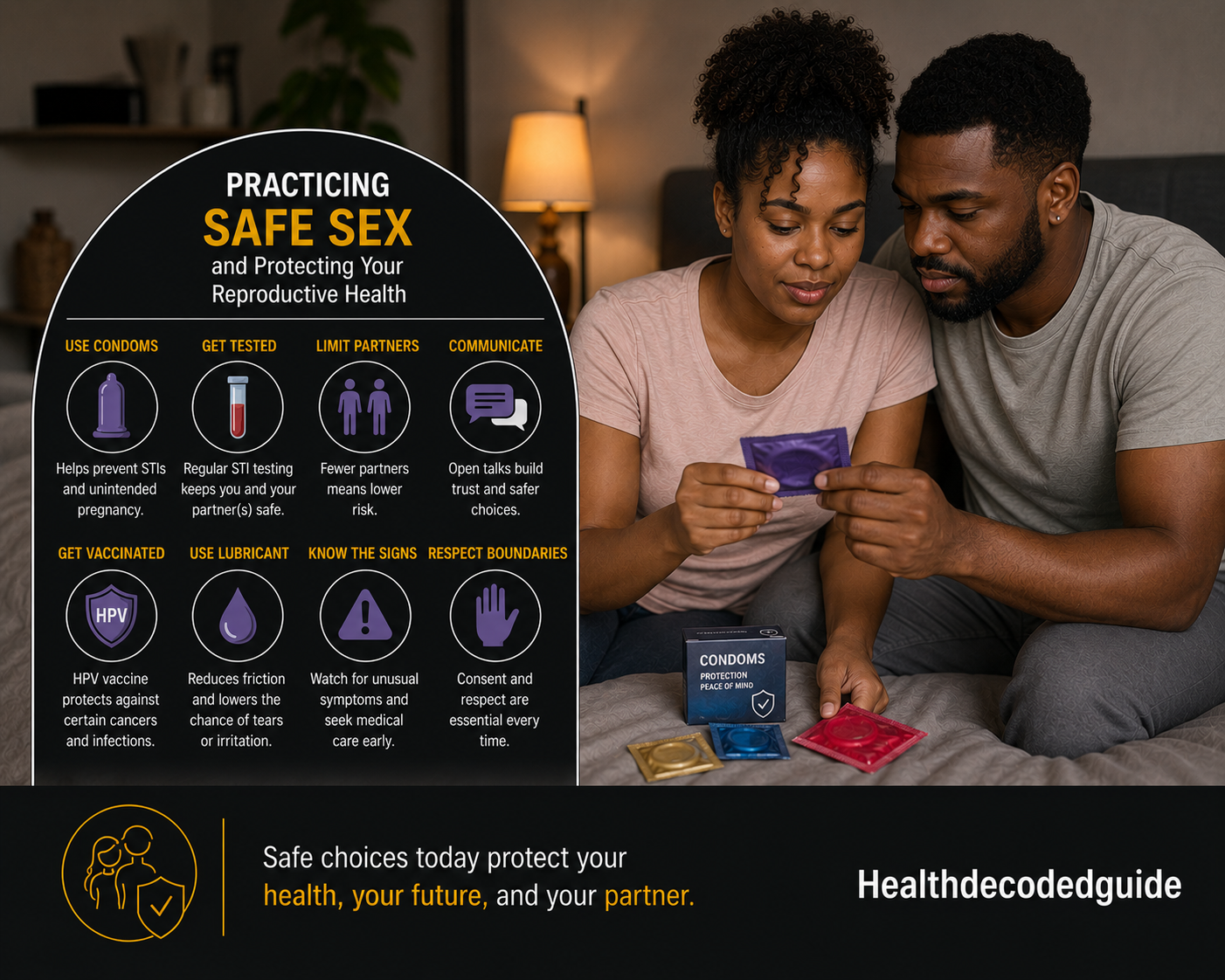
• use condoms consistently and correctly
• attend STI testing when appropriate
• avoid sharing sex toys without cleaning
• communicate openly about sexual health and protection
Supportive Measures
• prioritize regular reproductive health checkups
• seek accurate medical information
• avoid relying only on myths or online misinformation
• seek help early if symptoms develop
👉 Early testing and treatment may reduce complications and transmission.
9️⃣ Diagnosis
• STI testing and physical examination
• urine, blood, or swab testing depending on symptoms
• reproductive health assessment when needed
👉 Some infections require screening even without symptoms.
🟢 Important message
Practicing safer sex is an important part of protecting reproductive and long-term health.
Seeking information, testing, or medical support should never be a source of shame.
👉 Accurate knowledge and prevention may help protect fertility, relationships, and overall health.
FAQ
• What is safe sex?
Practices that help reduce STI transmission and unintended pregnancy risk.
• Do condoms protect against STIs?
Yes. Condoms help reduce the risk of many sexually transmitted infections.
• Can someone have an STI without symptoms?
Yes. Many infections may remain silent initially.
• Why is STI testing important?
Testing may help detect infections early and reduce complications.
• Should reproductive health concerns be discussed with healthcare professionals?
Yes. Early evaluation and treatment are important.
🔗 Related Health Topics
• Understanding Contraception and Women’s Health
• Burning During Urination
• Vaginal Itching
• Pelvic Pain
• Spotting Between Periods
📚 Medical References
- World Health Organization (WHO). Guidelines for the management of asymptomatic sexually transmitted infections.
- National Health Service (NHS). Sexually transmitted infections (STIs).
- Mayo Clinic. Sexually transmitted diseases (STDs) – Symptoms and causes.
- Centers for Disease Control and Prevention (CDC). How to Prevent STIs.
- American College of Obstetricians and Gynecologists (ACOG). How to Prevent Sexually Transmitted Infections (STIs).
- National Institute for Health and Care Excellence (NICE). Reducing sexually transmitted infections (NG221).
⚠️ Medical Disclaimer
This article is for educational purposes only and does not replace professional medical advice.
If you have symptoms or concerns, please consult a qualified healthcare professional.