Read in: English | Pidgin English
🩺 Medically reviewed by the Health Decoded Guide Editorial Team · Last reviewed: July 2026
🔍 Quick Summary
Contraception refers to methods used to reduce the chance of pregnancy.
Different contraceptive methods work in different ways and
may have different benefits, side effects, and effectiveness levels.
Choosing a method is a personal health decision that should consider:
safety, lifestyle, medical history, and reproductive goals.
1️⃣ Introduction
Contraception is an important part of reproductive and women’s health.
• some methods help prevent pregnancy temporarily
• certain contraceptives may also help manage heavy periods, painful cramps, or hormonal symptoms
• no single method is perfect for everyone
👉 Understanding available options may help women make informed and safer health decisions.
2️⃣ How contraception works
Different contraceptive methods prevent pregnancy in different ways.
• some stop ovulation temporarily
• some block sperm from reaching the egg
• others affect the uterine environment or cervical mucus
👉 Effectiveness often depends on the method used and how consistently it is used.
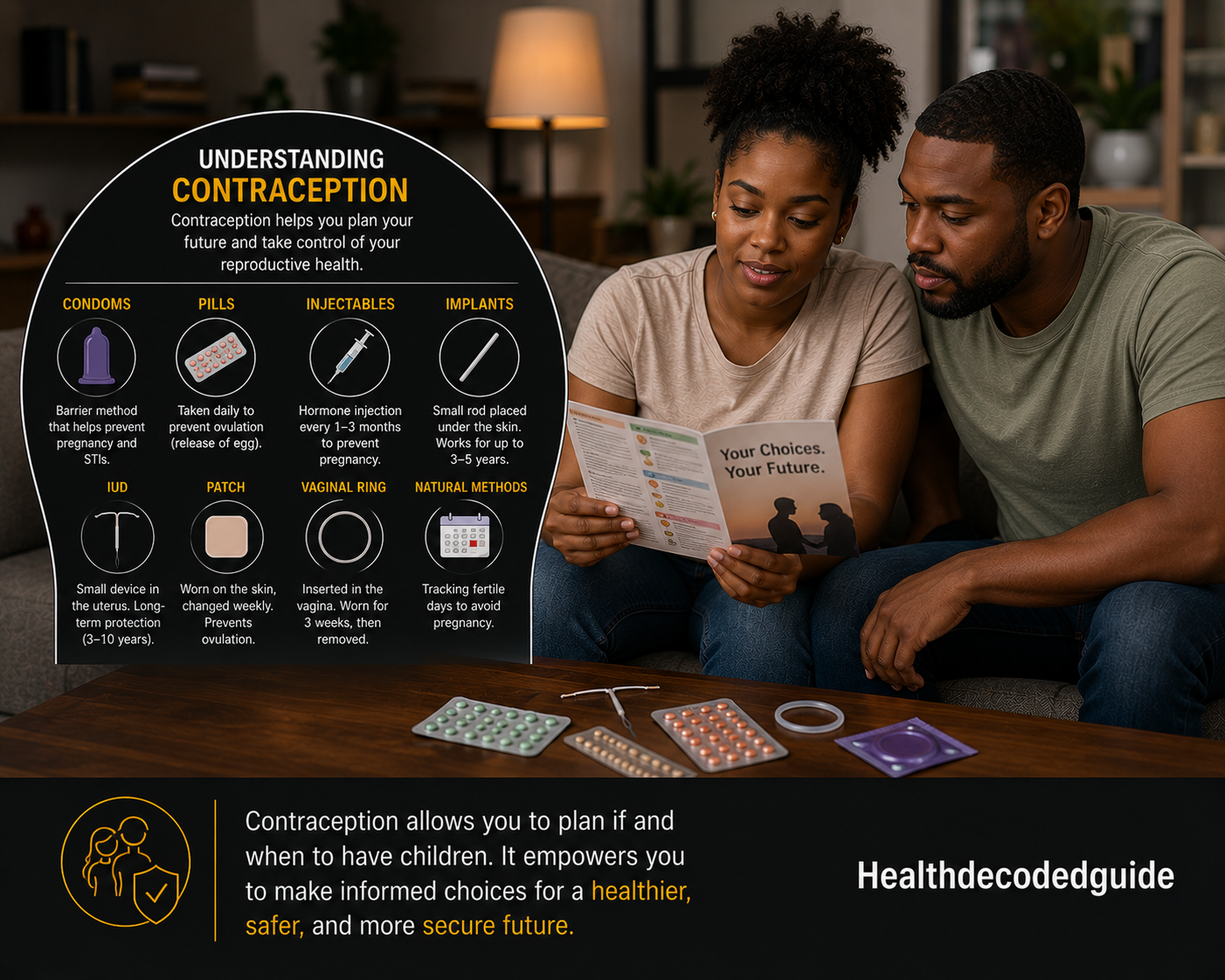
3️⃣ Common types of contraception
• Barrier methods
- condoms
- diaphragms
• Hormonal methods
- birth control pills
- injections, implants, or patches
• Long-acting reversible contraception
- hormonal or copper IUDs
- contraceptive implants
• Permanent methods
- surgical sterilization procedures
- usually intended for long-term decisions
👉 Some methods also help reduce menstrual symptoms or acne.
4️⃣ Common concerns and side effects
• irregular bleeding or spotting
• nausea or breast tenderness
• mood or weight-related changes in some women
👉 Side effects vary greatly depending on the person and contraceptive type.
5️⃣ Things to consider before choosing a method
• age and reproductive goals
• medical history and medications
• menstrual symptoms and hormone sensitivity
• ability to use the method consistently
👉 A healthcare professional can help identify safer options based on personal health history.
6️⃣ Associated health considerations
• smoking and blood clot risk
• migraines or high blood pressure
• history of blood clots or stroke
• STI protection needs
👉 Condoms are important because many other contraceptive methods do not protect against sexually transmitted infections (STIs).
7️⃣🩺 When it becomes important to seek medical advice 🚨
• severe chest pain
• shortness of breath
• severe headaches
• vision changes
• leg swelling
• severe abdominal pain
👉 These may indicate:
• rare but serious side effects such as blood clots
• conditions needing urgent medical evaluation
8️⃣ Management / safer use
• follow instructions carefully for the chosen method
• attend follow-up appointments when recommended
• discuss side effects or concerns early
• seek medical guidance before changing methods
Supportive Measures
• ask questions before starting contraception
• understand both benefits and limitations
• avoid relying on misinformation from social media alone
• prioritize regular reproductive health checkups
👉 Informed decisions often improve comfort, confidence, and safer contraceptive use.
9️⃣ Diagnosis / medical assessment before contraception
• medical history review
• blood pressure and health assessment
• discussion of menstrual patterns and risk factors
👉 Doctors often assess overall health before recommending certain hormonal methods.
🟢 Important message
Contraception is a personal healthcare decision, and different methods suit different people.
Understanding benefits, risks, side effects, and STI protection is important before choosing a method.
👉 Women deserve accurate, respectful, and non-judgmental reproductive health information.
FAQ
• What is contraception?
Methods used to reduce the chance of pregnancy.
• Do all contraceptives prevent STIs?
No. Condoms help reduce STI risk, but many other methods do not.
• Can contraception affect periods?
Yes. Some methods may reduce, stop, or irregularly change menstrual bleeding.
• Are hormonal contraceptives safe?
Many women use them safely, but medical history matters.
• Should a doctor be consulted before starting contraception?
Yes. Medical advice may help identify safer and more suitable options.
🔗 Related Health Topics
• Irregular Periods
• Heavy Menstrual Bleeding
• PCOS/PMOS
• Spotting Between Periods
• Women’s Health
📚 Medical References
- World Health Organization (WHO). Family planning/contraception methods.
- National Health Service (NHS). Contraception guide.
- Mayo Clinic. Birth control options: Things to consider.
- American College of Obstetricians and Gynecologists (ACOG). Birth Control.
- National Institute for Health and Care Excellence (NICE). Long-acting reversible contraception (CG30).
- Centers for Disease Control and Prevention (CDC). Contraception and Birth Control Methods.
⚠️ Medical Disclaimer
This article is for educational purposes only and does not replace professional medical advice.
If you have symptoms or concerns, please consult a qualified healthcare professional.