

Read in: English | Pidgin English
🩺 Medically reviewed by the Health Decoded Guide Editorial Team · Last reviewed: July 2026
🔍 Quick Summary
Osteoarthritis is the most common type of arthritis. It happens when the protective cartilage that cushions the ends of bones gradually wears down.
It can cause joint pain, stiffness and reduced movement, but early treatment and lifestyle changes can help relieve symptoms and maintain joint function.
1️⃣ Introduction
Osteoarthritis is a long-term joint condition that becomes more common with age.
• it usually affects the knees, hips, hands and spine
• symptoms often develop gradually over many years
• it is different from inflammatory arthritis such as rheumatoid arthritis
👉 Osteoarthritis is caused by wear, ageing and joint changes—not by the immune system attacking the joints.
2️⃣ How it happens
Healthy cartilage allows bones to move smoothly against each other.
• cartilage gradually becomes thinner
• bones begin to rub together more
• the joint may develop inflammation and extra bone growth (bone spurs)
👉 These changes can lead to pain, stiffness and reduced joint movement.
3️⃣ Types
Primary osteoarthritis
• develops gradually with ageing
• no clear underlying cause
Secondary osteoarthritis
• develops after joint injury or another medical condition
• may occur at a younger age
👉 Both types produce similar symptoms and are managed in similar ways.
4️⃣ Common causes
Ageing and joint wear
• increasing age
• repeated stress on joints over many years
Other risk factors
• previous joint injuries
• obesity
• family history
• certain occupations or sports
👉 Keeping a healthy weight can reduce pressure on weight-bearing joints.
5️⃣ Symptoms
• joint pain during or after activity
• stiffness after resting, especially in the morning for less than 30 minutes
• reduced joint movement
• grinding or cracking sensation during movement
• swelling around affected joints
👉 Osteoarthritis pain often becomes worse with activity and improves with rest.
6️⃣ Associated symptoms or complications
• difficulty walking
• reduced ability to perform daily activities
• muscle weakness around affected joints
• joint deformity in advanced disease
• reduced quality of life due to chronic pain
👉 Increasing pain and reduced mobility can affect independence if left untreated.
7️⃣ 🩺 When it becomes dangerous 🚨
• sudden severe swelling and redness of a joint
• inability to bear weight after an injury
• fever together with a painful swollen joint
• sudden severe joint deformity
👉 These may indicate:
• infection, fracture or another serious joint problem
• need for urgent medical assessment
8️⃣ Management / treatment
• regular low-impact exercise and physiotherapy
• weight management where appropriate
• pain-relieving medicines as recommended
• joint supports or walking aids when needed
• joint replacement surgery for severe cases
👉 Staying active is one of the best ways to protect joint function.
9️⃣ Diagnosis
• medical history and physical examination
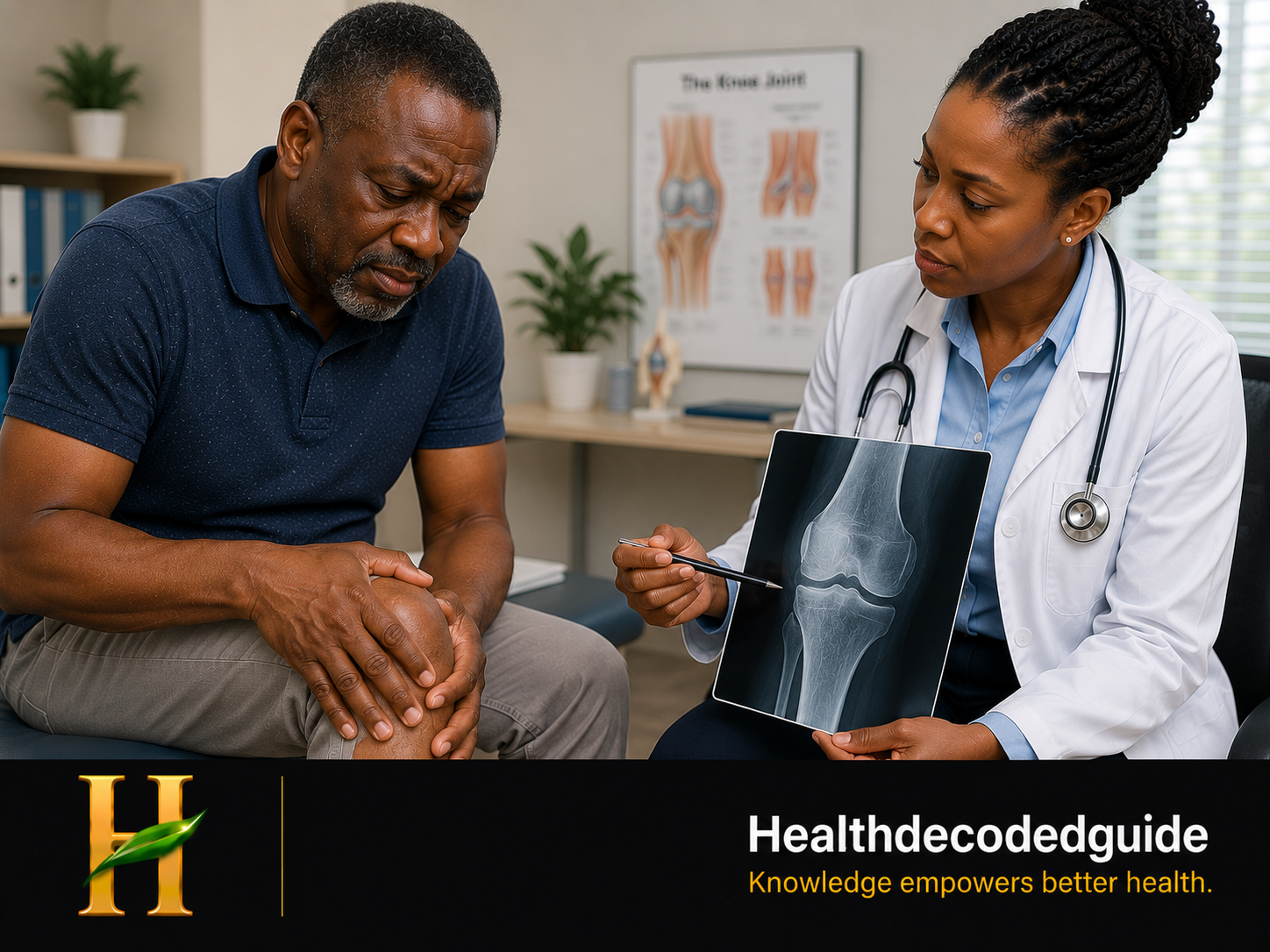
• X-rays of affected joints
• blood tests may help rule out other types of arthritis
👉 Osteoarthritis is usually diagnosed based on symptoms, examination and imaging.
🟢 Important Message
Joint pain is not always "just getting older."
👉 Early treatment and healthy lifestyle changes can help reduce pain and keep you active for longer.
FAQ
• Can osteoarthritis be cured?
No. However, treatment can reduce pain and improve movement.
• Is exercise safe?
Yes. Regular low-impact exercise is one of the most effective treatments.
• Does cold weather cause osteoarthritis?
No. Some people notice worsening symptoms in cold weather, but it does not cause the disease.
• Can young people develop osteoarthritis?
Yes. It can occur after joint injuries or certain medical conditions.
🧠 Why We Delay
Many people believe painful joints are simply a normal part of getting older. Others avoid exercise because they worry movement will damage the joint even more.
Delaying treatment can lead to worsening pain, muscle weakness and reduced mobility. Simple measures such as exercise, weight management and early treatment can make a significant difference.
👉 Don't accept persistent joint pain as something you simply have to live with.
🔗 Related Health Topics
• Rheumatoid Arthritis
• Ankylosing Spondylitis
• Osteoporosis
• Knee Pain
• Leg Pain
• Lupus (SLE)
📚 Medical References
• National Health Service (NHS). Osteoarthritis.
• Centers for Disease Control and Prevention (CDC). Osteoarthritis.
• Mayo Clinic. Osteoarthritis.
• National Institute for Health and Care Excellence (NICE). Osteoarthritis in over 16s: diagnosis and management.
• Versus Arthritis. Osteoarthritis.
⚠️ Medical Disclaimer
This article is for educational purposes only and does not replace professional medical advice.
If you have concerning symptoms, risk factors or abnormal test results, consult a healthcare professional.