

Ebola Virus Disease: Wetin E Be, How E Dey Spread, and Warning Signs
Read in: English | Pidgin English
Published on May 27, 2026 at 8:50 PM
🩺 Medically reviewed by the Health Decoded Guide Editorial Team· Last reviewed: July 2026
🚨 Wahala Update: Ebola Outbreak Still Dey Happen (as of July 2026)
Right now, Ebola dey spread for some parts of Democratic Republic of Congo (DRC) and Uganda. Na Bundibugyo virus dey cause am, and dis one na one of the biggest outbreak wey don ever happen.
If you dey travel go or come from any of dis places, make you check current advice from CDC or WHO before you travel. After you don travel, watch your body well for 21 days—if any symptom show, go hospital sharp sharp.
👉🏾 Dis outbreak news fit change as time dey go, so make you no rely only on dis article—always check the latest update from health authorities.
🔍 Quick Breakdown
Ebola na dangerous sickness wey virus dey cause, and e fit spread when person
touch infected body fluids like blood, vomit, sweat, or stool.
For some people:
• high fever fit start suddenly
• serious body weakness
• muscle and body pain fit happen
• vomiting and running stomach fit follow
As d sickness dey get worse:
• serious dehydration
• bleeding
• and even organ failure
fit happen for some cases.
🚨 Ebola fit become very serious if person no treatment am quick.
👉🏾 Different Ebola outbreaks don happen across Africa over the years,
and health experts still dey monitor newer strains and variants during outbreaks
🟧 How Ebola dey spread?
Ebola fit spread through direct contact with:
• blood
• vomit
• diarrhea
• urine
• saliva
• semen
Contact with infected animals fit also spread am.
👉🏾 Ebola no dey usually spread through far-distance contact like common cold or flu infections.
🟧 Different Ebola virus types
• Zaire Ebola virus
→ dis one na of d deadliest and most common outbreak types
• Sudan Ebola virus
→ na dis one cause d recent outbreaks for East Africa
• other Ebola species
→ dey less common but still dangerous
👉🏾 Scientists still dey monitor newer Ebola variants and outbreaks.
🟧 Common symptoms
• fever
• weakness
• headache
• vomiting
• diarrhea
• body pain
👉🏾 Early symptoms fit first look like common cold, malaria or typhoid.
🟧 Severe symptoms
• bleeding from d nose, mouth, gums, or sometimes even from d anus
• confusion
• severe dehydration
• Person fit collapse
• organ problems
👉🏾 No be everybody wey get Ebola dey get serious bleeding.
🟧 Who fit dey more at risk?
• people wey dey take care of patients wey get d virus
• healthcare workers without proper protection
• close contact with family members wey get d virus
👉🏾 Outbreak control and infection prevention dey very important.
🟧 Real life example
Few days before symptoms start:
• Munira spend time with one friend wey she think say get ordinary cold-like sickness
Later:
• d friend condition suddenly worsen
• doctors later discover say na Ebola infection
Some days after:
• Munira begin feel feverish
• body pain and weakness start
• she just dey feel somehow, tired
At first:
• she think say na malaria or stress
• she try rest for house and take normal medicine (paracetamol)
As days pass:
• vomiting begin
• diarrhea start
• severe weakness come worsen
Later:
• people around am begin notice say the sickness no be ordinary fever, tell her to go hospital
When Munira reach hospital:
• doctors quickly isolate am because of possible Ebola exposure
👉🏾 Early Ebola symptoms fit first look like malaria or other common infections before more dangerous symptoms show later.
🟧 Wetin fit help prevent Ebola
• avoid contact with infected person body fluids
• follow public health instructions during outbreaks
• abeg go hospital fast fast after you meet person wey get d virus or you get symptoms
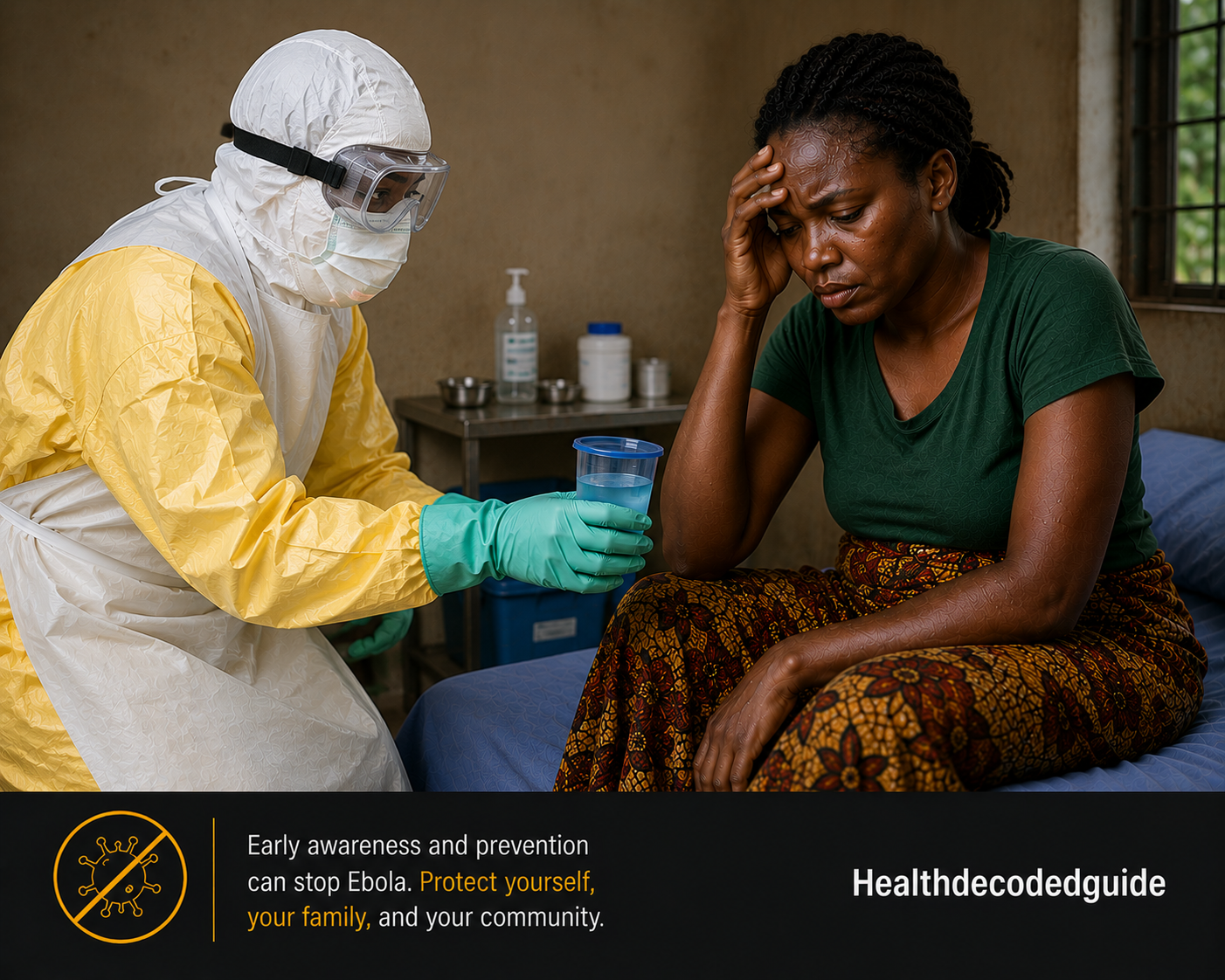
• use protective equipment especially if you dey work with patients during outbreaks
👉🏾 Early isolation and treatment fit help reduce spread.
🟢 Final reassurance
Ebola serious, but accurate information and fast medical response fit help save lives and reduce outbreaks.
👉🏾 Early medical care important if symptoms happen after possible exposure.
📚 Reference
For full medical references, see English version of this article.
⚠️ Disclaimer
This article na for education only. E no replace medical advice from qualified healthcare professional.
If symptoms serious or possible Ebola exposure happen, abeg go do urgent medical check up.
🔗Related Health Topics
• Viral Hemorrhagic Fever
• Fever and Chills
• Dehydration
• Sepsis
• Infection Prevention
• Malaria
• Covid-19
👉🏾 If you still get questions or Prefer full medical detail? Read English version