Pelvic Inflammatory Disease (PID) | Symptoms, Causes & Treatment
Pidgin English
Published on August 15, 2026 at 9:10 PM
🩺 Medically reviewed by Marvin Brown-Gogo, MD, Family Medicine Physician | Medical Reviewer · Last reviewed: September 2026
🔍 Quick Breakdown
Pelvic inflammatory disease, wey doctors dey call PID, na infection wey affect d upper reproductive organs like d womb and fallopian tubes.
Sometimes e fit affect d ovaries and nearby tissues too.
PID fit treat with antibiotics. But if treatment delay, d infection fit damage d fallopian tubes and increase d chance of fertility problems, long-term pelvic pain or ectopic pregnancy.
👉🏾 Early treatment important because e fit clear d infection before more damage happen.
🟧 Wetin be PID and which part of body e dey affect?
Normally, d upper reproductive organs dey protected from plenty of d bacteria wey dey around d vagina.
PID happen when bacteria travel upwards from d vagina or cervix enter areas where dem no suppose reach.
D infection fit affect:
• womb (uterus)
• fallopian tubes
• ovaries
• tissues around d reproductive organs
PID no be just ordinary lower belle pain—na infection wey need proper medical treatment.
🟧 Wetin dey happen for your body?
When bacteria travel upwards:
• infection fit enter the womb
• inflammation fit reach d fallopian tubes
• surrounding tissues fit become swollen and painful
• as the area heal, scar tissue fit develop for some people
If serious infection gather together around the fallopian tube or ovary, abscess fit form.
Scar tissue inside the fallopian tubes na one reason PID fit later affect fertility or increase the risk of ectopic pregnancy.
🟧 Why e dey happen?
• Chlamydia or gonorrhea
→ these sexually transmitted infections (STIs) na important causes of PID, especially when dem never treat.
• Other bacteria
→ bacteria wey normally dey around the vagina fit sometimes travel upwards and contribute to PID.
• Infection around some procedures
→ rarely, infection fit develop after certain procedures involving the cervix or womb.
👉🏾 No be every PID come from STI—but STI testing dey important when doctor suspect PID.
🟧 How you go know say e dey?
Some people get obvious symptoms. For others, the symptoms fit mild enough to ignore.
You fit notice:
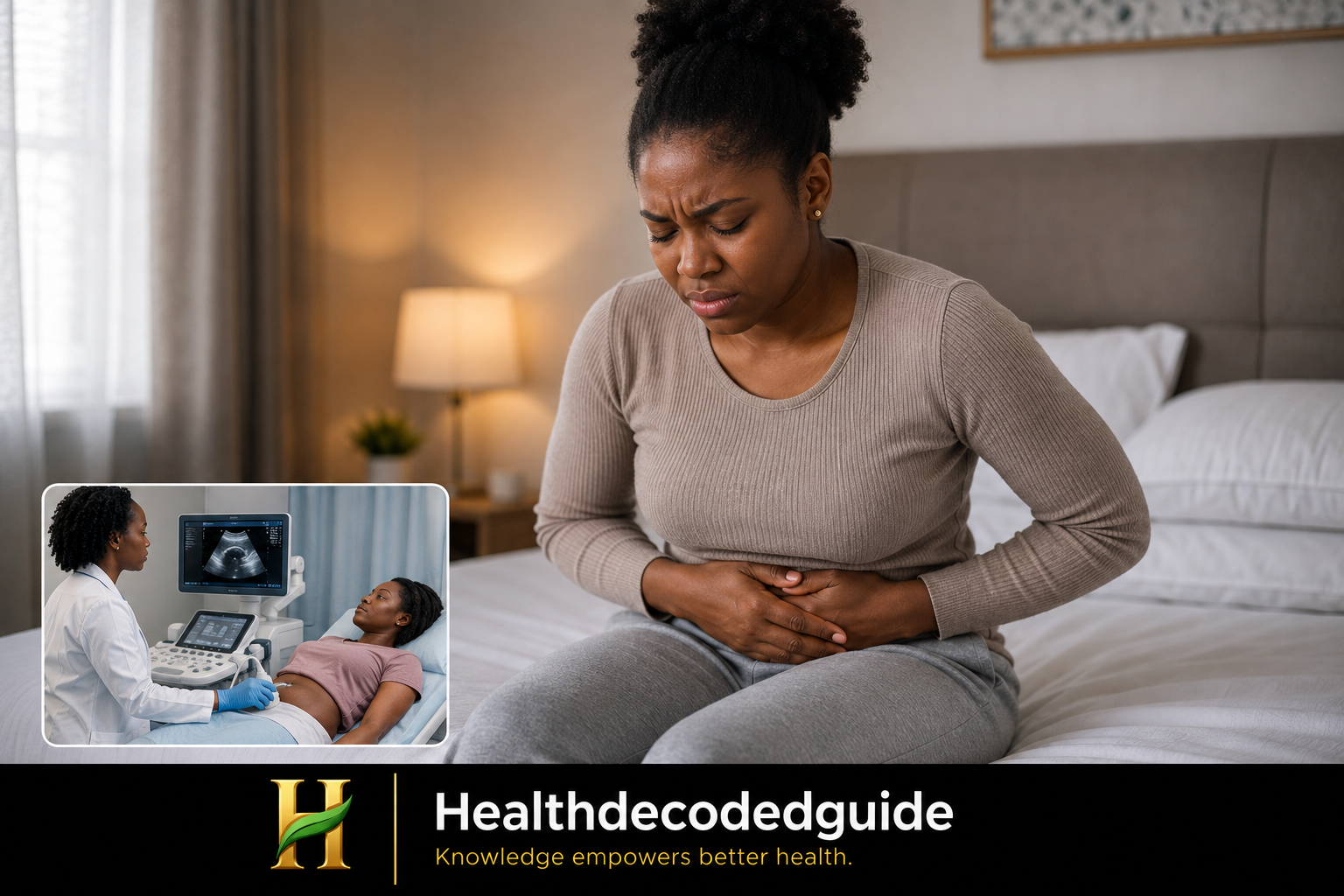
• pain for lower belle or pelvis
• unusual or plenty vaginal discharge
• pain during sex
• bleeding between periods
• bleeding after sex
• pain when you dey urinate
• fever
Sometimes person fit get PID without serious pain.
No wait for pain to become unbearable. Mild but persistent symptoms still deserve medical check.
🟧 Wetin you fit do
If healthcare professional suspect or diagnose PID:
• start d antibiotics as prescribed
• complete d full treatment even if you don feel better
• do STI testing if dem recommend am
• make recent sexual partner(s) get assessment and treatment when necessary
• avoid sex until treatment complete and healthcare advice say e safe
For serious infection, person fit need hospital treatment.
👉🏾 Antibiotics fit treat d infection, but dem no fit remove scar tissue wey don already form—na why early treatment matter.
🟧 Real life example
Amaka begin notice lower belle pain wey she first think say na her period dey come.
But after some days:
• the pain no disappear
• vaginal discharge begin dey different from her normal discharge
• sex begin dey painful
She feel uncomfortable to discuss d discharge and sexual symptoms, so she first decide to wait.
When d pain continue, she visit clinic. After examination and tests, doctor suspect PID and start treatment.
After she understand, she decide to:
• complete all her antibiotics
• do d recommended STI tests
• follow d advice about partner testing and treatment
👉🏾 The symptoms improve after treatment, and Amaka understand why delaying because of embarrassment no help the situation.
PID na medical infection—not something to feel ashamed about.
🟧 🩺 When you suppose go hospital 🚨
• severe or quickly worsening lower belle pain
• high fever or serious chills
• vomiting wey no dey stop
• fainting or serious dizziness
• severe pelvic pain if you dey pregnant or pregnancy fit possible
• severe pain with heavy vaginal bleeding
👉🏾 These signs fit mean severe PID, abscess, ectopic pregnancy or another urgent condition. Seek medical care quickly.
🟢 Final Reassurance
PID fit treat, and plenty people recover well when dem get the correct antibiotics early.
Getting PID no automatically mean say person go get fertility problem. But repeated or untreated infection fit increase the risk of complications.
👉🏾 If you get persistent pelvic pain with unusual discharge, bleeding or pain during sex, getting checked early fit help protect your reproductive health.
📚 Reference
For full medical references, see the English version of this article.
⚠️ Disclaimer
This article na for education only. E no replace doctor advice.
If you suspect say you get PID or you get worrying pelvic pain, unusual discharge, bleeding or fever, abeg see healthcare professional.
🔗 Related Health Topics
• Pelvic Pain
• Chlamydia
• Gonorrhea
• Ectopic Pregnancy
• Sexually Transmitted Infections (STIs)
👉🏾 If you still get questions or prefer full medical detail, read the English version.