When Woman Pelvic Organs Begin Shift Downward inside D Vagina
Read in: English | Pidgin English
Published on June 29, 2026 at 6:44 PM
🩺 Medically reviewed by the Health Decoded Guide Editorial Team · Last reviewed: July 2026
🔍 Quick Breakdown
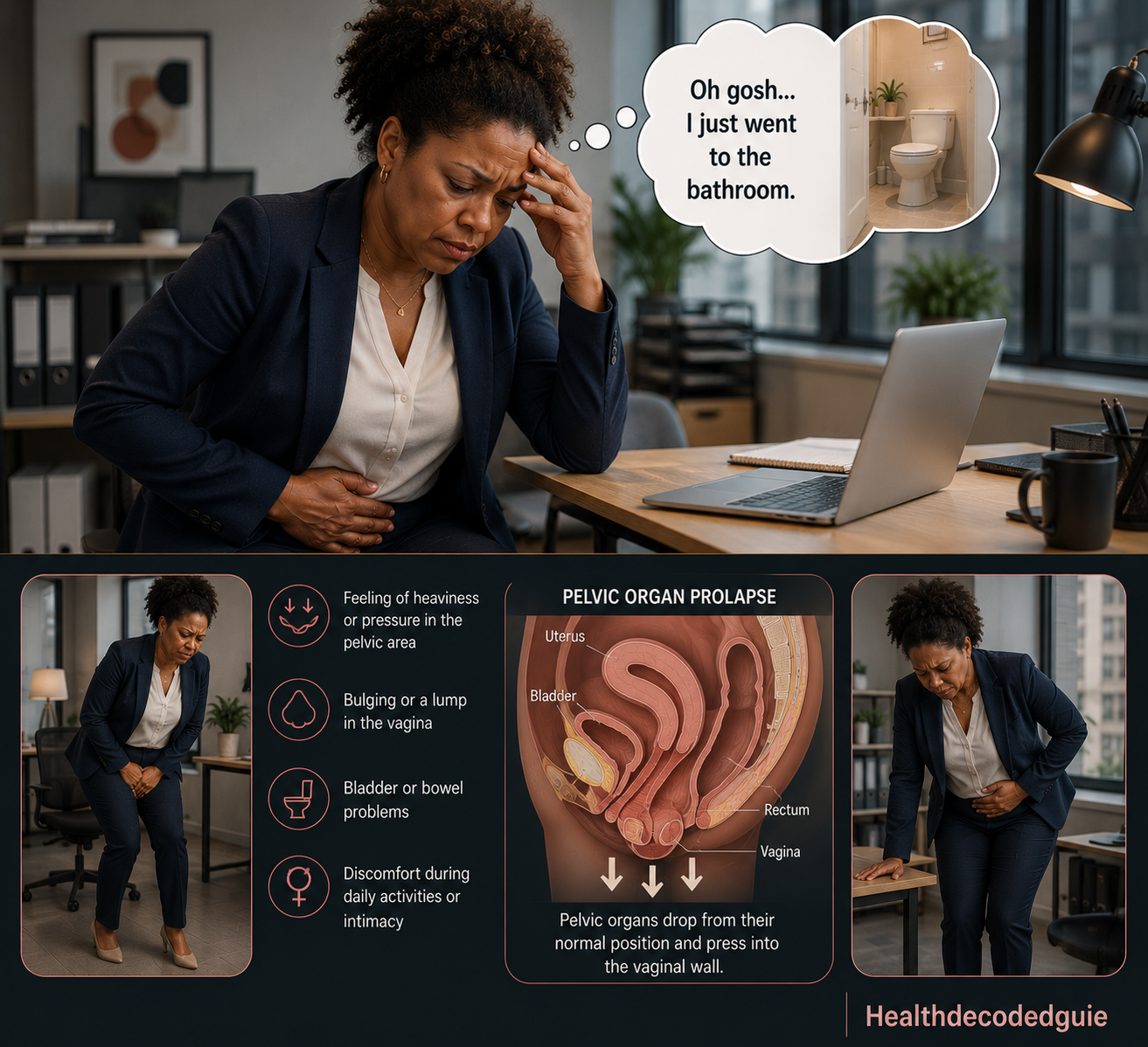
Pelvic organ prolapse happen when:
• d muscles and tissues wey dey support d pelvic organs weaken
E fit make d:
• bladder
• womb
• bowel
begin dey press downward.
Some women fit feel:
• heaviness
• pressure
• bulging sensation
🟧 How e dey take start?
Normally:
• d pelvic floor muscles dey support d organs properly
But after:
• childbirth
• aging
• repeated pressure
support tissues fit weaken gradually.
As support reduce:
• organs fit begin move downward.
👉🏾 Symptoms often worsen after standing for long periods.
🟧 Why e dey happen?
• Childbirth
→ Pelvic muscles and ligaments fit stretch or
weaken during pregnancy and vaginal delivery
• Aging or menopause
→ As women grow older, d tissues wey support
d pelvic organs gradually become weaker.
• Repeated pressure on the pelvic floor
→ This one fit happen because of:
- chronic constipation and straining during toilet visits
- chronic cough (like from smoking or lung disease)
- heavy lifting over many years
- obesity
- repeated pregnancies
• Previous pelvic surgery
→ Some pelvic operations fit weaken d tissues wey dey support d pelvic organs.
👉🏾 Over time, if the pelvic floor muscles and ligaments become too weak, d bladder, womb (uterus), or bowel fit begin drop down into d vagina.
🟧 How you go know say e serious?
• severe pelvic pain
• inability to urinate properly
• tissue coming out from vaginal area
👉🏾 These symptoms need urgent medical evaluation.
🟧 Wetin you fit do by yourself or for house
• pelvic floor exercises
→ strengthen support muscles
• avoid heavy straining
→ reduce pressure on pelvic tissues
• maintain healthy body weight
→ reduce stress on pelvic area
👉🏾 Early treatment fit slow worsening and improve comfort.
🟧 Real life example
After menopause, Mbëmbë notice say:
• pelvic area dey feel heavy often
• she dey feel pressure after standing long
• bladder control begin change
Later:
• doctor explain say na pelvic organ prolapse na im be d problem
With exercises and treatment:
• symptoms improve gradually
👉🏾 Plenty women get pelvic prolapse symptoms quietly without talking about am.
🟧🩺 When you suppose go hospital 🚨
• severe pain
• bleeding or wounds around protruding tissue
• inability to urinate properly
👉🏾 These signs fit mean severe prolapse complications.
🟢 Final reassurance
Pelvic organ prolapse common, especially after childbirth or with age.
Many women improve with exercises, physiotherapy, and proper medical support.
👉🏾 Pelvic heaviness or bulging no be something you must silently endure.
📚 Reference
For full medical references, see English version of this article.
⚠️ Disclaimer
This article na for education only. E no replace medical advice from qualified healthcare professional.
If symptoms serious or no go, abeg see healthcare professional.
🔗Related Health Topics
• Pelvic Floor Weakness
• Urinary Incontinence in Women
• Frequent Urination in Women
• Overactive Bladder
• Pelvic Floor Exercise
• Physiotherapy and Rehabilitation
• Healthy Aging
👉🏾 If you still get questions or Prefer full medical detail? Read English version