

Restless Legs Syndrome (When Your Legs No Dey Let You Rest)
Pidgin English
Published on August 20, 2026 at 7:15 PM
🩺 Medically reviewed by Marvin Brown-Gogo, MD, Family Medicine Physician | Medical Reviewer · Last reviewed: September 2026
🔍 Quick Breakdown
You don ever lie down ready to sleep, but your legs just no gree rest?
You fit feel like small ants dey waka for your legs, pins dey prick you, something dey pull inside, or just one strange uncomfortable feeling wey make you wan move your legs.
Once you move, stretch or waka small, d feeling fit reduce—but when you rest again, e fit come back.
E fit happen with restless legs syndrome (RLS).
D feeling usually worse when person dey rest, especially for evening or night, and moving the legs fit temporarily make am better.
👉🏾 One important clue be say: rest make am worse, movement dey make am better.
🟧 Wetin really be restless legs syndrome?
Restless legs syndrome no simply mean say person leg dey shake.
Na condition wey cause strong feeling to move d legs, usually because d legs dey feel uncomfortable.
People dey describe the feeling differently:
• something dey crawl inside d legs
• tingling ( pins dey prick you) or person dey pull d leg
• leg pain or strange feeling
• itching wey no really dey for the skin
D feeling dey usually starts or gets worse when you sit or lie down, especially for evening or for night.
But once you stand, walk or stretch, e fit reduce for some time.
Na d combination of uncomfortable feeling plus strong urge/feeling to move dey make RLS different from ordinary restlessness.
🟧 Wetin dey happen for your body?
Doctors never completely understand everything wey dey cause RLS.
But research suggest say d condition involve how d brain dey control movement,
and iron and dopamine activity inside d nervous system dey play important role inside.
This na also why low iron levels fit contribute to RLS for some people.
RLS no be simply because your legs “too active.” D nervous system and how d brain handles movement signals dey somehow play important roles.
🟧 Why e dey happen?
For some people, no clear underlying cause dey.
For others, certain things fit contribute.
• Iron deficiency
→ low iron stores fit cause or worsen RLS for some people.
• Pregnancy
→ symptoms fit begin or become worse during pregnancy, especially later months.
• Kidney disease
→ some people with chronic kidney disease develop RLS.
• Family history
→ the condition fit run for some families.
• Some medicines
→ certain medicines fit trigger or worsen symptoms.
• Other nerve or medical problems
→ sometimes another condition fit produce similar symptoms and need proper assessment.
👉🏾 Because low iron fit contribute, healthcare professional fit recommend blood tests—but no just start iron tablets yourself without checking whether you actually need them.
🟧 How you go know say e fit be RLS?
The pattern na one of d biggest clues.
RLS typically:
• starts or gets worse when you rest
• improves temporarily when you move
• dey worse for evening or nighttime
This one different from [leg cramp], where one muscle suddenly tighten and cause pain.
If this pattern dey happen repeatedly—especially if e dey disturb your sleep—tell healthcare professional exactly wetin you dey experience.
🟧 Wetin you fit do by yourself to improve am?
For mild symptoms, some things fit help:
• keep regular sleeping and waking time
• dey active during daytime
• walk or gently stretch when symptoms start
• try gentle massage or warmth
• reduce caffeine, especially for evening.
• notice whether any medicine seem to make symptoms worse
If symptoms persist, healthcare professional fit check for underlying causes such as iron deficiency.
Prescription treatment dey available for people wey symptoms significantly affect sleep or everyday life.
👉🏾 Treatment depend on d cause and severity—wetin work for one person no necessarily be d right treatment for another.
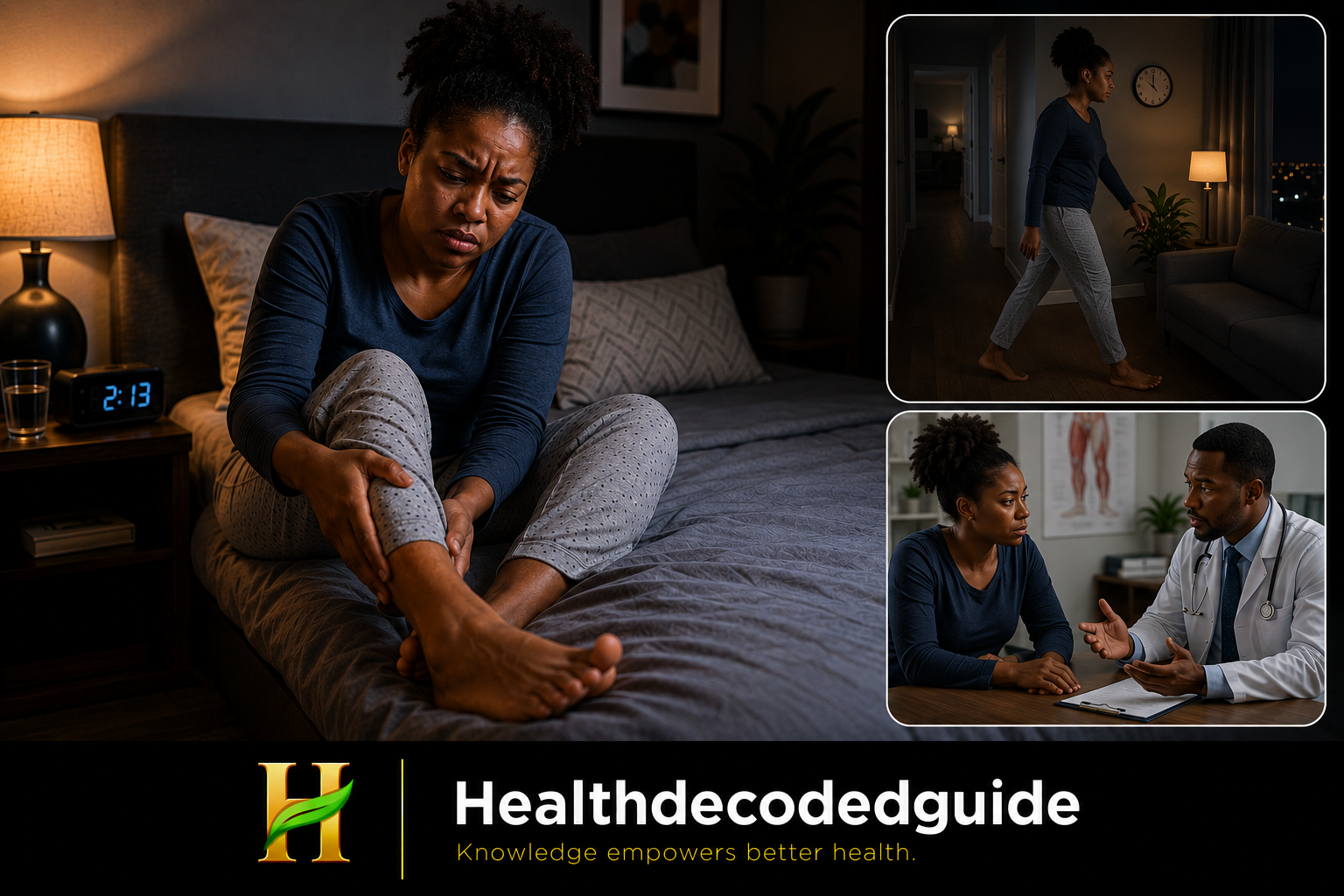
🟧 Real life example
For some weeks, Ngozi notice one strange thing.
Every night, just when she don arrange pillow, switch off light and ready to sleep, her legs go start their own business.
E dey feel like tiny ants dey crawl deep inside them.
She go turn, stretch, rub her legs together.
Nothing.
She just feel say she must move her legs. Once she stand up and waka small around d room, d feeling go calm down.
“Finally.”
She go return to bed…
Few minutes later, d feeling don come back again.
At first, Ngozi blame tiredness.
But night after night, something wey suppose be bedtime begin turn to walking up and down d room when everybody else dey sleep.
One night, after she don stand up for d third time, she look d clock.....2:17 a.m.
na den she begin dey wonder...
“Wait o… this thing no be ordinary tiredness. Abi na spiritual matter?”
D next day, she call her pastor.
Lucky for Ngozi, her pastor na also doctor.
After she explain how d strange feeling dey start when she rest at night and how walking dey temporarily relieve am, he tell her:
“This pattern fit happen with something dem dey call restless legs syndrome—but no conclude yet. Make you go clinic make dem assess you properly first.”
Ngozi pause. “Restless wetin?” 😭
For clinic, d healthcare professional ask more about when d feeling dey happen, wetin makes am better or worse, review her medicines and arrange appropriate tests, including checking her iron levels.
After proper assessment, d pattern fit with restless legs syndrome (RLS), and dem discuss possible contributing factors and how to manage am.
👉🏾 Sometimes d biggest clue no be just wetin your legs dey feel—na d pattern.
🟧 🩺 When you suppose go hospital
Arrange medical assessment if:
• symptoms dey disturb your sleep
• d problem dey happen frequently or dey become worse
• daytime tiredness begin affect your normal activities
• symptoms start after you begin or change medicine
• you suspect say you fit get iron deficiency
• symptoms during pregnancy become difficult to manage
But if one leg suddenly:
• swell
• become red or hot
• develop severe pain
or you develop new leg weakness, seek prompt medical assessment because these no be typical signs of RLS.
👉🏾 Not every uncomfortable leg symptom na restless legs syndrome. Sudden swelling, redness, severe pain or weakness need another explanation.
🟢 Final Reassurance
Restless legs syndrome fit sound like small problem until na every night your legs dey prevent you from sleeping.
The good thing be say possible causes fit dey investigated and treatment dey available.
If rest makes your legs uncomfortable, movement repeatedly makes them better and d problem dey worse at night, tell healthcare professional exactly that pattern.
📚 Reference
For full medical references, see the English version of this article.
⚠️ Disclaimer
This article na for education only. E no replace doctor advice.
If uncomfortable leg symptoms repeatedly disturb your sleep, become worse or come with other worrying symptoms, abeg see healthcare professional.
🔗 Related Health Topics
• Insomnia
• Iron Deficiency Anaemia
• Tremor
• Leg Cramps
• Sleep Problems
👉🏾 If you still get questions or prefer full medical detail, read the English version.