

🌍English
Published on February 22, 2026
🩺 Medically reviewed by Priscilla Afiakurue, MD, Family Medicine Physician | Founder & Lead Medical Editor · Last reviewed: September 2026
🔍 Quick Summary
Ear infections are especially common in babies and young children.
A child may complain of ear pain, but younger children may instead become irritable, sleep poorly, eat less or seem not to hear properly. Most childhood ear infections affect the middle ear behind the eardrum, often after a cold, and many mild cases improve without antibiotics.
👉 Ear pulling alone does not prove that a child has an ear infection — the eardrum usually needs to be examined.
1️⃣ Why are ear infections so common in children?
The middle ear connects to the back of the nose and throat through a small passage called the Eustachian tube.
After a cold, this tube can swell and block. Fluid then becomes trapped behind the eardrum, creating an environment where viruses or bacteria can cause infection.
Children are more prone because their Eustachian tubes are smaller and block more easily.
2️⃣ How can you tell if your child may have an ear infection?
Older children may simply say their ear hurts.
Babies and toddlers may show less obvious signs:
• crying or unusual irritability
• difficulty sleeping
• reduced appetite
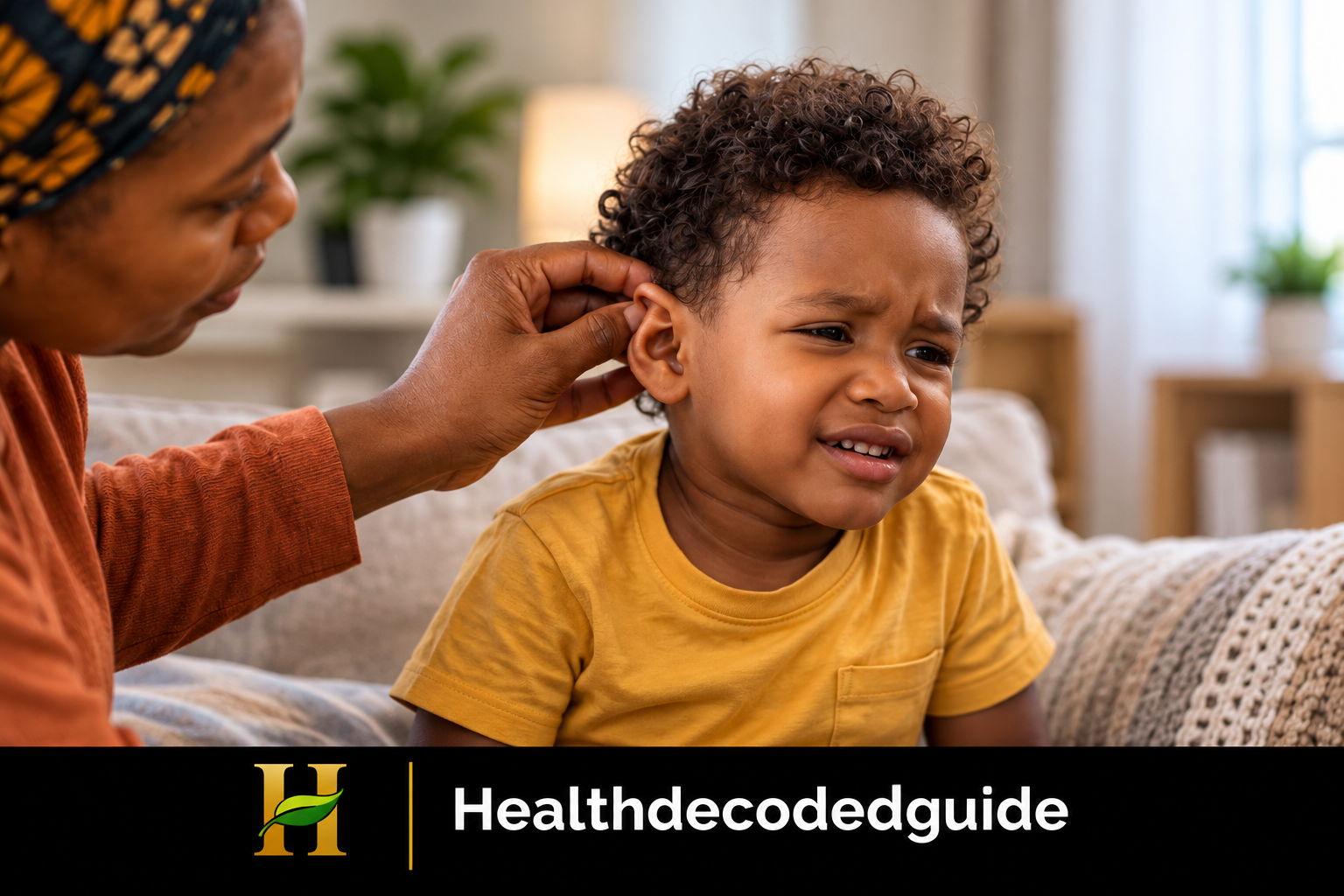
• rubbing or pulling at an ear
• fever
• muffled hearing or not responding normally to sounds
• fluid or pus coming from the ear
Ear pulling can also happen with teething, tiredness or simply because a child has discovered their ears, so it should not be used alone to diagnose infection.
3️⃣ Does every child need antibiotics?
No.
Many mild middle ear infections improve as the child's immune system clears the infection.
Depending on the child's age, severity and examination findings, a healthcare professional may recommend:
• pain relief and observation
• watchful waiting for around 2–3 days
• antibiotics when infection is severe, persistent or otherwise more likely to benefit from treatment
👉 Pain control is important whether or not antibiotics are prescribed.
4️⃣ What can parents do at home?
While your child is recovering:
• encourage fluids
• let them rest
• use age-appropriate pain or fever medicine as advised
• monitor whether pain and fever are improving
• do not put cotton buds or other objects inside the ear
Never give aspirin to children because of the risk of Reye syndrome.
If antibiotics are prescribed, give them exactly as directed.
5️⃣ What about fluid and hearing after the infection?
Fluid can remain behind the eardrum for some time after the infection has improved.
This may temporarily make hearing seem muffled.
Arrange further assessment if:
• hearing problems persist
• speech or language development seems affected
• infections happen repeatedly
👉 A child can feel better before the fluid behind the eardrum has completely disappeared.
6️⃣ 🩺 When should your child see a healthcare professional? 🚨
Arrange medical assessment if:
• ear pain is severe or getting worse
• symptoms continue beyond about 2–3 days
• fluid, pus or blood comes from the ear
• hearing is reduced
• fever is high or your child seems significantly unwell
A baby younger than 3 months with a temperature of 38°C (100.4°F) or higher needs prompt medical assessment.
Seek urgent help if your child develops:
• swelling, redness or marked tenderness behind the ear
• an ear that begins sticking outward because of swelling
• severe headache or stiff neck
• unusual drowsiness, confusion or difficulty walking
Swelling behind the ear can be a sign of mastoiditis, a rare but serious complication.
🟢 Important Message
Ear infections are common in childhood, and most children recover well.
The useful question is not simply “Does my child have ear pain?” but whether they are improving, whether hearing is affected and whether any warning signs are developing.
👉 If your child is getting worse instead of better, get the ear checked.
FAQ
• Does ear pulling mean my baby has an ear infection?
Not necessarily. Babies also pull their ears when tired, teething or exploring.
• Can ear infections happen after a cold?
Yes. Colds can block the Eustachian tube and allow fluid to build up behind the eardrum.
• Can my child go to school with an ear infection?
The ear infection itself is not usually contagious, but the cold or virus that came before it may be. The child should also be well enough to participate normally.
• Can an ear infection affect speech?
Temporary fluid can reduce hearing. Persistent or recurrent hearing problems can affect speech and language development and should be assessed.
• Why does fluid sometimes come out of the ear?
Pressure behind the eardrum can sometimes cause a small perforation, allowing fluid or pus to drain. The child should be medically assessed.
🧠 Why We Delay
Parents may assume ear pulling is only teething, or may wait because the child cannot clearly explain where the pain is.
Most mild infections do settle, but persistent pain, discharge, hearing changes or a child who looks increasingly unwell should change the plan.
👉 Watch the child, not just the ear — behaviour and overall wellbeing often tell you when something is getting worse.
🔗 Related Health Topics
• Ear Infection
• Fever in Children
• Childhood Infections
• Hearing Loss Problem Children
• Sore Throat
📚 Medical References
● Centers for Disease Control and Prevention (CDC). Ear Infection Basics.
● Centers for Disease Control and Prevention (CDC). Preventing and Treating Ear Infections.
● American Academy of Pediatrics (AAP). Ear Infections in Children: Information for Parents.
● American Academy of Pediatrics (AAP). Ear Infection Symptoms.
● National Health Service (NHS). Mastoiditis.
⚠️ Medical Disclaimer
This article is for educational purposes only and does not replace professional medical advice.