

Read in: English | Pidgin English
🩺 Medically reviewed by the Health Decoded Guide Editorial Team · Last reviewed: July 2026
🔍 Quick Summary
Portion control is about eating the right amount—not too much, not too little.
It helps manage weight, energy, and overall health without strict diets.
1️⃣ Introduction
Portion control means being aware of how much food you eat.
• not about restricting food completely
• focuses on balance and moderation
• works with everyday eating habits
👉 You can eat most foods—just in the right amounts.
2️⃣ How it happens
Portion size influences calorie intake and satiety.
• large portions → more calories
• small portions → may leave you unsatisfied
• balanced portions → stable energy and fullness
👉 The goal is satisfaction—not excess.
3️⃣ Classification
• Visual portion control
- using hand or plate size as a guide
- simple and practical
• Measured portion control
- using scales or cups
- more precise
👉 Simple visual methods work well for daily life.
4️⃣ Common challenges
• oversized portions
- large plates or takeaway meals
• distracted eating
- eating while watching TV or using phone
5️⃣ Symptom explanation
• overeating
• feeling too full or sluggish
• energy crashes
👉 These occur when intake exceeds what the body needs.
6️⃣ Associated benefits
• better weight management
• improved digestion
• stable energy levels
• reduced cravings
• better blood sugar control, helping lower the risk of type 2 diabetes
• improved cholesterol levels and heart health when combined with a balanced diet
• lower risk of high blood pressure and obesity over time
• supports healthy eating habits that are easier to maintain long term
👉 Balanced portions support overall wellbeing.
7️⃣🩺 When it becomes a problem 🚨
• frequent overeating
• eating without hunger
• difficulty stopping once started
👉 These may indicate:
• poor hunger awareness
• need to adjust eating habits
8️⃣ Practical strategies
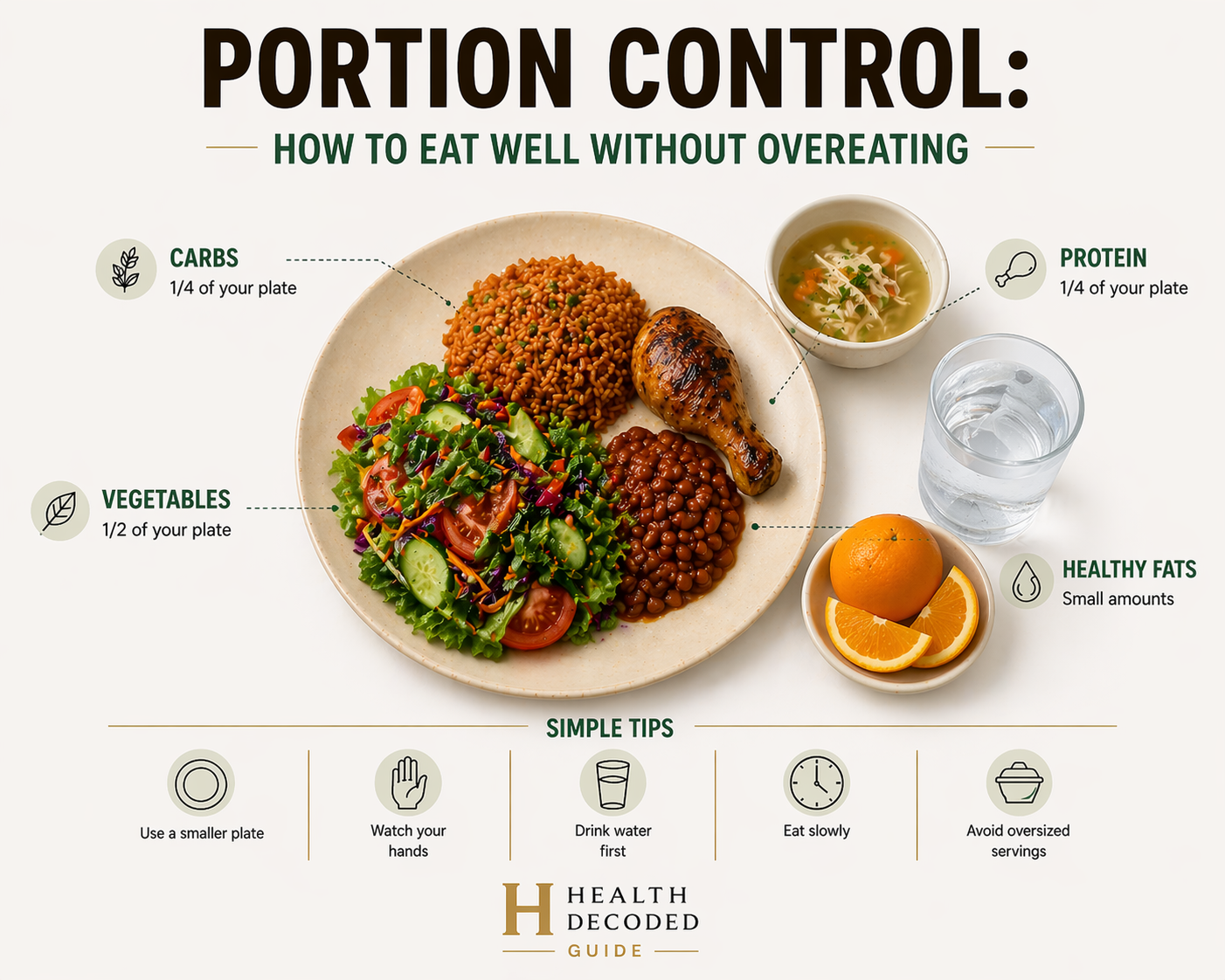
• use smaller plates
• eat slowly and mindfully
• stop when comfortably full
9️⃣ Simple portion guide
• protein → palm-sized portion
• carbohydrates → cupped hand
• fats → thumb-sized
👉 These guides help without measuring tools.
🟢 Important message
Portion control is a simple but powerful habit.
👉 Small adjustments can lead to long-term results.
FAQ
• Do I need to count calories?
Not always—portion awareness can be enough.
• Can I still enjoy my favorite foods?
Yes—portion control allows flexibility.
• How can I control my portions without feeling hungry?
Eat slowly, include protein and fibre in your meals, and drink enough water to help you feel full.
• Are larger portions always unhealthy?
Not necessarily. The right portion depends on your age, activity level, and individual health needs.
• Can portion control help with weight loss?
Yes. Eating appropriate portion sizes can help reduce calorie intake and support healthy weight management without completely avoiding your favourite foods.
🔗 Related Health Topics
• Protein and satiety
• Weight management
• Healthy diet Basic
• Healthy habits
• Healthy aging
• Heart Disease Prevention
📚 Medical References
• World Health Organization (WHO). Healthy diet.
• National Health Service (NHS). The Eatwell Guide.
• Mayo Clinic. Weight loss: Gain control of emotional eating.
• National Institute for Health and Care Excellence (NICE). Obesity: identification, assessment and management.
• Harvard T.H. Chan School of Public Health. Healthy Eating Plate.
• MedlinePlus. Nutrition.
⚠️ Medical Disclaimer
This article is for educational purposes only and does not replace professional medical advice.
For personalized dietary advice, consult a healthcare professional.