Read in: English | Pidgin English
🩺 Medically reviewed by the Health Decoded Guide Editorial Team· Last reviewed: July 2026
🔍 Quick Summary
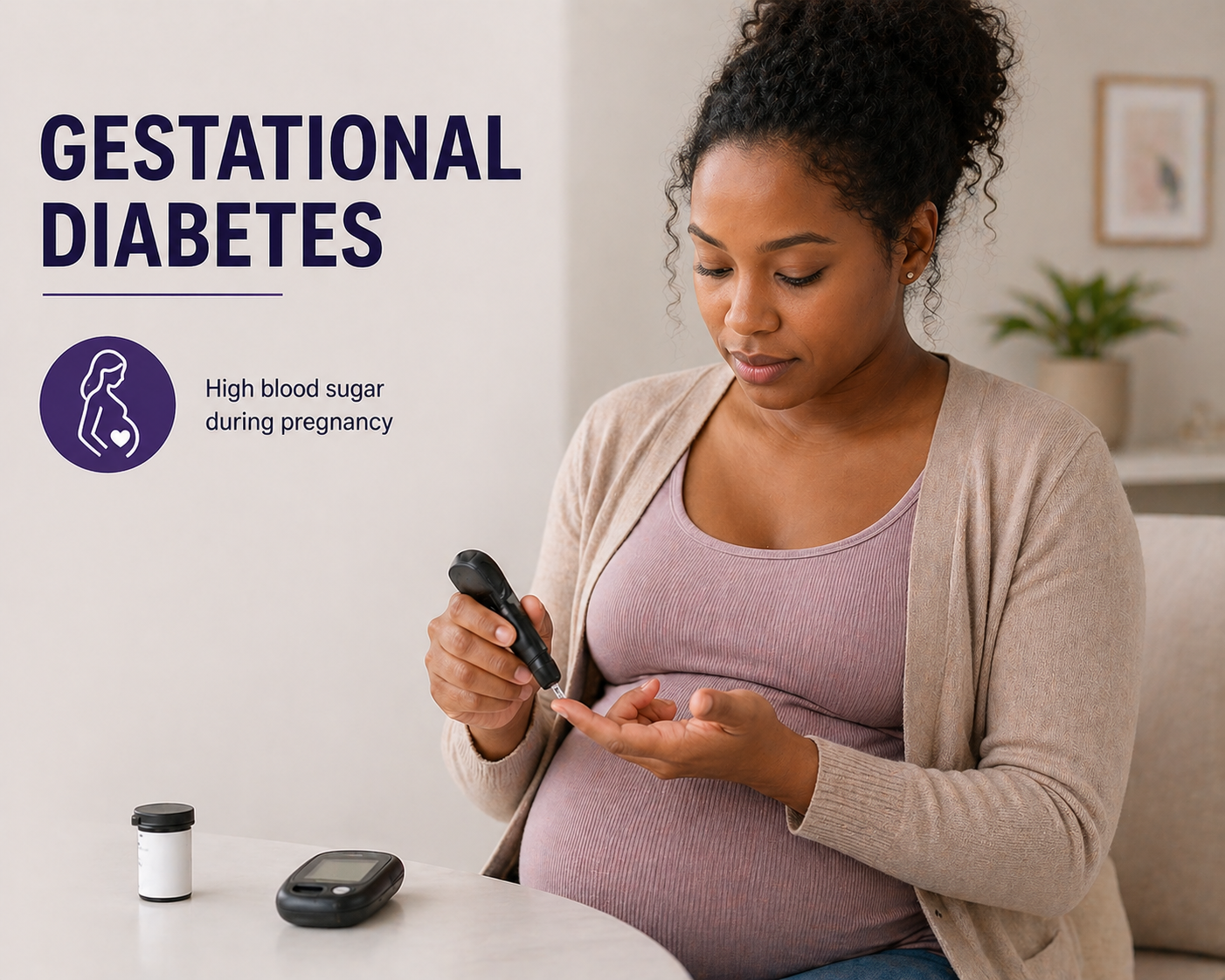
Gestational diabetes is high blood sugar that develops during pregnancy.
It usually resolves after delivery but needs careful monitoring.
1️⃣ Introduction
Gestational diabetes occurs during pregnancy.
• affects how the body handles sugar
• usually develops in the second or third trimester
• may not cause obvious symptoms
👉 It is temporary—but important for both mother and baby.
2️⃣ How it happens
Hormones during pregnancy affect insulin.
• pregnancy hormones reduce insulin effectiveness
• blood sugar levels rise
• body cannot compensate fully
👉 This leads to temporary insulin resistance.
3️⃣ Classification
• Mild gestational diabetes
- controlled with diet and lifestyle
- no medication needed
• More severe gestational diabetes
- requires medication or insulin
- closer monitoring
👉 Severity varies between individuals.
4️⃣ Common causes
• Hormonal changes in pregnancy
• Risk factors
- overweight or obesity
- family history of diabetes
- previous gestational diabetes
5️⃣ Symptoms
• often no symptoms
• sometimes increased thirst or urination
👉 Many cases are detected through routine screening.
6️⃣ Associated risks
• For the baby
- large birth weight
- risk during delivery
• For the mother
- increased risk of Type 2 diabetes later
- high blood pressure
👉 Proper control reduces these risks.
7️⃣🩺 When it becomes dangerous 🚨
• very high blood sugar
• poor fetal growth or excessive growth
• complications during pregnancy
👉 These may indicate:
• need for closer monitoring
• specialist care
8️⃣ Management / treatment
• healthy diet
• regular physical activity
• blood sugar monitoring
• medication or insulin if needed
9️⃣ Diagnosis
• oral glucose tolerance test (OGTT)
• routine pregnancy screening
• blood glucose monitoring
👉 Screening is usually done during pregnancy.
🟢 Important message
Gestational diabetes is manageable.
👉 With proper care, most pregnancies proceed safely.
FAQ
• Will it go away after pregnancy?
Usually yes—but follow-up is important.
• Does it affect future health?
Yes—it increases the risk of Type 2 diabetes later.
🔗 Related Health Topics
• Diabetes
• Blood sugar monitoring
• High Blood Pressure
• Building Healthy Habits
• Exercise and Health
• Pre-enclampsia (coming soon)
• Pregnancy symptoms
📚 Medical References
• World Health Organization (WHO). Diabetes.
• Centers for Disease Control and Prevention (CDC). Gestational Diabetes.
• Mayo Clinic. Gestational diabetes.
• National Institute for Health and Care Excellence (NICE). Diabetes in pregnancy: management from preconception to the postnatal period.
• American College of Obstetricians and Gynecologists (ACOG). Gestational Diabetes.
⚠️ Medical Disclaimer
This article is for educational purposes only and does not replace professional medical advice.
If you are pregnant or have concerns, consult a healthcare professional.