Read in: English | Pidgin English
🩺 Medically reviewed by the Health Decoded Guide Editorial Team· Last reviewed: July 2026
🔍 Quick Summary
Infections happen when germs enter the body.
Simple daily habits can significantly reduce your risk.
1️⃣ Introduction
Infections are caused by germs such as bacteria, viruses, fungi, and parasites.
• can spread through contact, air, food, or water
• may be mild or serious
• often preventable
👉 Prevention is one of the most effective ways to protect your health.
2️⃣ How it happens
Germs enter the body and multiply.
• through the mouth, nose, eyes
• through cuts or broken skin
• through contaminated food or water
👉 The body fights infection—but prevention reduces the burden.
3️⃣ Classifications
• Common infections
• More serious infections
👉 Prevention applies to both everyday and serious infections.
4️⃣ Common risk factors
• Poor hygiene
- infrequent handwashing
• Environmental exposure
- crowded places
- unsafe water or food
• Behavioural factors
- unprotected sex
• Healthcare-related exposure
- unsafe medical practices or poor infection control
5️⃣ Symptoms
• fever
• fatigue
• cough
• Joint pain or body pain
• Shortness of Breath
👉 These are signs the body is fighting infection.
6️⃣ Associated risks
• spread to others
• complications if untreated
• recurrent infections
👉 Prevention protects both you and others.
7️⃣🩺 When prevention becomes critical 🚨
• during outbreaks
• for vulnerable groups (children, elderly)
• weakened immune system
👉 These may require:
• stricter hygiene
• vaccination and early care
8️⃣ Key prevention methods
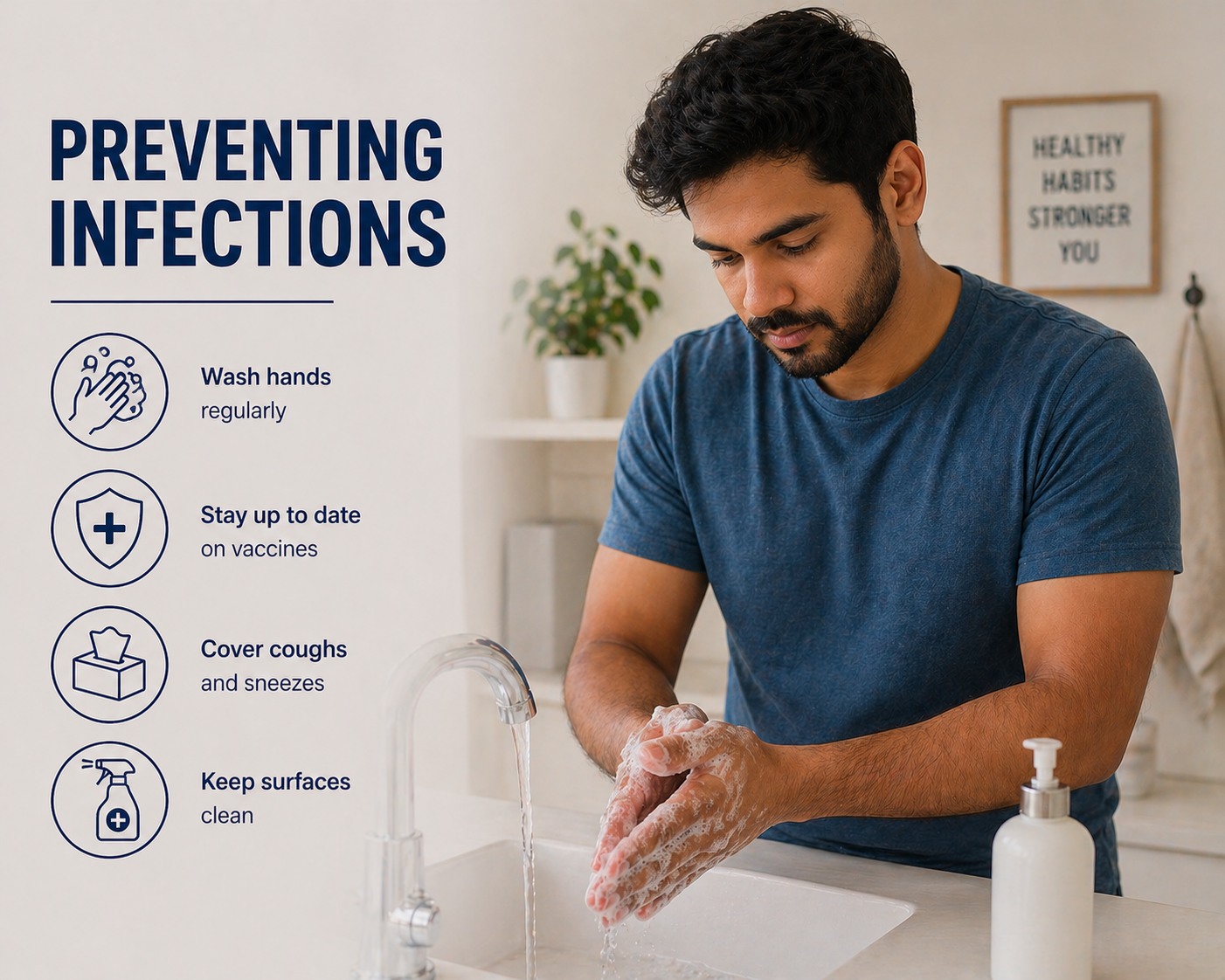
• hand hygiene (washing with soap)
• safe food and water practices
• vaccination
9️⃣ Daily protective habits
• avoid close contact with sick individuals
• cover mouth when coughing or sneezing
• keep wounds clean
👉 Small habits make a big difference.
🟢 Important message
Preventing infections is simple but powerful.
👉 Consistent daily habits protect long-term health.
FAQ
• Do I need to wash hands often?
Yes—especially before eating and after contact with surfaces.
• Are vaccines important?
Yes—they protect against serious infections.
🔗 Related Health Topics
• Vaccination importance
• Building Healthy Habits
• Skin infections
• Hygiene and sanitation (coming soon)
• Childhood infections
📚 Medical References
• World Health Organization (WHO). Infection prevention and control.
• NHS England. National infection prevention and control manual (NIPCM) for England.
• Centers for Disease Control and Prevention (CDC). Infection Control Basics.
• Mayo Clinic. Germs: Understand and protect against bacteria, viruses and infection.
• National Institute for Health and Care Excellence (NICE). Healthcare-associated infections: prevention and control in primary and community care.
• UK Health Security Agency (UKHSA). Infection prevention and control: resource for adult social care.
⚠️ Medical Disclaimer
This article is for educational purposes only and does not replace professional medical advice.
Consult a healthcare professional for personalized advice.