Read in: English | Pidgin English
🩺 Medically reviewed by the Health Decoded Guide Editorial Team· Last reviewed: July 2026
🔍 Quick Summary
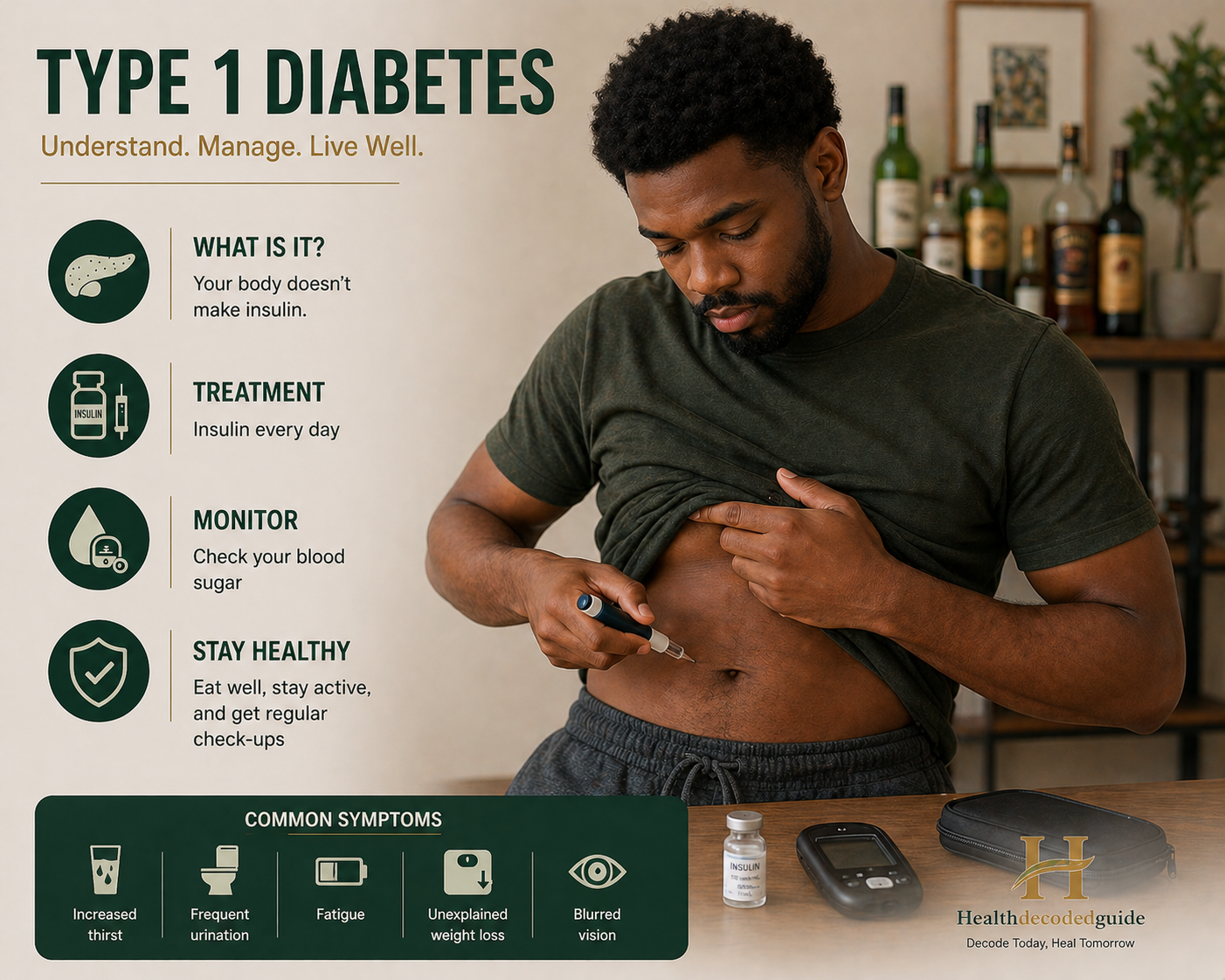
Type 1 diabetes is a condition where the body stops producing insulin.
It requires lifelong insulin treatment and careful blood sugar monitoring.
1️⃣ Introduction
Type 1 diabetes is a chronic condition affecting blood sugar control.
• the body cannot produce insulin
• usually begins in childhood or young adulthood
• requires lifelong management
👉 It is not caused by lifestyle—it is an autoimmune condition.
2️⃣ How it happens
The immune system attacks insulin-producing cells.
• pancreas stops making insulin
• glucose cannot enter cells
• sugar builds up in the blood
👉 Without insulin, the body cannot use sugar for energy.
3️⃣ Types
• Classic Type 1 diabetes
- rapid onset
- clear symptoms
• Latent autoimmune diabetes (LADA)
- slower progression
- may initially appear like Type 2
👉 Both involve loss of insulin production.
4️⃣ Common causes
• Autoimmune process
- immune system attacks pancreas
• Risk factors
- genetics
- environmental triggers (not fully understood)
5️⃣ Symptoms
• excessive thirst
• frequent urination
• unexplained weight loss
👉 These occur due to high blood sugar and inability to use glucose.
6️⃣ Associated symptoms
• fatigue
• blurred vision
• increased hunger
• dehydration
👉 Symptoms often develop quickly.
7️⃣🩺 When it becomes dangerous 🚨
• vomiting
• abdominal pain
• confusion
• deep or rapid breathing
👉 These may indicate:
• diabetic ketoacidosis (DKA)
• need for urgent medical care
8️⃣ Management / treatment
• insulin therapy (daily injections or pump)
• regular blood sugar monitoring
• balanced diet and physical activity
9️⃣ Diagnosis
• blood glucose tests
• HbA1c
• antibody testing
👉 Diagnosis is based on high blood sugar and immune markers.
🟢 Important message
Type 1 diabetes requires lifelong care.
👉 With proper management, people can live healthy, active lives.
FAQ
• Can Type 1 diabetes be prevented?
No—it cannot currently be prevented.
• Is insulin always needed?
Yes—insulin is essential for survival.
🔗 Related Health Topics
• Diabetes
• Diabetes Prevention
• Blood sugar monitoring
• Autoimmune Diseases
• Chronic Kidney Disease
• Hypoglycemia
📚 Medical References
• World Health Organization (WHO). Diabetes.
• National Health Service (NHS). Type 1 diabetes.
• Centers for Disease Control and Prevention (CDC). About Type 1 Diabetes.
• Mayo Clinic. Type 1 diabetes.
• National Institute for Health and Care Excellence (NICE). Type 1 diabetes in adults: diagnosis and management.
• American Diabetes Association (ADA). Understanding Type 1 Diabetes.
⚠️ Medical Disclaimer
This article is for educational purposes only and does not replace professional medical advice.
If you have symptoms or concerns, consult a healthcare professional.