Read in: English | Pidgin English
🩺 Medically reviewed by the Health Decoded Guide Editorial Team · Last reviewed: July 2026
🔍 Quick Summary
Epilepsy is a neurological condition that causes repeated seizures due to abnormal electrical activity in the brain.
Some seizures are dramatic with shaking and collapse, while others may only cause staring spells, confusion, or unusual sensations.
Many people with epilepsy can live normal, active lives with proper treatment and support.
1️⃣ Introduction
Epilepsy is a long-term brain condition associated with recurrent seizures.
• seizures happen because of sudden abnormal electrical signals in the brain
• epilepsy can affect children and adults
• not every seizure means a person has epilepsy
👉 A single seizure can happen for many reasons, but epilepsy usually involves repeated unprovoked seizures.
2️⃣ How it happens
The brain normally uses controlled electrical signals to communicate.
• in epilepsy, these electrical signals become disrupted
• abnormal signals may affect one area or the whole brain
• this can temporarily affect movement, awareness, behavior, or sensation
👉 The symptoms depend on which part of the brain is affected during the seizure.
3️⃣ Types
• Focal seizures
- start in one part of the brain
- may cause unusual movements, smells, sensations, or confusion
• Generalized seizures
- affect both sides of the brain
- may cause collapse, shaking, or loss of consciousness
• Absence seizures
- brief staring episodes
- more common in children
👉 Some seizures are very subtle and may be mistaken for daydreaming or confusion.
4️⃣ Common causes
• Brain-related conditions
- head injury
- stroke or brain infections
• Genetic factors
- family history of epilepsy
- inherited neurological conditions
• Other triggers or factors
- sleep deprivation
- alcohol withdrawal or certain medications
👉 In some people, no clear cause is identified.
5️⃣ Symptom explanation
• sudden shaking or jerking movements
• temporary loss of awareness
• staring spells or confusion
👉 These symptoms happen because seizure activity temporarily interrupts normal brain function.
6️⃣ Associated symptoms
• tongue biting
• loss of bladder control
• unusual smells or sensations before seizures
• tiredness after a seizure
👉 Some people experience warning signs called an “aura” before a seizure starts.
7️⃣🩺 When it becomes dangerous 🚨
• seizure lasting more than 5 minutes
• repeated seizures without recovery between them
• difficulty breathing or serious injury during a seizure
👉 These may indicate:
• status epilepticus
• a medical emergency requiring urgent treatment
8️⃣ Management / treatment
• anti-seizure medications prescribed by a doctor
• avoiding triggers like sleep deprivation or heavy alcohol use
• regular follow-up with healthcare professionals
👉 Some people may also benefit from surgery, nerve stimulation therapy, or dietary treatment in selected cases.
9️⃣ Diagnosis
• medical history and seizure description
• neurological examination
• tests such as EEG or brain imaging scans
👉 Witness descriptions from family or friends can help doctors understand what type of seizure occurred.
🟢 Important message
Epilepsy is a medical condition — not a personal weakness or spiritual problem.
Many people with epilepsy successfully study, work, drive, build families, and live fulfilling lives with proper care.
👉 Early diagnosis and consistent treatment can greatly reduce seizures and improve quality of life.
FAQ
• Can stress trigger seizures?
Yes. Stress, poor sleep, alcohol, and flashing lights may trigger seizures in some people.
• Is epilepsy contagious?
No. Epilepsy cannot spread from one person to another.
• Can someone die from a seizure?
Most seizures stop on their own, but prolonged seizures or injuries during seizures can become dangerous.
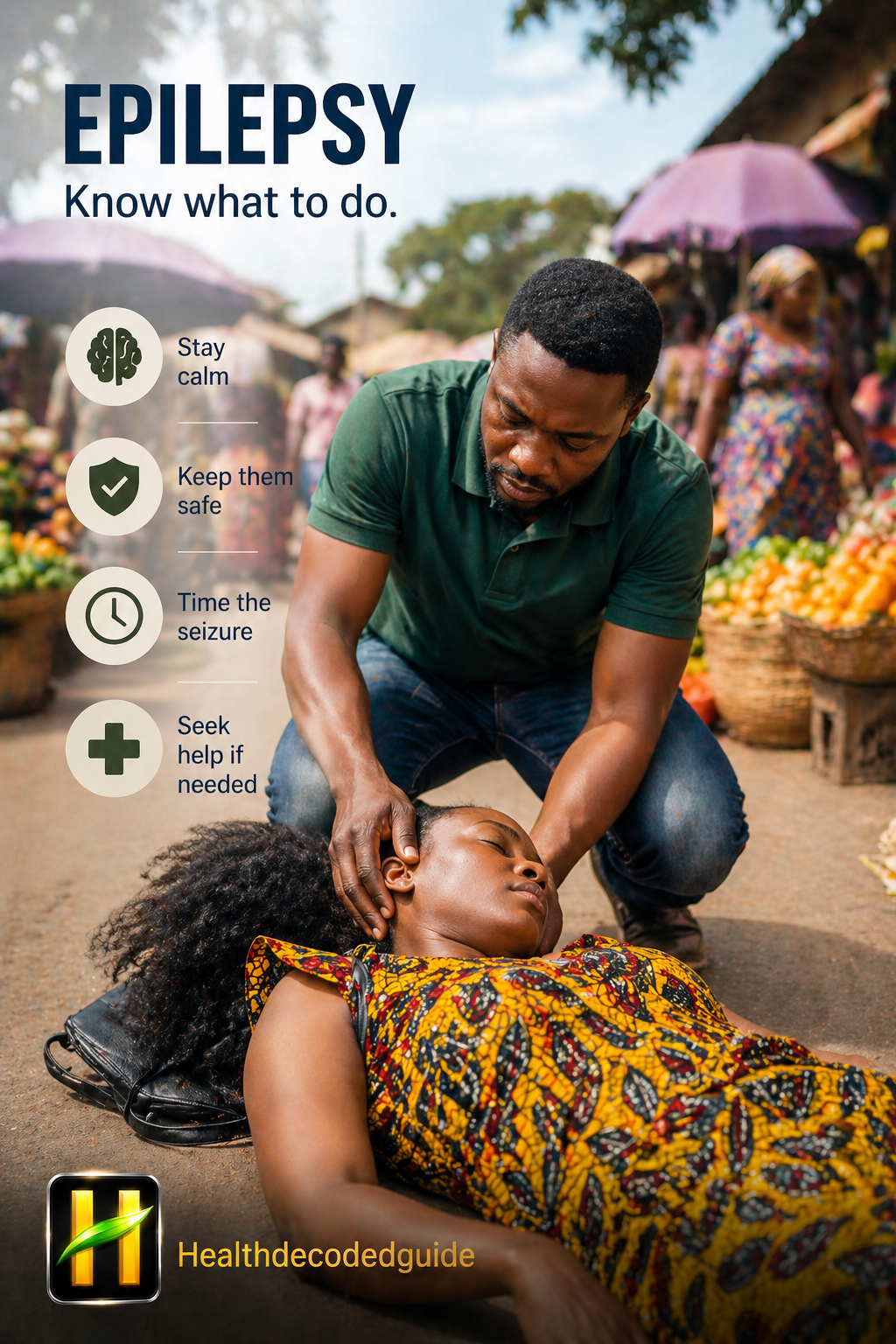
• Should I hold someone down during a seizure?
No. Move dangerous objects away and place the person on their side if possible, but do not restrain them.
• Can epilepsy be treated?
Yes. Many people achieve good seizure control with medication and lifestyle adjustments.
🔗 Related Health Topics
• Stroke
• Concussion
• Febrile Seizures
• Migraine
• Sleep Disorders
• Seizures vs Fainting
• Seizures First Aid
📚 Medical References
• World Health Organization (WHO). Epilepsy.
• National Health Service (NHS). Epilepsy.
• Centers for Disease Control and Prevention (CDC). About Epilepsy.
• Mayo Clinic. Epilepsy.
• National Institute for Health and Care Excellence (NICE). Epilepsies in children, young people and adults.
• International League Against Epilepsy (ILAE). Classification and Definition of Epilepsy Syndromes.
⚠️ Medical Disclaimer
This article is for educational purposes only and does not replace professional medical advice.
If you have symptoms or concerns, please consult a qualified healthcare professional.