Read in: English | Pidgin English
🩺 Medically reviewed by the Health Decoded Guide Editorial Team · Last reviewed: July 2026
🔍 Quick Summary
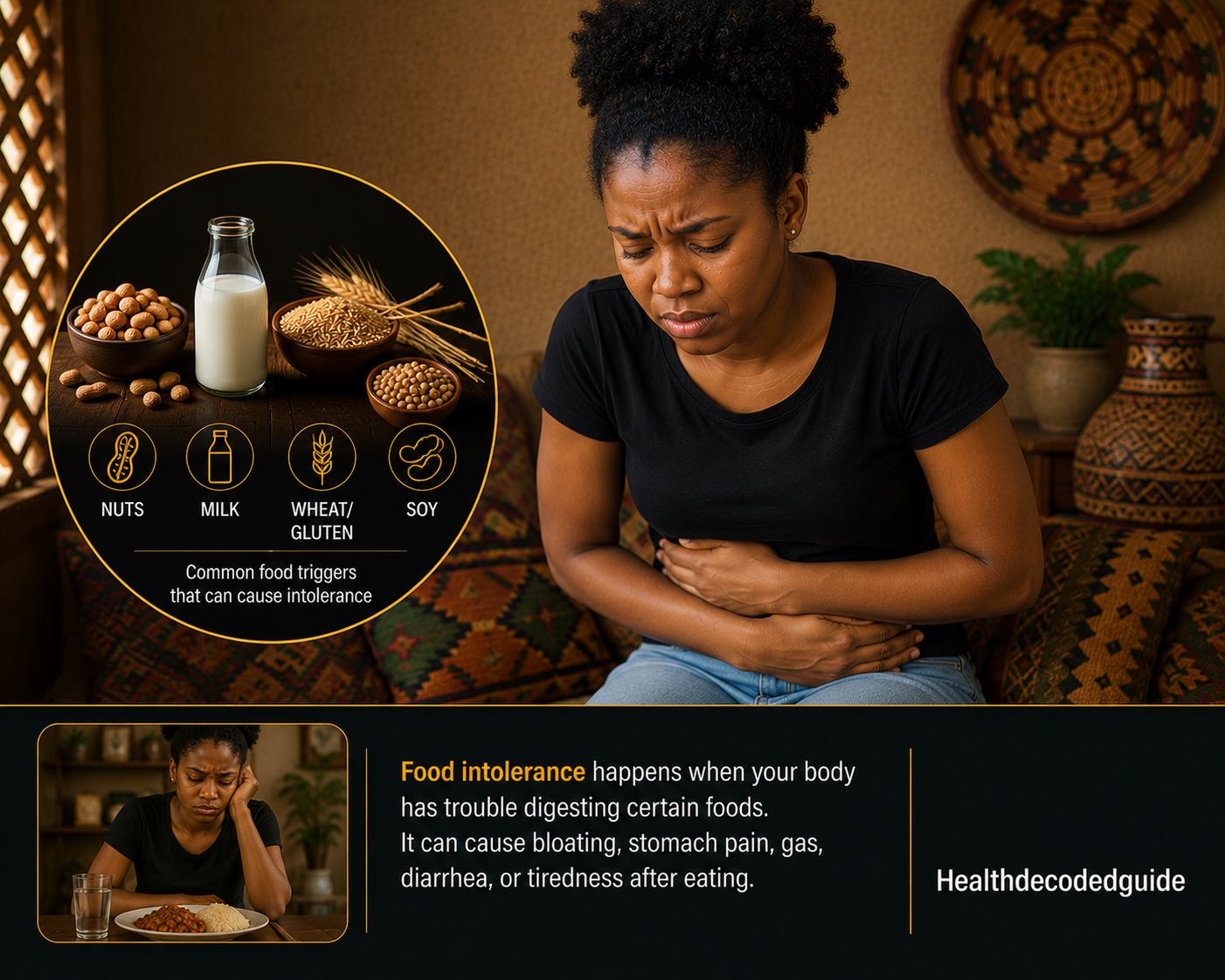
Food intolerance happens when the body has difficulty digesting certain foods.
It commonly causes bloating, stomach pain, diarrhea, or nausea after eating specific foods.
Unlike food allergy, food intolerance usually does not involve a dangerous immune reaction.
1️⃣ Introduction
Food intolerance affects digestion and comfort after eating.
• symptoms often develop gradually after meals
• different foods can trigger symptoms in different people
• severity varies from mild discomfort to significant digestive upset
👉 Many people may not realize certain foods are linked to their symptoms.
2️⃣ How it happens
The digestive system may struggle to process certain food components.
• some people lack enzymes needed to digest specific foods
• certain foods may irritate the digestive tract
• gut sensitivity can increase digestive reactions
👉 Symptoms usually depend on the amount of food consumed.
3️⃣ Types
• Lactose intolerance
- difficulty digesting milk sugar
- may cause bloating or diarrhea
• Gluten sensitivity
- symptoms after eating foods containing gluten
- may cause stomach discomfort or fatigue
• Additive or chemical intolerance
- reactions to food additives or preservatives
- may trigger headaches or digestive symptoms
👉 Food intolerance differs from food allergy, which can be life-threatening.
4️⃣ Common causes
• Enzyme deficiencies
- reduced ability to digest certain foods
- common in lactose intolerance
• Gut sensitivity
- irritable bowel syndrome (IBS)
- digestive inflammation
• Dietary factors
- highly processed foods
- excessive fatty or spicy foods
👉 Stress and anxiety may worsen food-related digestive symptoms.
5️⃣ Symptoms
• bloating or excess gas
• stomach cramps
• diarrhea or loose stool
👉 Symptoms often appear after eating trigger foods.
6️⃣ Associated symptoms
• nausea
• fatigue
• headaches in some people
• bowel habit changes
👉 Keeping a food diary may help identify triggers.
7️⃣🩺 When it becomes dangerous 🚨
• severe dehydration from diarrhea or vomiting
• significant weight loss
• blood in stool or severe abdominal pain
👉 These may indicate:
• more serious digestive disease
• conditions requiring urgent medical evaluation
8️⃣ Management / treatment
• identify and avoid trigger foods
• eat balanced meals with proper nutrition
• use digestive support strategies if recommended
Supportive Measures
• keep a food and symptom diary
• introduce dietary changes gradually
• maintain hydration
• seek medical guidance before major diet restrictions
👉 Avoid removing too many foods without proper advice.
9️⃣ Diagnosis
• symptom history and dietary review
• elimination diets in some cases
• tests to exclude allergy or digestive disease
👉 Diagnosis often depends on identifying symptom patterns linked to foods.
🟢 Important message
Food intolerance is common and often manageable once trigger foods are identified.
Understanding your body’s reactions can help improve digestion and quality of life.
👉 Persistent digestive symptoms should still be medically evaluated.
FAQ
• What is food intolerance?
Difficulty digesting certain foods without a dangerous allergic reaction.
• Is food intolerance the same as food allergy?
No. Food allergy involves the immune system and can be severe.
• What foods commonly cause intolerance?
Milk, gluten-containing foods, fatty foods, and food additives.
• Can stress worsen symptoms?
Yes. Stress may increase digestive sensitivity.
• When should medical help be sought?
If symptoms are severe, persistent, or involve weight loss or blood in stool.
🔗 Related Health Topics
• Digestive Problems
• Gut Health
• Bloating
• Irritable Bowel Syndrome
• Abdominal Pain
📚 Medical References
• National Health Service (NHS). Food intolerance: https://www.nhs.uk/conditions/food-intolerance/
• Mayo Clinic. Food allergy vs. food intolerance: What's the difference?: https://www.mayoclinic.org/diseases-conditions/food-allergy/expert-answers/food-allergy/faq-20058338
• American College of Gastroenterology (ACG). Patient Information: https://gi.org/patients/
• Centers for Disease Control and Prevention (CDC). Food Safety: https://www.cdc.gov/food-safety/
• National Institute for Health and Care Excellence (NICE). Food allergy in under 19s: assessment and diagnosis (CG116): https://www.nice.org.uk/guidance/cg116
⚠️ Medical Disclaimer
This article is for educational purposes only and does not replace professional medical advice.
If you have symptoms or concerns, please consult a qualified healthcare professional.