Read in: English | Pidgin English
🩺 Medically reviewed by the Health Decoded Guide Editorial Team · Last reviewed: July 2026
🔍 Quick Summary
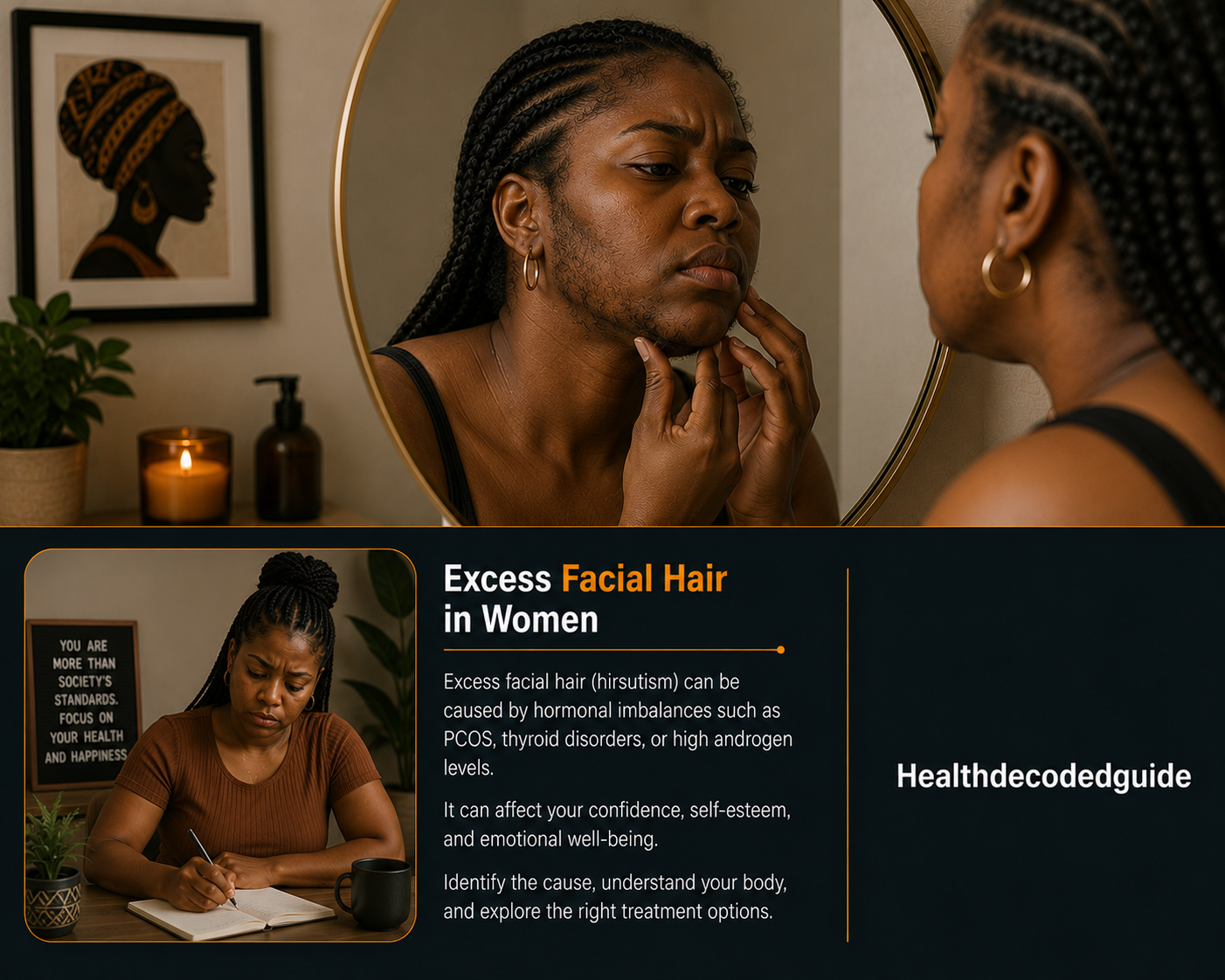
Hirsutism na wetin dem dey call excess facial hair growth in women.
e dey affects areas such as the chin, upper lip, jawline, chest, or abdomen.
Hormonal conditions like PCOS are common causes, although genetics and medications may also contribute.
1️⃣ Introduction
Hair growth patterns vary naturally between individuals.
• some women develop thicker or darker hair in male-pattern areas
• symptoms may appear gradually over time
• excess hair growth may affect confidence and emotional well-being
👉 Mild facial hair can be normal in some women, depending on genetics and ethnicity.
2️⃣ How it happens
Hormones called androgens influence hair growth.
• increased androgen levels may stimulate thicker hair growth
• hair follicles become more sensitive to hormones
• hormonal imbalance may affect multiple body systems
👉 The same hormones affecting facial hair may also influence periods, acne, and weight.
3️⃣ Types
• Mild hirsutism
- light excess hair growth
- limited areas affected
• Moderate hirsutism
- darker or thicker facial hair
- more noticeable body hair changes
• Severe hirsutism
- rapid or extensive hair growth
- may occur with deeper voice or major hormonal symptoms
👉 Sudden severe hair growth deserves medical evaluation.
4️⃣ Common causes
• Hormonal conditions
- PCOS
- adrenal or ovarian hormone imbalance
• Genetic factors
- family tendency toward thicker hair
- ethnic hair growth patterns
• Medication or metabolic factors
- certain hormonal medications
- obesity or insulin resistance
👉 PCOS is one of the most common causes of hirsutism in women.
5️⃣ Symptoms
• excess hair on the chin or upper lip
• thicker or darker body hair
• increased hair growth over time
👉 Androgen hormones stimulate hair follicles in certain body areas.
6️⃣ Associated symptoms
• irregular periods
• acne or oily skin
• weight changes
• scalp hair thinning in some women
👉 Multiple hormonal symptoms together may suggest PCOS or endocrine conditions.
7️⃣🩺 When it becomes dangerous 🚨
• sudden rapid hair growth
• deepening voice
• severe menstrual changes or infertility symptoms
👉 These may indicate:
• significant hormonal imbalance
• rare endocrine or ovarian conditions needing urgent evaluation
8️⃣ Management / treatment
• treatment of the underlying hormonal condition
• lifestyle and weight management support
• hair removal or cosmetic treatment options
Supportive Measures
• maintain healthy lifestyle habits
• manage stress and sleep properly
• avoid unsafe or unverified hormonal products
• seek medical evaluation for persistent symptoms
👉 Emotional support may also help because symptoms can affect confidence and self-esteem.
9️⃣ Diagnosis
• medical history and symptom review
• hormone blood tests
• pelvic ultrasound in some cases
👉 Doctors often assess menstrual patterns and other hormonal symptoms together.
🟢 Important message
Excess facial hair in women is common and often linked to hormonal changes or PCOS.
Proper evaluation may help identify treatable causes and improve both physical and emotional well-being.
👉 Sudden or severe hair growth changes should not be ignored.
FAQ
• What is hirsutism?
Excess male-pattern hair growth in women.
• Can PCOS cause facial hair growth?
Yes. PCOS commonly increases androgen hormone activity.
• Is mild facial hair normal in women?
Yes. Small amounts of facial hair may be normal for some women.
• Can weight affect hormonal hair growth?
Yes. Obesity and insulin resistance may worsen hormonal imbalance.
• When should medical help be sought?
If hair growth becomes severe, sudden, or occurs with menstrual changes.
🔗 Related Health Topics
• PCOS
• Weight Changes and Hormones
• Perimenopause
• Irregular Periods
• Acne
📚 Medical References
- World Health Organization (WHO). Polycystic ovary syndrome fact sheet: https://www.who.int/news-room/fact-sheets/detail/polycystic-ovary-syndrome
- National Health Service (NHS). Excessive hair growth (hirsutism): https://www.nhs.uk/symptoms/hirsutism/
- Mayo Clinic. Hirsutism — symptoms and causes: https://www.mayoclinic.org/diseases-conditions/hirsutism/symptoms-causes/syc-20354935
- American College of Obstetricians and Gynecologists (ACOG). Polycystic ovary syndrome (Practice Bulletin No. 194): https://www.acog.org/clinical/clinical-guidance/practice-bulletin/articles/2018/06/polycystic-ovary-syndrome
- National Institute for Health and Care Excellence (NICE). Clinical Knowledge Summary — Hirsutism: https://cks.nice.org.uk/topics/hirsutism/
- Endocrine Society. Evaluation and Treatment of Hirsutism in Premenopausal Women — Clinical Practice Guideline: https://www.endocrine.org/clinical-practice-guidelines/hirsutism
⚠️ Medical Disclaimer
This article is for educational purposes only and does not replace professional medical advice.
If you have symptoms or concerns, please consult a qualified healthcare professional.