Read in: English | Pidgin English
🩺 Medically reviewed by the Health Decoded Guide Editorial Team · Last reviewed: July 2026
🔍 Quick Summary
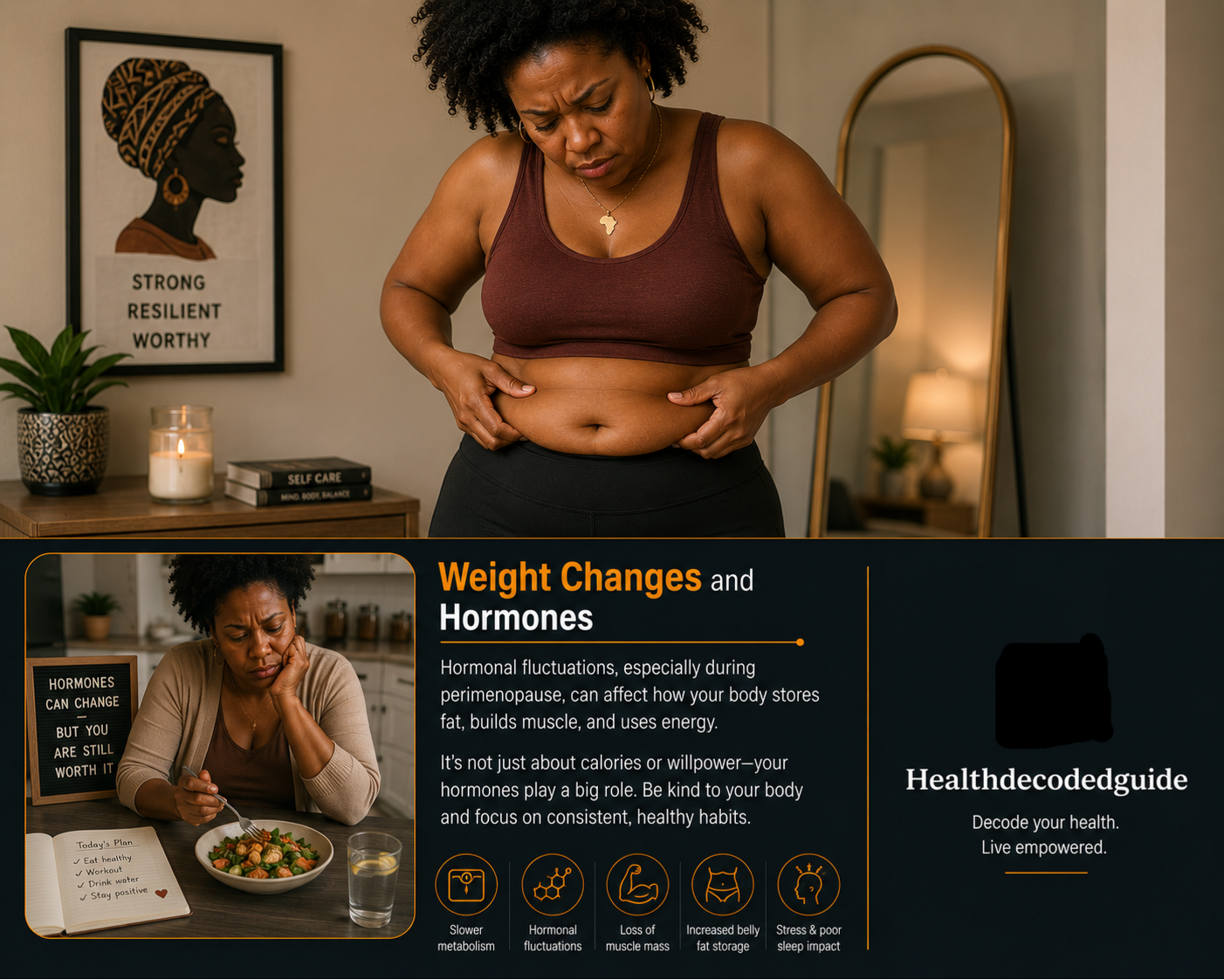
Hormones play an important role in body weight, metabolism, appetite, and fat distribution.
Hormonal changes may contribute to weight gain, weight loss, bloating, or changes in body shape.
Conditions affecting hormones can influence how the body stores and uses energy.
1️⃣ Introduction
Hormones are chemical messengers that help regulate many body functions.
• they affect appetite, metabolism, and energy use
• hormonal imbalance may influence body weight over time
• symptoms may happen gradually or suddenly
👉 Weight changes are not always simply related to eating habits alone.
2️⃣ How it happens
The body uses hormones to control metabolism and fat storage.
• some hormones increase hunger or cravings
• others affect how the body burns calories
• hormonal fluctuations may also change fluid retention and body composition
👉 Different hormones affect different parts of the body in different ways.
3️⃣ Types
• Hormonal weight gain
- gradual increase in body weight
- often linked to metabolism or appetite changes
• Hormonal weight loss
- unintended weight reduction
- may happen with thyroid or other medical conditions
• Fluid-related body changes
- bloating or swelling
- weight fluctuations over short periods
👉 Hormonal symptoms often occur together with other body changes.
4️⃣ Common causes
• Female hormonal changes
- perimenopause
- menopause
- PCOS or menstrual hormone fluctuations
• Endocrine and metabolic conditions
- thyroid disorders
- diabetes
- cortisol imbalance
• Lifestyle and stress factors
- poor sleep
- chronic stress affecting appetite hormones
👉 Stress hormones may affect both appetite and fat storage.
5️⃣ Symptoms
• unexplained weight loss or gain
• increased cravings or appetite changes
• bloating or body shape changes
👉 Hormonal changes may affect metabolism, hunger, and fluid balance.
6️⃣ Associated symptoms
• irregular periods
• fatigue or low energy
• mood changes
• hair or skin changes
👉 Symptoms affecting multiple body systems may suggest hormonal involvement.
7️⃣🩺 When it becomes dangerous 🚨
• rapid unexplained weight loss
• severe swelling or breathing difficulty
• extreme fatigue
• dizziness
• or fainting
👉 These may indicate:
• serious hormonal or metabolic conditions
• medical problems requiring urgent evaluation
8️⃣ Management / treatment
• treat underlying hormonal conditions
• healthy nutrition and regular physical activity
• sleep and stress management support
Supportive Measures
• maintain balanced eating habits
• stay physically active consistently
• monitor body and menstrual changes
• seek medical advice for persistent symptoms
👉 Sustainable lifestyle changes often support hormonal health better than extreme dieting.
9️⃣ Diagnosis
• medical history and symptom review
• blood tests for hormones or metabolism
• weight, menstrual, and lifestyle assessment
👉 Doctors often evaluate multiple symptoms together to identify hormonal causes.
🟢 Important message
Hormones can strongly influence body weight and body composition.
Persistent unexplained weight changes deserve proper evaluation, especially when combined with other hormonal symptoms.
👉 Weight changes should be viewed with understanding and not only self-blame.
FAQ
• Can hormones cause weight gain?
Yes. Hormonal changes may affect metabolism, appetite, and fat storage.
• Can stress affect body weight?
Yes. Chronic stress can influence appetite and hormone balance.
• Can menopause cause weight changes?
Yes. Hormonal shifts during perimenopause and menopause may affect body composition.
• Does PCOS affect weight?
Yes. PCOS commonly affects metabolism and weight regulation.
• When should medical help be sought?
If weight changes are unexplained, severe, or occur with other symptoms.
🔗 Related Health Topics
• Perimenopause
• PCOS
• Thyroid Disorders
• Obesity
• Stress Management
• Healthy aging
📚 Medical References
• World Health Organization (WHO). Obesity and overweight: https://www.who.int/news-room/fact-sheets/detail/obesity-and-overweight
• National Health Service (NHS). Unexplained weight gain: https://www.nhs.uk/conditions/unexplained-weight-gain/
• Mayo Clinic. Weight gain: https://www.mayoclinic.org/symptoms/weight-gain/basics/causes/sym-20050923
• American College of Obstetricians and Gynecologists (ACOG). Polycystic Ovary Syndrome (PCOS): https://www.acog.org/womens-health/faqs/polycystic-ovary-syndrome-pcos
• National Institute for Health and Care Excellence (NICE). Obesity: identification, assessment and management (CG189): https://www.nice.org.uk/guidance/cg189
•Endocrine Society. Patient resources: https://www.endocrine.org/improving-practice/patient-resources
⚠️ Medical Disclaimer
This article is for educational purposes only and does not replace professional medical advice.
If you have symptoms or concerns, please consult a qualified healthcare professional.