Read in: English | Pidgin English
🩺 Medically reviewed by the Health Decoded Guide Editorial Team · Last reviewed: July 2026
🔍 Quick Summary
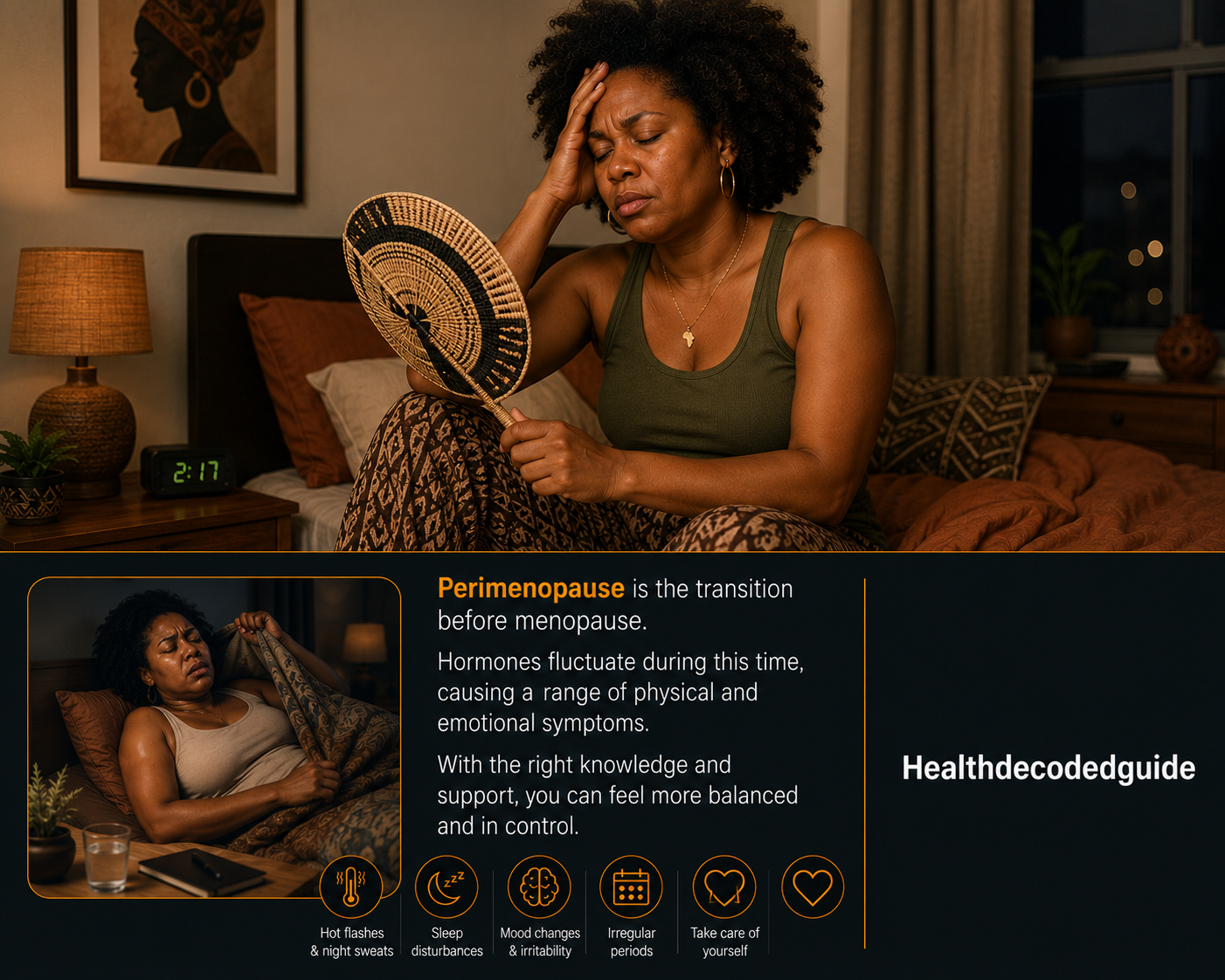
Perimenopause is the transitional phase before menopause when hormone levels begin to change.
It may cause irregular periods, hot flashes, mood changes, sleep problems, and body changes.
Symptoms often develop gradually and may vary greatly between women.
1️⃣ Introduction
Perimenopause is a normal hormonal transition in women.
• it usually begins during the 40s, but may start earlier
• the ovaries gradually produce less estrogen over time
• menstrual cycles often become less predictable
👉 Perimenopause can last for several years before menopause occurs.
2️⃣ How it happens
Hormones controlling the menstrual cycle begin fluctuating.
• estrogen and progesterone levels change irregularly
• ovulation may become less consistent
• these hormonal shifts affect many body systems
👉 Hormonal fluctuations often explain why symptoms come and go unpredictably.
3️⃣ Types/Classification
• Early perimenopause
- menstrual cycles begin changing slightly
- mild symptoms may appear
• Late perimenopause
- periods become more irregular or infrequent
- symptoms often become stronger
👉 Every woman experiences perimenopause differently.
4️⃣ Common causes
• Natural aging
- ovarian hormone production gradually decreases
- fertility declines over time
• Medical or lifestyle influences
- smoking
- certain surgeries or treatments affecting the ovaries
• Genetic and hormonal factors
- family patterns
- individual hormone sensitivity
👉 Some women experience stronger symptoms than others.
5️⃣ Symptoms
• irregular periods
• hot flashes or night sweats
• mood changes or irritability
👉 Hormonal fluctuations affect the brain, temperature regulation, and reproductive system.
6️⃣ Associated symptoms
• sleep disturbance
• vaginal dryness
• reduced libido
• weight or body composition changes
👉 Symptoms may affect emotional well-being, sleep, and relationships.
7️⃣🩺 When it becomes dangerous 🚨
• very heavy bleeding
• bleeding after menopause
• severe pelvic pain
• or dizziness
👉 These may indicate:
• gynecological conditions needing urgent evaluation
• bleeding unrelated to normal hormonal changes
8️⃣ Management / treatment
• healthy lifestyle and regular exercise
• stress and sleep management
• hormonal or medical treatment in some cases
Supportive Measures
• maintain balanced nutrition
• reduce smoking and excessive alcohol intake
• monitor menstrual changes
• seek medical support for severe symptoms
👉 Lifestyle support may improve symptoms and long-term health.
9️⃣ Diagnosis
• symptom and menstrual history review
• physical or pelvic examination when needed
• hormone tests in selected cases
👉 Doctors often diagnose perimenopause based mainly on symptoms and menstrual changes.
🟢 Important message
Perimenopause is a natural life transition, but symptoms can still significantly affect comfort and quality of life.
Understanding hormonal changes may help women feel more prepared and supported.
👉 Severe bleeding, pain, or sudden major symptoms should not be ignored.
FAQ
• What is perimenopause?
The hormonal transition phase before menopause.
• At what age does perimenopause begin?
Often during the 40s, but sometimes earlier.
• Can periods become irregular during perimenopause?
Yes. Irregular cycles are very common.
• Can perimenopause affect mood and sleep?
Yes. Hormonal changes commonly affect emotions and sleep quality.
• When should medical help be sought?
If bleeding becomes very heavy, painful, or unusual.
🔗 Related Health Topics
• Menopause Symptoms
• Spotting Between Periods
• Healthy Lifestyle & Weight Management
• PCOS
• Heavy Menstrual Bleeding
📚 Medical References
• World Health Organization (WHO). Menopause: https://www.who.int/news-room/fact-sheets/detail/menopause
• National Health Service (NHS). Perimenopause: https://www.nhs.uk/conditions/menopause/perimenopause/
• Mayo Clinic. Perimenopause: https://www.mayoclinic.org/diseases-conditions/perimenopause/symptoms-causes/syc-20354666
• American College of Obstetricians and Gynecologists (ACOG). The Menopause Years: https://www.acog.org/womens-health/faqs/the-menopause-years
• National Institute for Health and Care Excellence (NICE). Menopause: diagnosis and management (NG23): https://www.nice.org.uk/guidance/ng23
• The Menopause Society (formerly North American Menopause Society). Menopause Topics: https://menopause.org/patient-education/menopause-topics
⚠️ Medical Disclaimer
This article is for educational purposes only and does not replace professional medical advice.
If you have symptoms or concerns, please consult a qualified healthcare professional.