Read in: English | Pidgin English
🩺 Medically reviewed by the Health Decoded Guide Editorial Team · Last reviewed: July 2026
🔍 Quick Summary
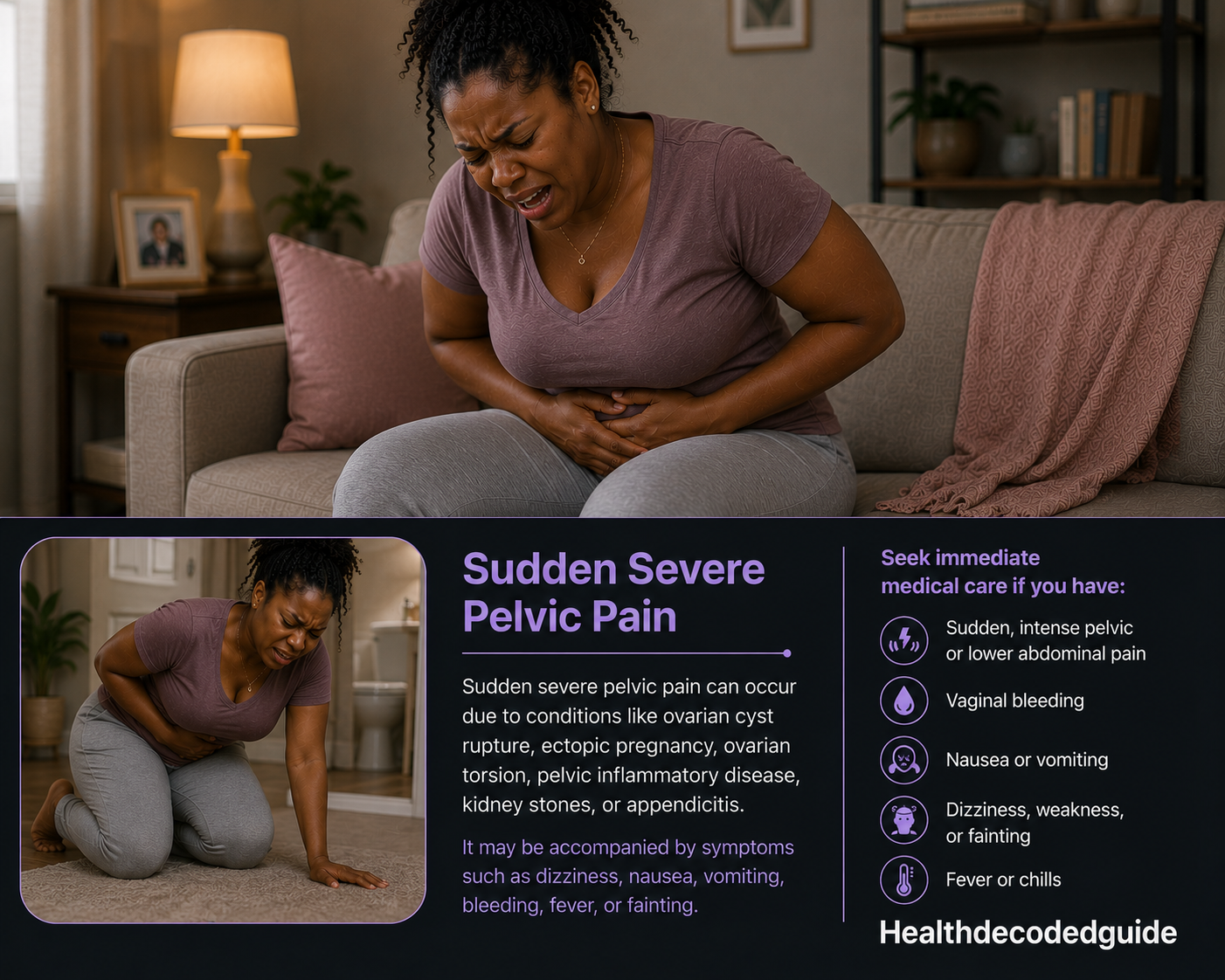
Sudden severe pelvic pain can happen because of gynecological, urinary, digestive, or pregnancy-related emergencies.
The pain may begin suddenly and can occur with:
bleeding
fever
vomiting
dizziness.
Some causes are serious and require urgent medical attention.
1️⃣ Introduction
Pelvic pain refers to pain in the lower abdomen or pelvic area.
• sudden severe pain should never be ignored
• pain may affect one side or the entire lower abdomen
• symptoms can range from sharp stabbing pain to severe cramping
👉 The timing, location, and associated symptoms help doctors identify the cause.
2️⃣ How it happens
Many organs are located inside the pelvis.
• ovaries, uterus, bladder, bowel, and reproductive organs can all cause pelvic pain
• inflammation, infection, twisting, or bleeding may trigger severe pain
• pregnancy-related complications may also affect the pelvis
👉 Sudden pain often signals irritation, pressure, or loss of blood flow in pelvic organs.
3️⃣ Common causes
• Gynecological emergencies
- ovarian torsion
- ruptured ovarian cyst
• Pregnancy-related causes
- ectopic pregnancy
- miscarriage complications
• Urinary or digestive causes
- kidney stones
- severe urinary or bowel infections
👉 Some causes are mild, but others are medical emergencies.
4️⃣ Other possible causes
• pelvic inflammatory disease
• appendicitis
• severe menstrual cramps
• endometriosis flare-ups
👉 Pain location and associated symptoms help narrow the cause.
5️⃣ Symptoms
• sudden severe pelvic or lower abdominal pain
• pain on one or both sides
• difficulty walking or moving comfortably
👉 Severe inflammation or pressure inside the pelvis often worsens movement-related pain.
6️⃣ Associated symptoms
• nausea or vomiting
• vaginal bleeding
• fever or chills
• dizziness or fainting
👉 Symptoms occurring together may indicate emergency conditions.
7️⃣🩺 When it becomes dangerous 🚨
• severe worsening pain
• heavy bleeding
• Fainting
• fever with vomiting
• weakness
👉 These may indicate:
• ectopic pregnancy, ovarian torsion, or internal bleeding
• serious infection or emergency pelvic conditions
8️⃣ Management / treatment
• urgent medical evaluation
• imaging tests such as ultrasound or CT scan
• treatment based on the underlying cause
Supportive Measures
• avoid delaying medical care for severe pain
• monitor associated symptoms carefully
• avoid self-medicating repeatedly without evaluation
• seek emergency help if symptoms worsen rapidly
👉 Early evaluation may help prevent serious complications.
9️⃣ Diagnosis
• symptom and menstrual history review
• pelvic examination
• pregnancy tests, urine tests, or imaging studies
👉 Doctors often use imaging urgently to identify pelvic emergencies quickly.
🟢 Important message
Sudden severe pelvic pain is not a symptom that should simply be “waited out.”
Some causes may become life-threatening if treatment is delayed.
👉 Severe pelvic pain with bleeding, dizziness, or vomiting needs urgent medical attention.
FAQ
• What can cause sudden severe pelvic pain?
Gynecological emergencies, infections, kidney stones, or pregnancy complications.
• Is ovarian torsion painful?
Yes. It commonly causes sudden severe one-sided pelvic pain.
• Can ectopic pregnancy cause pelvic pain?
Yes. Severe pelvic pain and bleeding during pregnancy can be signs of ectopic pregnancy.
• When is pelvic pain an emergency?
If pain is severe, sudden, associated with bleeding, fever, vomiting, or fainting.
• Should sudden pelvic pain always be checked?
Yes. Severe sudden pelvic pain deserves urgent medical evaluation.
🔗 Related Health Topics
• Ovarian Torsion
• Pelvic Pain During Pregnancy
• Spotting Between Periods
• Ectopic Pregnancy
📚 Medical References
• World Health Organization (WHO). Sexually transmitted infections (STIs): https://www.who.int/health-topics/sexually-transmitted-infections
• National Health Service (NHS). Pelvic pain: https://www.nhs.uk/conditions/pelvic-pain/
•Mayo Clinic. Pelvic pain – Symptoms and causes: https://www.mayoclinic.org/symptoms/pelvic-pain/basics/causes/sym-20050898
• American College of Obstetricians and Gynecologists (ACOG). Chronic Pelvic Pain: https://www.acog.org/womens-health/faqs/chronic-pelvic-pain
• National Institute for Health and Care Excellence (NICE). Ectopic pregnancy and miscarriage: diagnosis and initial management (NG126): https://www.nice.org.uk/guidance/ng126
• Centers for Disease Control and Prevention (CDC). Pelvic Inflammatory Disease (PID): https://www.cdc.gov/pid/
⚠️ Medical Disclaimer
This article is for educational purposes only and does not replace professional medical advice.
If you have symptoms or concerns, please consult a qualified healthcare professional.