Read in: English | Pidgin English
🩺 Medically reviewed by the Health Decoded Guide Editorial Team · Last reviewed: July 2026
🔍 Quick Summary
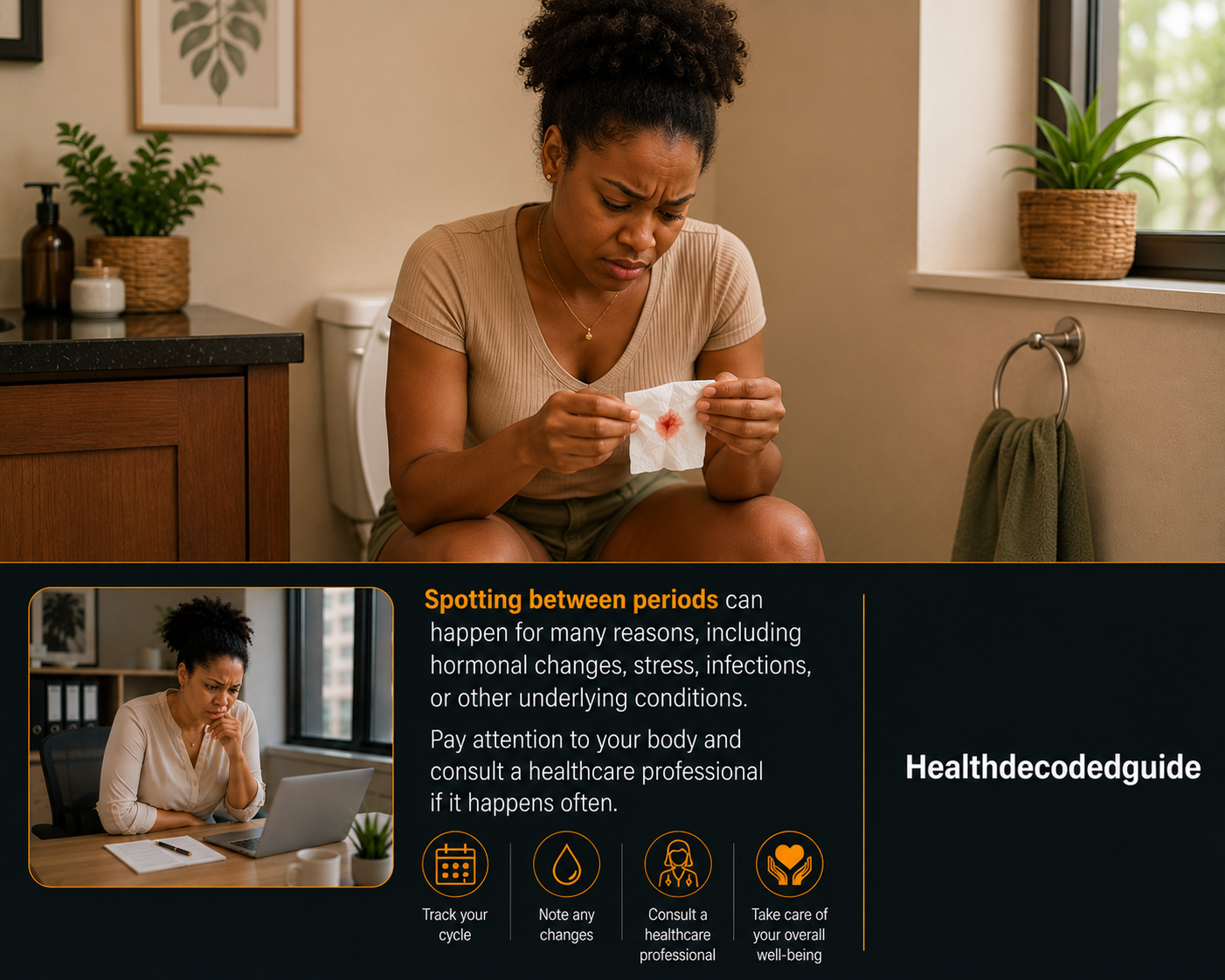
Spotting between periods means light vaginal bleeding happening outside the normal menstrual cycle.
It may happen because of hormonal changes, birth control, stress, infections, pregnancy, or gynecological conditions.
Although spotting is sometimes harmless, persistent or heavy bleeding should be medically evaluated.
1️⃣ Introduction
Menstrual bleeding normally follows a regular cycle.
• spotting refers to light bleeding outside expected periods
• the blood may appear pink, red, or brown
• some women notice occasional spotting only once, while others experience repeated episodes
👉 Spotting is common, but the cause can vary depending on age, hormones, and reproductive health.
2️⃣ How it happens
The menstrual cycle is controlled by hormones.
• hormonal fluctuations may affect the uterine lining
• irritation or inflammation may trigger light bleeding
• pregnancy-related changes may also cause spotting in some cases
👉 Even small hormonal changes can sometimes affect bleeding patterns.
3️⃣ Types
• Hormonal spotting
- linked to ovulation or hormone imbalance
- often light and temporary
• Pregnancy-related spotting
- may happen early in pregnancy
- requires medical evaluation if persistent or painful
• Abnormal gynecological bleeding
- associated with fibroids, polyps, adenomyosis, or infection
- may become heavier or recurrent
👉 The timing and pattern of bleeding often help identify the cause.
4️⃣ Common causes
• Hormonal changes
- ovulation
- perimenopause or PCOS
• Reproductive and gynecological conditions
- fibroids
- adenomyosis or infections
• Lifestyle or medication factors
- stress
- hormonal contraception
👉 Sudden stress and major body changes may affect menstrual hormones.
5️⃣ Symptoms
• light bleeding between periods
• brown or pink discharge
• irregular menstrual timing
👉 Spotting happens when small amounts of blood leave the uterus outside the normal cycle.
6️⃣ Associated symptoms
• pelvic pain or cramps
• bloating
• vaginal discharge changes
• fatigue or dizziness if bleeding increases
👉 Painful spotting may suggest infection or gynecological conditions needing evaluation.
7️⃣🩺 When it becomes dangerous 🚨
• heavy bleeding or blood clots
• severe pelvic pain
• spotting during pregnancy with pain or dizziness
👉 These may indicate:
• ectopic pregnancy or miscarriage
• serious gynecological conditions needing urgent medical care
8️⃣ Management / treatment
• treat the underlying cause when identified
• hormonal management in some cases
• lifestyle support and stress reduction
Supportive Measures
• monitor bleeding patterns and cycle timing
• keep track of associated symptoms
• maintain balanced nutrition and hydration
• seek medical review for persistent irregular bleeding
👉 A menstrual diary may help doctors identify patterns and triggers.
9️⃣ Diagnosis
• menstrual and medical history review
• pelvic examination
• pregnancy tests, hormone tests, or ultrasound in some cases
👉 Doctors often assess the timing, amount, and associated symptoms of the bleeding.
🟢 Important message
Spotting between periods is common and often linked to hormonal changes, but persistent or painful bleeding should be evaluated.
Understanding menstrual changes early may help identify underlying conditions sooner.
👉 Unexpected bleeding should not always be ignored, especially if symptoms worsen.
FAQ
• Is spotting between periods normal?
Occasional light spotting can happen, especially with hormonal changes.
• Can stress cause spotting?
Yes. Stress may affect hormone balance and menstrual cycles.
• Can pregnancy cause spotting?
Yes. Light spotting can occur early in pregnancy, but painful or heavy bleeding needs urgent evaluation.
• Does birth control cause spotting?
Yes. Hormonal contraception commonly causes temporary spotting.
• When should medical help be sought?
If bleeding becomes heavy, painful, persistent, or occurs during pregnancy.
🔗 Related Health Topics
• Perimenopause
• PCOS
• Adenomyosis
• Heavy Menstrual Bleeding
• Pelvic Pain
📚 Medical References
• National Health Service (NHS). Vaginal bleeding between periods or after sex.
• Mayo Clinic. Vaginal bleeding.
• American College of Obstetricians and Gynecologists (ACOG). Abnormal Uterine Bleeding.
• National Institute for Health and Care Excellence (NICE). Heavy menstrual bleeding: assessment and management (NG88).
• International Federation of Gynecology and Obstetrics (FIGO). Committee on Menstrual Disorders and Related Health Impacts.
⚠️ Medical Disclaimer
This article is for educational purposes only and does not replace professional medical advice.
If you have symptoms or concerns, please consult a qualified healthcare professional.