Read in: English | Pidgin English
🩺 Medically reviewed by the Health Decoded Guide Editorial Team · Last reviewed: July 2026
🔍 Quick Summary
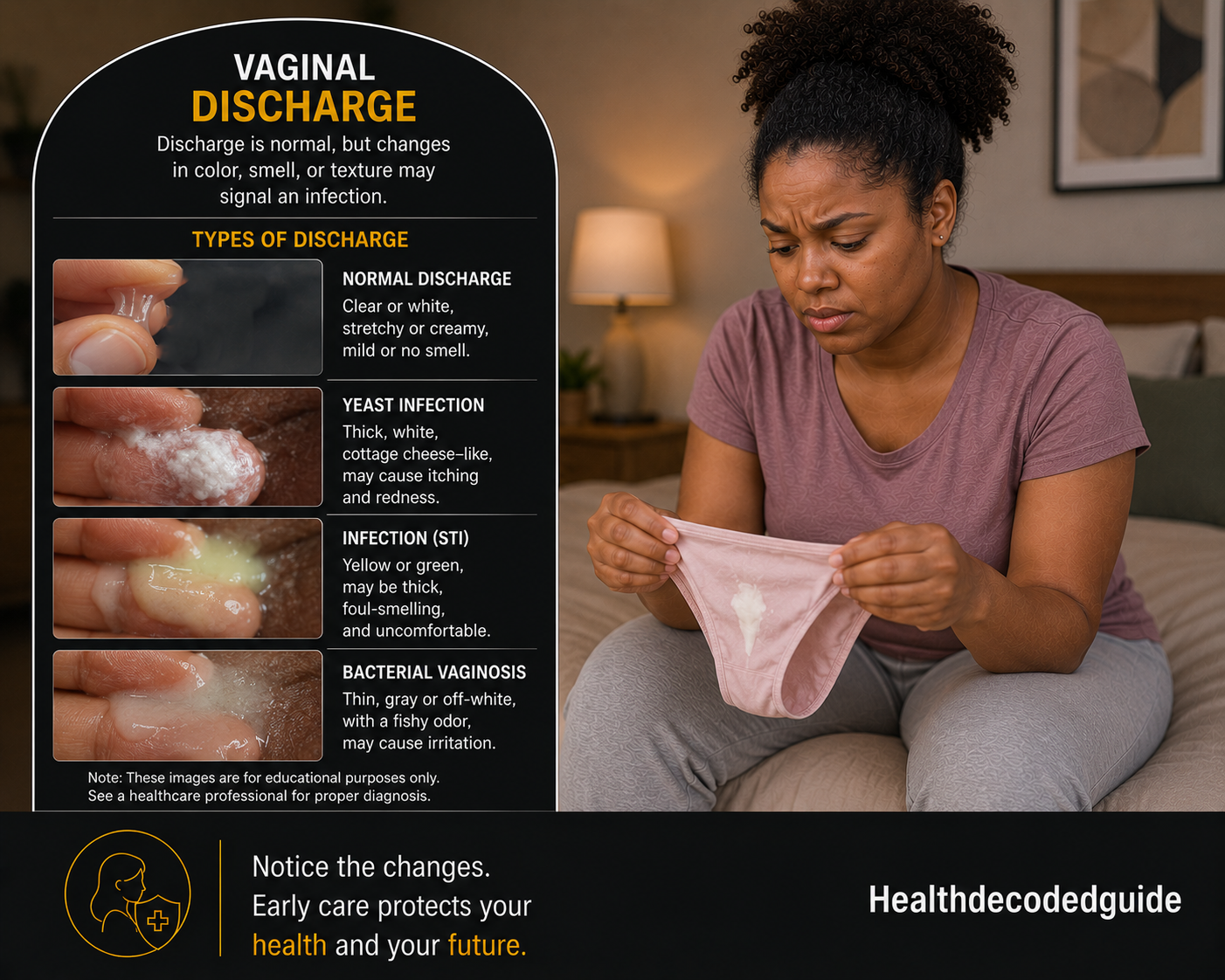
Vaginal discharge is fluid naturally produced by the vagina and cervix.
Some discharge is completely normal and helps keep the vagina healthy and clean.
However, changes in color, smell, amount, or associated symptoms may sometimes suggest infection or another medical condition.
1️⃣ Introduction
Vaginal discharge changes naturally throughout life and during the menstrual cycle.
• discharge helps protect and clean the vagina
• normal discharge may vary in amount and texture
• hormones, ovulation, pregnancy, and contraception may affect discharge patterns
👉 Many women experience normal discharge changes at different times in their cycle.
2️⃣ How it happens
The vagina and cervix naturally produce fluid.
• this fluid helps maintain vaginal health and balance
• hormones influence the amount and texture of discharge
• infections or irritation may change the appearance or smell of discharge
👉 Not all vaginal discharge is abnormal.
3️⃣ What is usually considered normal?
• clear or white discharge
• mild odor or no odor
• discharge changing slightly during ovulation or pregnancy
👉 Normal discharge should usually not cause severe itching, pain, or strong unpleasant odor.
4️⃣ Common causes of abnormal discharge
• Sexually transmitted infections (STIs)
- gonorrhea or chlamydia
- trichomoniasis
• Hormonal and irritation-related causes
- hormonal changes
- scented soaps or vaginal products
👉 Different infections may cause different discharge colors and smells.
5️⃣ Symptoms that may happen together
• vaginal itching or burning
• pelvic pain
• pain during urination
• unpleasant odor
👉 Associated symptoms often help doctors identify the underlying cause.
6️⃣ Associated discharge changes
• thick white discharge
• yellow, green, or gray discharge
• bloody or brown discharge outside periods
• frothy or foul-smelling discharge
👉 Sudden unusual changes deserve medical attention.
7️⃣🩺 When it becomes dangerous 🚨
• fever with pelvic pain
• discharge with severe pain or bleeding
• symptoms during pregnancy
• sores or ulcers around the genital area
👉 These may indicate:
• pelvic inflammatory disease or STI complications
• infections requiring urgent medical treatment
8️⃣ Management / treatment
• treatment depends on the underlying cause
• antifungal or antibiotic treatment may be needed
• avoid self-treating repeatedly without proper diagnosis
Supportive Measures
• avoid harsh soaps or scented vaginal products
• practice safer sex and STI prevention
• wear breathable cotton underwear
• seek evaluation for persistent or unusual symptoms
👉 Vaginal health products are not always necessary and may sometimes worsen irritation.
9️⃣ Diagnosis
• symptom and medical history review
• vaginal examination in some cases
• swab or STI testing when needed
👉 Doctors often identify causes based on discharge appearance together with testing.
🟢 Important message
Some vaginal discharge is completely normal and healthy.
However, unusual odor, itching, pain, or major discharge changes should not be ignored.
👉 Early evaluation may help prevent complications and improve reproductive health.
FAQ
• Is vaginal discharge normal?
Yes. Normal discharge helps protect and clean the vagina.
• What color discharge is usually normal?
Clear or white discharge is commonly normal.
• Can infections change discharge color or smell?
Yes. Infections may cause yellow, green, gray, or foul-smelling discharge.
• Should discharge during pregnancy be checked?
Some changes are normal, but unusual discharge or bleeding during pregnancy deserves medical evaluation.
• When should medical help be sought?
If discharge causes itching, pain, odor, fever, or unusual bleeding.
🔗 Related Health Topics
• Vaginal Itching
• Burning During Urination
• Practicing Safe Sex and Protecting Your Reproductive Health
• Pelvic Pain
• Spotting Between Periods
📚 Medical References
• World Health Organization (WHO). Women’s reproductive and sexual health guidance.
• National Health Service (NHS). Vaginal discharge.
• Mayo Clinic. Vaginal discharge – Causes.
• Centers for Disease Control and Prevention (CDC). About Sexually Transmitted Infections (STIs).
• American College of Obstetricians and Gynecologists (ACOG). Vaginitis.
• National Institute for Health and Care Excellence (NICE). Pelvic inflammatory disease.
⚠️ Medical Disclaimer
This article is for educational purposes only and does not replace professional medical advice.
If you have symptoms or concerns, please consult a qualified healthcare professional.