Read in: English | Pidgin English
🩺 Medically reviewed by the Health Decoded Guide Editorial Team · Last reviewed: July 2026.
🔍 Quick Summary
Asthma management means taking the right steps to keep asthma under good control and reduce the risk of asthma attacks.
Understanding what asthma is and how it affects the airways is an important first step because good asthma control begins with knowing how the condition works.
1️⃣ Introduction
Asthma management focuses on preventing symptoms, maintaining normal daily activities and reducing the risk of severe asthma attacks.
• good asthma control is possible for most people
• treatment usually combines medicines with lifestyle measures
• understanding asthma helps people recognise symptoms and use treatment correctly
👉 Learning about your condition is one of the most effective parts of asthma treatment.
2️⃣ Principles of good asthma management
Asthma cannot currently be cured, but it can often be well controlled.
Good asthma management works by reducing inflammation, preventing airway narrowing and treating symptoms early.
• controller medicines reduce long-term inflammation
• reliever medicines quickly relax the airway muscles during symptoms
• avoiding triggers helps reduce flare-ups
👉 The goal is not simply treating asthma attacks—it is preventing them from happening.
3️⃣ Key parts of asthma management
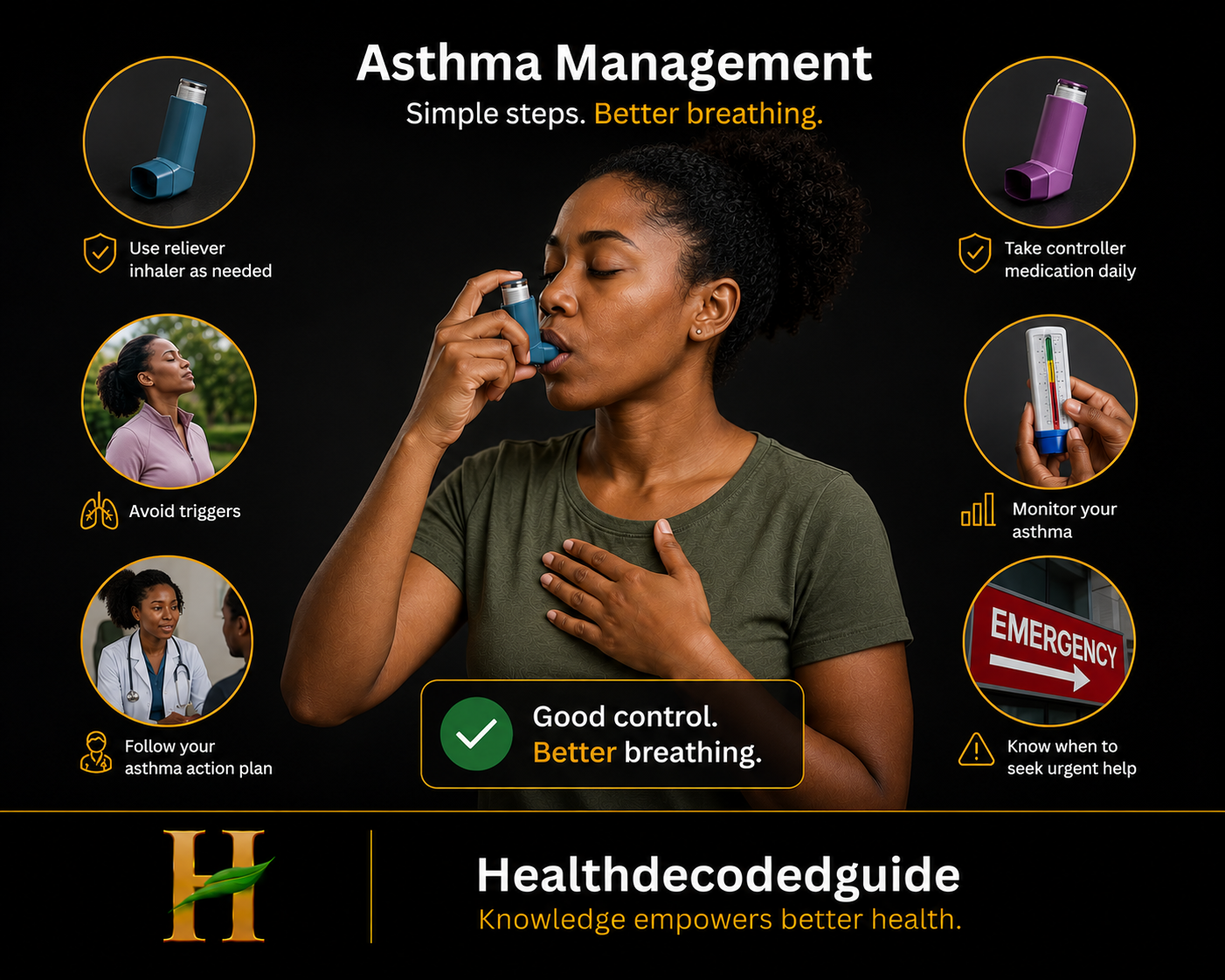
Daily asthma control
• taking preventer inhalers regularly
• monitoring symptoms
• avoiding known triggers
Managing asthma attacks
• using reliever inhalers promptly
• knowing when to seek emergency care
👉 Good long-term control greatly reduces the risk of emergency asthma attacks.
4️⃣ How to keep asthma under control
Medicines
• inhaled corticosteroids (preventer inhalers)
• reliever inhalers
• additional medicines when needed
Lifestyle measures
• avoiding known triggers
• exercising regularly when appropriate
• stopping smoking
• keeping vaccinations up to date
👉 Asthma treatment is personalised because symptoms and triggers vary from person to person.
5️⃣ How to know your asthma is well controlled
• symptoms occur no more than twice a week
• little or no night-time coughing or wheezing
• normal daily activities without limitation
• reliever inhaler rarely needed
👉 Needing your reliever inhaler frequently may mean your asthma is not well controlled.
6️⃣ What happens if asthma is not well controlled
• frequent asthma attacks
• disturbed sleep
• reduced ability to exercise
• missed school or work
• increased risk of hospital admission
👉 Frequent symptoms often mean your treatment needs reviewing.
7️⃣ 🩺 When asthma becomes an emergency 🚨
• severe shortness of breath
• difficulty speaking because of breathlessness
• lips or fingertips turning blue
• reliever inhaler not helping
• symptoms rapidly getting worse
👉 These may indicate:
• a severe asthma attack requiring emergency treatment
• need for urgent medical assessment
8️⃣ Everyday habits for managing asthma
• take your preventer inhaler exactly as prescribed
• always use the correct inhaler technique
• know and avoid your asthma triggers where possible
• keep an up-to-date asthma action plan
• attend regular asthma reviews with your healthcare professional
👉 Most people with asthma can live full, active lives when their asthma is well managed.
9️⃣ Regular asthma reviews
Your healthcare professional may regularly check:
• your current symptoms
• lung function tests such as spirometry or peak flow
• your inhaler technique
• how often you need your medicines
👉 Regular reviews help make sure your treatment continues to match your asthma.
🟢 Important Message
Asthma management is more than simply carrying an inhaler.
👉 Understanding your asthma, taking medicines correctly and recognizing worsening symptoms can help prevent serious asthma attacks.
FAQ
• Can asthma be completely cured?
No. However, it can usually be controlled very well with the right treatment.
• Should I use my preventer inhaler even when I feel well?
Yes. Preventer inhalers reduce airway inflammation and help prevent future asthma attacks.
• Can I exercise if I have asthma?
Yes. Most people with well-controlled asthma can safely exercise. Speak with your healthcare professional if exercise regularly triggers symptoms.
• Why is inhaler technique important?
Incorrect technique may prevent enough medicine from reaching your lungs, making treatment less effective.
• How often should my asthma be reviewed?
Most people should have their asthma reviewed at least once a year, or sooner if symptoms change or asthma is poorly controlled.
🧠 Why We Delay
Many people only think about asthma when they cannot breathe. If symptoms improve after using a reliever inhaler, they may assume the asthma is under control and stop taking their preventer medicine.
Poor asthma control can quietly increase the risk of severe attacks, even when symptoms seem mild. Regular treatment, correct inhaler technique and routine reviews help keep inflammation under control before problems develop.
👉 Good asthma management starts long before an asthma attack happens.
🔗 Related Health Topics
• Asthma
• Asthma Attacks
• Broncholitis in young children
• Asthma in Children
• Wheezing
• Shortness of Breath
• How to Use a Inhaler with a Spacer
📚 Medical References
• National Health Service (NHS). Asthma.
• Global Initiative for Asthma (GINA). Global Strategy for Asthma Management and Prevention.
• Centers for Disease Control and Prevention (CDC). Asthma.
• World Health Organization (WHO). Asthma.
• American Lung Association. Asthma.
⚠️ Medical Disclaimer
This article is for educational purposes only and does not replace professional medical advice.
If you have concerning symptoms, risk factors or abnormal test results, consult a healthcare professional.