

Read in: English | Pidgin English
🩺 Medically reviewed by the Health Decoded Guide Editorial Team · Last reviewed: July 2026
🔎 Quick Summary
Asthma is one of the most common long-term lung conditions in children.
It causes the airways to become inflamed and narrowed, making it harder for a child to breathe. Although asthma cannot be cured, proper treatment helps most children live active and healthy lives.
1️⃣ Introduction
Asthma affects millions of children worldwide.
Some children have symptoms only occasionally, while others may have flare-ups more often.
With the right treatment and avoiding known triggers, most children can continue to play, learn and exercise normally.
👉🏽 Many children with asthma lead completely active lives when their condition is well controlled.
2️⃣ What happens during an asthma attack?
During an asthma flare-up:
• the airways become swollen
• muscles around the airways tighten
• extra mucus is produced
• airflow becomes reduced
These changes make breathing more difficult.
👉🏽 The wheezing sound happens because air is trying to pass through narrowed airways.
3️⃣ Common symptoms
Children with asthma may develop:
• wheezing (a whistling sound while breathing)
• coughing, especially at night
• shortness of breath
• chest tightness
• fast breathing
• tiring easily during play
Symptoms may come and go.
👉🏽 A cough that keeps returning, especially at night or after exercise, may sometimes be a sign of asthma.
4️⃣ Common asthma triggers
Different children have different triggers.
Common ones include:
Illnesses
• common cold
• influenza
• RSV and other viral infections
Allergens
• dust mites
• pollen
• mould
• pet dander
Irritants
• cigarette smoke
• air pollution
• strong perfumes
Other triggers
• exercise
• cold air
• emotional excitement
👉🏽 Knowing your child's triggers is an important part of controlling asthma.
5️⃣ How is asthma diagnosed?
Doctors diagnose asthma using:
• your child's symptoms
• physical examination
• family history
• response to asthma medicines
Older children may also perform breathing tests such as spirometry.
👉🏽 There is no single blood test that confirms asthma.
6️⃣ Treatment
Treatment usually includes:
Quick-relief medicines
These medicines quickly relax the airway muscles during an asthma attack.
Preventer medicines
Usually inhaled corticosteroids, taken regularly to reduce airway inflammation and help prevent future attacks.
Your child's doctor will explain which medicine your child needs and how often it should be used.
👉🏽 Even when your child feels well, preventer medicines should be taken exactly as prescribed.
7️⃣ Helping your child live well with asthma
Parents can help by:
• giving medicines correctly
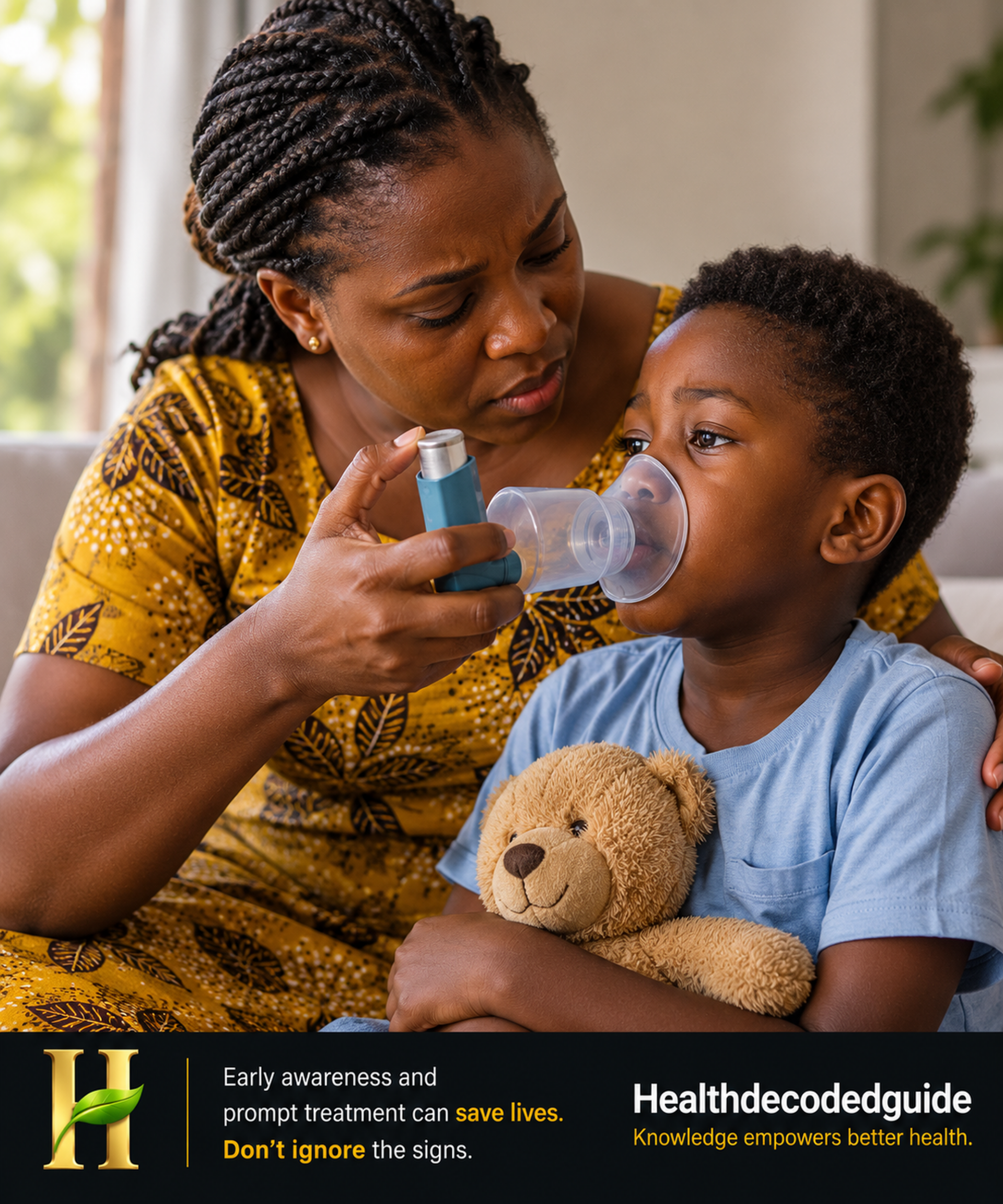
• learning proper inhaler technique
• using a spacer if recommended
• avoiding known triggers
• attending regular asthma reviews
• keeping an asthma action plan
👉🏽 Good asthma control means your child should sleep well, play normally and attend school regularly.
8️⃣ Possible complications
Poorly controlled asthma may lead to:
• frequent hospital visits
• interrupted sleep
• missed school days
• reduced physical activity
• severe asthma attacks
👉🏽 Early treatment helps reduce the risk of serious complications.
9️⃣ When to seek emergency care 🚨
Seek emergency medical care immediately if your child:
• struggles to breathe
• cannot finish sentences because of breathlessness
• lips or fingernails become blue or grey
• ribs pull in during breathing
• becomes unusually sleepy or confused
• does not improve after using the prescribed reliever inhaler
👉🏽 Severe asthma attacks are medical emergencies and need immediate treatment.
🟢 Important message
Asthma is a common childhood condition, but it can usually be well controlled.
Learning to recognise symptoms early, avoiding triggers and using asthma medicines correctly can help your child stay healthy and active.
👉🏽 Good asthma control means your child controls asthma—not the other way around.
FAQ
• Can children outgrow asthma?
Some children have fewer symptoms as they get older, but others continue to have asthma into adulthood.
• Can exercise make asthma worse?
Exercise can trigger asthma symptoms in some children, but with good asthma control, most children can safely participate in sports.
• Is asthma contagious?
No. Asthma cannot spread from one person to another.
• Can asthma be cured?
There is currently no cure, but treatment helps control symptoms and prevent attacks.
• Why does my child cough more at night?
Night-time coughing is common in asthma because the airways may become more sensitive during sleep.
• Does every wheezing child have asthma?
No. Viral infections and other conditions can also cause wheezing, especially in younger children.
🔗 Related Health Topics
• Wheeze in Children
• Breathing problem in Children
• Allergic Asthma in Children
• Exercise-Induced Asthma in Children
• Night-time Asthma in Children
• Bronchiolitis
• Cough in Children
📚 Medical References
• World Health Organization (WHO). Asthma.
• Global Initiative for Asthma (GINA). Global Strategy for Asthma Management and Prevention.
• National Health Service (NHS). Asthma.
• Centers for Disease Control and Prevention (CDC). Asthma.
• American Academy of Pediatrics (HealthyChildren.org). Asthma & Respiratory Viruses.
⚠️ Medical Disclaimer
This article is for educational purposes only and does not replace professional medical advice.
If your child has difficulty breathing, frequent wheezing or symptoms of an asthma attack, seek prompt medical care. If severe breathing difficulty develops, call your local emergency services immediately.