

Read in: English | Pidgin English
🩺 Medically reviewed by the Health Decoded Guide Editorial Team · Last reviewed: July 2026
🔍 Quick Summary
Travel vaccinations help protect you from infections that are more common in certain parts of the world.
The vaccines you need depend on where you are travelling, your health, and the activities you plan to do.
1️⃣ Introduction
Travelling exposes you to diseases that may not exist, or may be uncommon, in your home country.
• some countries require proof of certain vaccinations before entry
• vaccines protect both travellers and local communities
• planning ahead allows enough time for vaccines to become effective
👉 Travel health preparation should begin several weeks before your departure.
2️⃣ How travel vaccinations work
Vaccines train your immune system to recognise and fight specific infections before you are exposed to them.
• your body produces protective antibodies
• this reduces the risk of severe illness if you encounter the disease
• some vaccines also reduce the spread of infections between countries
👉 Most travel vaccines prevent disease—they do not treat infections after they occur.
3️⃣ Types
Routine vaccinations
These are vaccines everyone should keep up to date with, regardless of travel.
• measles, mumps and rubella (MMR)
• tetanus, diphtheria and polio
• influenza and COVID-19 where recommended
Travel-specific vaccinations
These depend on your destination.
• Yellow fever
• Typhoid
• Hepatitis A
• Hepatitis B
• Rabies
• Japanese encephalitis
• Cholera
• Meningococcal vaccine (for some destinations)
👉 The vaccines recommended for one country may not be necessary for another.
4️⃣ Who may need travel vaccinations?
Destination-related risk
• countries where certain infections are common
• regions experiencing disease outbreaks
Personal risk factors
• children
• older adults
• pregnancy
• weakened immune system
• chronic medical conditions
• long-term travel
• visiting rural communities or staying with family
👉 Your travel plans are just as important as your destination when deciding which vaccines you need.
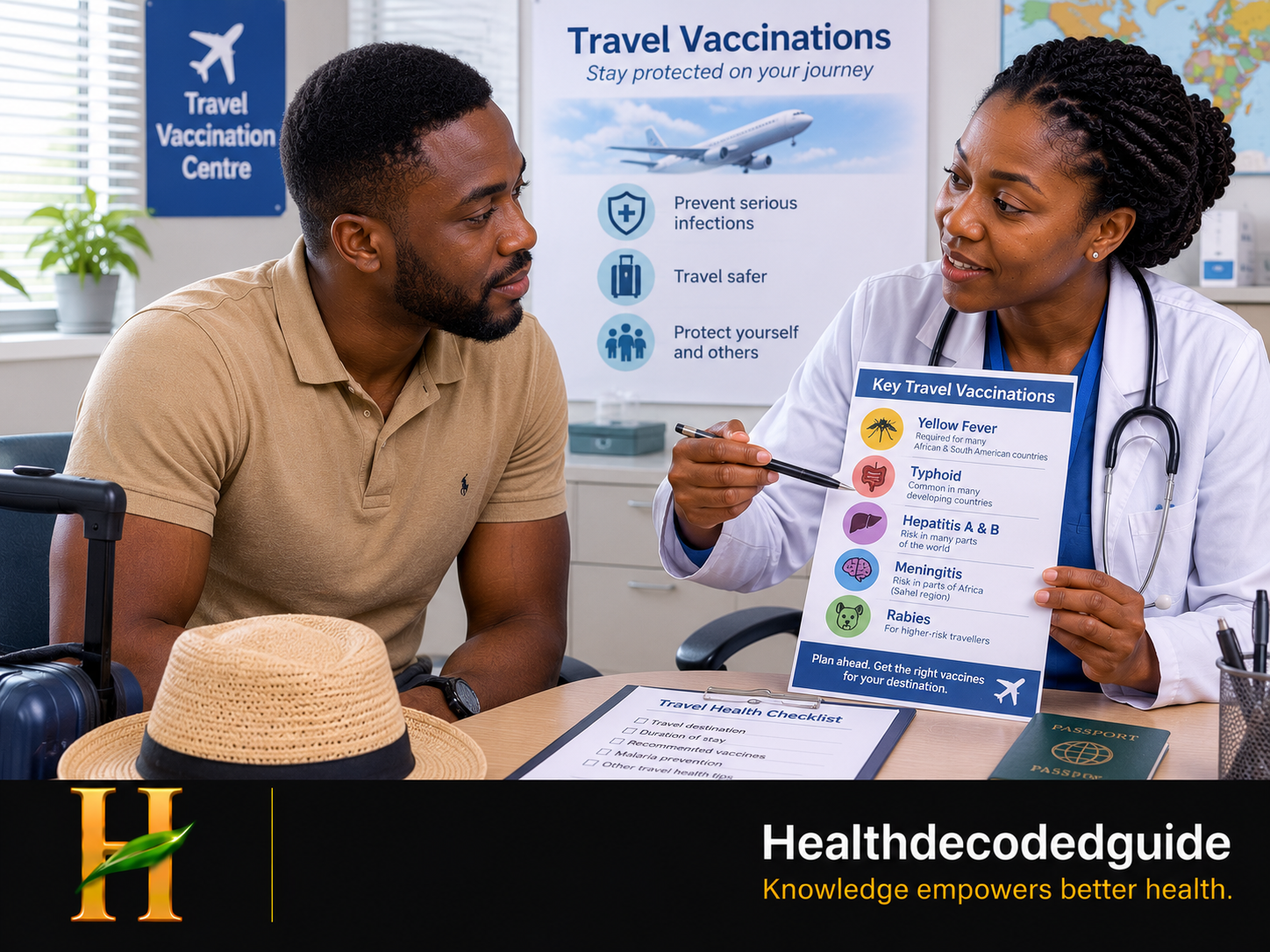
5️⃣ What happens during a travel health consultation?
• your travel itinerary is reviewed
• your vaccination history is checked
• recommended vaccines and medicines are discussed
• advice is given on food safety, insect bites and other health risks
👉 Travel clinics often provide advice beyond vaccinations, including malaria prevention.
6️⃣ Possible side effects
Most travel vaccines only cause mild side effects.
• soreness where the injection was given
• mild fever
• tiredness
• headache
Serious allergic reactions are rare.
👉 The health risks of many travel-related infections are usually much greater than the risks associated with vaccination.
7️⃣ 🩺 When it becomes dangerous 🚨
Seek urgent medical attention if you develop:
• difficulty breathing after vaccination
• swelling of the face or throat
• severe allergic reaction
• high fever after returning from travel
• yellow eyes, severe diarrhea or persistent fever after visiting a high-risk country
👉 These may indicate:
• a severe vaccine reaction (rare)
• a serious travel-related infection requiring urgent assessment
8️⃣ Prevention and preparation
• book a travel health appointment at least 4–8 weeks before departure
• keep your routine vaccinations up to date
• use mosquito bite prevention where recommended
• drink safe water and eat safely while travelling
• carry your vaccination records if required
👉 Good travel health preparation begins long before you board the plane.
9️⃣ When should you get vaccinated?
• ideally 4–8 weeks before travel
• some vaccines require multiple doses
• some vaccines provide lifelong protection after one dose
👉 Even if your trip is soon, it is still worth seeking medical advice because some protection is better than none.
🟢 Important Message
Travelling abroad should be exciting—not interrupted by preventable illness.
👉 A simple travel health consultation before your trip can help protect both your health and your journey.
FAQ
• Do I need vaccines for every country?
No. Vaccine recommendations depend on your destination, activities and personal health.
• Can I travel without travel vaccines?
It depends on your destination. Some countries require proof of certain vaccinations, such as yellow fever, before entry.
• How early should I visit a travel clinic?
Ideally at least 4–8 weeks before travelling.
• Are travel vaccines safe?
Yes. Most are very safe and serious side effects are uncommon.
• Do I need travel vaccines for every country?
No. Vaccine recommendations depend on your destination, activities, length of stay and personal health.
• Are malaria tablets the same as travel vaccines?
No. Malaria tablets help prevent malaria, while vaccines protect against specific infections such as yellow fever or hepatitis A.
• What is the Yellow Card?
The Yellow Card is an International Certificate of Vaccination or Prophylaxis (ICVP) that provides proof of certain vaccinations, such as yellow fever.
• Why does my friend need different travel vaccines than I do?
Vaccine recommendations vary based on destination, planned activities, age, medical conditions and previous vaccinations.
🧠 Why We Delay
Many travellers only think about flights, hotels and passports. Health preparation is often left until the last minute, leaving little time for vaccines to work or for multiple-dose schedules to be completed.
Delaying travel advice may increase the risk of preventable infections and, in some cases, could even affect entry into countries that require proof of vaccination. Planning ahead helps you travel with greater confidence and protection.
👉 Preparing your health for travel is just as important as packing your suitcase.
🔗 Related Health Topics
• Yellow Fever
• Typhoid Fever
• Hepatitis
• Malaria
• Mosquito Bite Prevention
📚 Medical References
• World Health Organization (WHO). International travel and health. https://www.who.int
• Centers for Disease Control and Prevention (CDC). Travelers' Health. https://wwwnc.cdc.gov/travel
• National Health Service (NHS). Travel vaccinations. https://www.nhs.uk
• UK Health Security Agency (UKHSA). Travel health guidance. https://travelhealthpro.org.uk
• Public Health Agency of Canada (PHAC). Travel health advice. https://travel.gc.ca
⚠️ Medical Disclaimer
This article is for educational purposes only and does not replace professional medical advice.
If you have concerning symptoms, risk factors or abnormal test results, consult a healthcare professional.