

Read in: English | Pidgin English
🩺 Medically reviewed by the Health Decoded Guide Editorial Team · Last reviewed: July 2026
🔎 Quick Summary
Mosquito bites can spread diseases such as malaria, dengue fever, yellow fever, chikungunya and Zika virus in some parts of the world.
Simple measures like using insect repellent, sleeping under mosquito nets and reducing mosquito breeding sites can greatly lower your risk of mosquito bites.
1️⃣ Introduction
Mosquitoes are among the world's most important carriers of infectious diseases.
Although most mosquito bites only cause temporary itching, some mosquitoes can spread serious illnesses.
Protecting yourself from mosquito bites is one of the best ways to reduce your risk of these infections.
👉🏽 Preventing mosquito bites protects not only you, but also your family and community.
2️⃣ Why mosquito bites matter
Not every mosquito carries disease, but infected mosquitoes can transmit parasites or viruses when they bite.
Mosquito bites can spread:
• malaria
• dengue fever
• zika virus
• chikungunya
• yellow fever
The diseases spread depend on where you live or travel.
👉🏽 A mosquito bite may look harmless, but in some regions it can transmit serious infections.
3️⃣ Use insect repellent
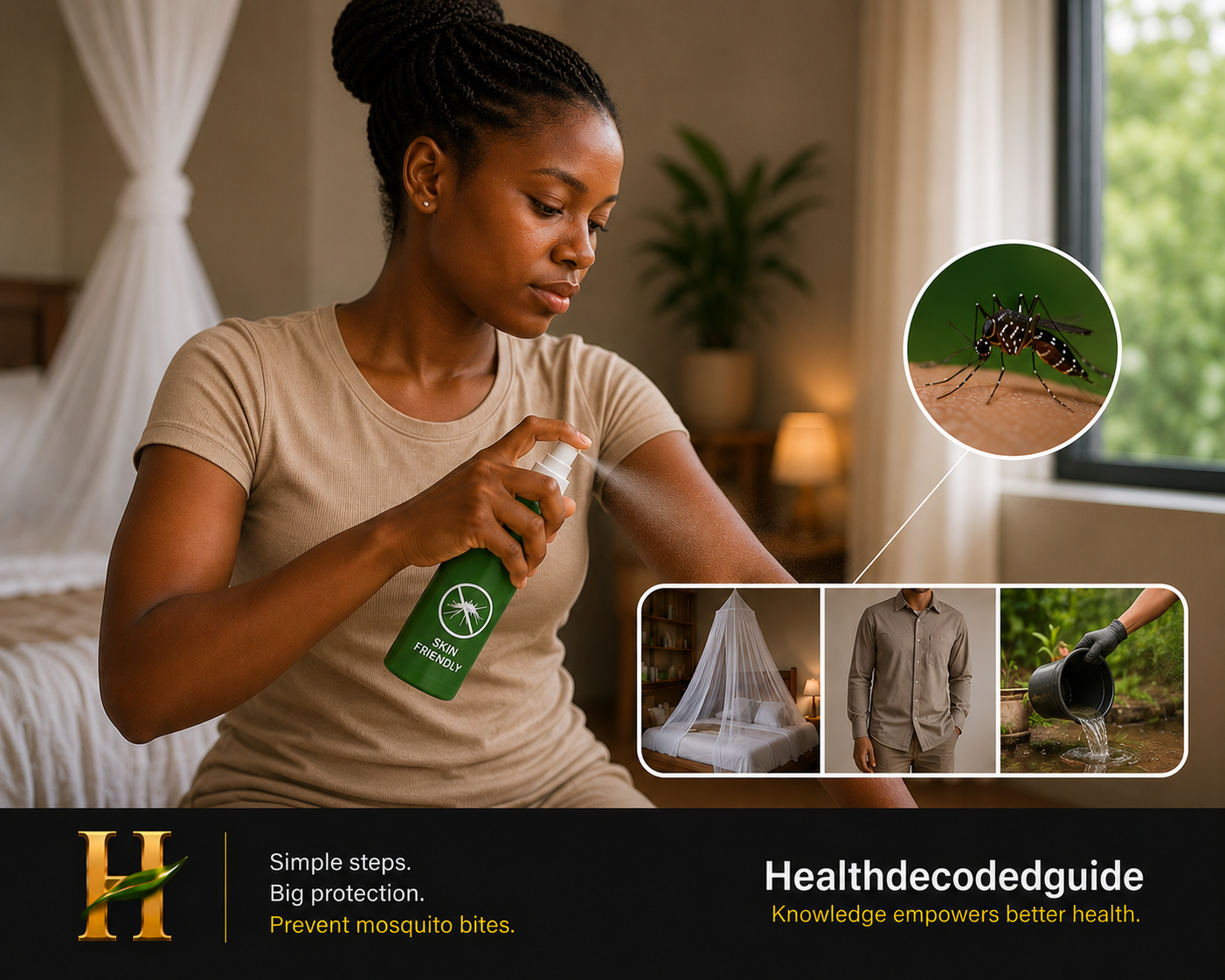
One of the easiest ways to reduce mosquito bites is by using insect repellent.
Choose products containing approved active ingredients such as:
• DEET
• picaridin (also called icaridin)
• IR3535
• oil of lemon eucalyptus (PMD) for appropriate ages
Always:
• follow the product instructions
• reapply when recommended
• avoid spraying into the eyes or mouth
👉🏽 Different repellents protect for different lengths of time, so always check the label.
4️⃣ Wear protective clothing
Covering exposed skin makes it harder for mosquitoes to bite.
When mosquitoes are active:
• wear long-sleeved shirts
• wear long trousers
• wear socks and closed shoes where practical
• choose loose-fitting clothing
• consider insecticide-treated clothing when travelling to high-risk areas
👉🏽 Light-coloured clothing may make mosquitoes easier to spot, although any covered skin is better protected than exposed skin.
5️⃣ Sleep under mosquito nets
Mosquito nets are especially important in areas where mosquitoes spread malaria.
For best protection:
• use insecticide-treated mosquito nets
• sleep under the net every night
• make sure the net has no holes
• tuck the net securely under the mattress or sleeping mat
👉🏽 Mosquito nets remain one of the most effective ways to reduce malaria transmission.
6️⃣ Reduce mosquitoes around your home
Mosquitoes lay eggs in standing water.
Help reduce mosquito breeding by:
• emptying buckets and containers regularly
• covering water storage containers
• cleaning blocked gutters
• changing pet water frequently
• removing old tyres and unused containers that collect rainwater
👉🏽 Even small amounts of standing water can become mosquito breeding sites.
7️⃣ Protect babies and children
Children may be especially vulnerable to mosquito-borne diseases.
To help protect them:
• use mosquito nets over sleeping areas
• dress children in protective clothing
• use age-appropriate insect repellents
• follow product instructions carefully
👉🏽 Never apply insect repellent to a baby's hands because they may put them in their mouth or eyes.
8️⃣ Protect yourself while travelling
If travelling to an area where mosquito-borne diseases occur:
• check travel health advice before leaving
• pack insect repellent
• carry long-sleeved clothing
• sleep under mosquito nets when necessary
• ask whether malaria prevention medicine is recommended
👉🏽 Travel advice depends on your destination, season and local disease outbreaks.
9️⃣ Common mistakes
Avoid these common mistakes:
• applying too little repellent
• forgetting to reapply repellent
• sleeping without mosquito nets in malaria-risk areas
• leaving standing water around the home
• assuming mosquitoes only bite at night
👉🏽 Different mosquito species bite at different times of the day.
🔟 When to seek medical care 🚨
See a healthcare professional if you develop:
• fever after mosquito bites
• severe headache
• skin rash
• persistent vomiting
• yellow eyes or skin
• confusion
• difficulty breathing
👉🏽 Fever after travelling to a malaria-risk area should always be assessed urgently.
🟢 Important message
Mosquito bite prevention is one of the simplest ways to reduce your risk of several serious diseases.
Small daily habits such as using insect repellent, sleeping under mosquito nets and removing standing water can make a big difference.
👉🏽 Protecting yourself from mosquito bites also helps protect your family and community.
FAQ
• Why do mosquitoes bite some people more than others?
Mosquitoes are attracted by body heat, carbon dioxide, body odour and other factors. Some people may naturally attract mosquitoes more than others.
• Do mosquito bites always spread disease?
No. Most mosquito bites do not transmit disease. Risk depends on the mosquito species and whether it carries an infection.
• Can mosquitoes bite through clothing?
Yes. Thin or tight-fitting clothing may not fully protect against mosquito bites.
• Are mosquito coils enough to prevent mosquito bites?
No. Mosquito coils may reduce mosquitoes indoors but should not replace mosquito nets, repellents or other protective measures.
• Should I use mosquito repellent every day?
If you live in or are visiting an area where mosquitoes are common or mosquito-borne diseases occur, using repellent according to the manufacturer's instructions can help reduce bites.
• Does removing standing water really help?
Yes. Eliminating standing water reduces places where many mosquitoes lay their eggs.
🔗 Related Health Topics
• Malaria Prevention
• Malaria Symptoms
• Dengue Fever
• Treatment for Malaria
• Malaria vs Dengue
• Malaria vs Typhoid
📚 Medical References
• World Health Organization (WHO). Vector-borne diseases: https://www.who.int/news-room/fact-sheets/detail/vector-borne-diseases
• World Health Organization (WHO). Malaria: https://www.who.int/health-topics/malaria
• Centers for Disease Control and Prevention (CDC). Preventing Mosquito Bites: https://www.cdc.gov/mosquitoes/prevention/
• National Health Service (NHS). Insect bites and stings: https://www.nhs.uk/conditions/insect-bites-and-stings
• Mayo Clinic. Mosquito bites – Symptoms and causes: https://www.mayoclinic.org/diseases-conditions/mosquito-bites/symptoms-causes/syc-20375310
⚠️ Medical Disclaimer
This article is for educational purposes only and does not replace professional medical advice.
If you have symptoms or concerns, please consult a qualified healthcare professional.