

Read in: English | Pidgin English
🩺 Medically reviewed by the HDG Medical Editorial Team· Last reviewed: July 2026.
🔍 Quick Summary
Malaria is a preventable disease spread mainly through the bites of infected female Anopheles mosquitoes.
Using insecticide-treated mosquito nets, preventing mosquito bites, taking preventive medicines when appropriate, and vaccinating eligible children can greatly reduce the risk of malaria.
1️⃣ Introduction
Malaria prevention combines several strategies to reduce the risk of infection.
• avoid mosquito bites
• sleep under insecticide-treated mosquito nets
• take preventive medicines when recommended
• vaccinate eligible children where available
• seek early testing if malaria symptoms develop
👉 Using several prevention methods together offers better protection than relying on only one.
2️⃣ How malaria spreads
Malaria spreads when an infected female Anopheles mosquito bites a person and injects malaria parasites into the bloodstream.
• mosquitoes become infected after biting someone with malaria
• infected mosquitoes pass the parasite to other people through bites
• malaria is common in many tropical and subtropical regions
• risk often increases during and after rainy seasons
👉 Malaria is not usually spread by hugging, shaking hands, coughing, or sharing food.
3️⃣ Sleep under an insecticide-treated mosquito net
Sleeping under a treated mosquito net remains one of the most effective ways to prevent malaria.
• use the net every night
• tuck the net securely around the bed or sleeping mat
• repair holes when possible
• replace damaged or worn-out nets
👉 Even if mosquitoes seem few, sleeping under a treated net every night remains important.
4️⃣ Prevent mosquito bites
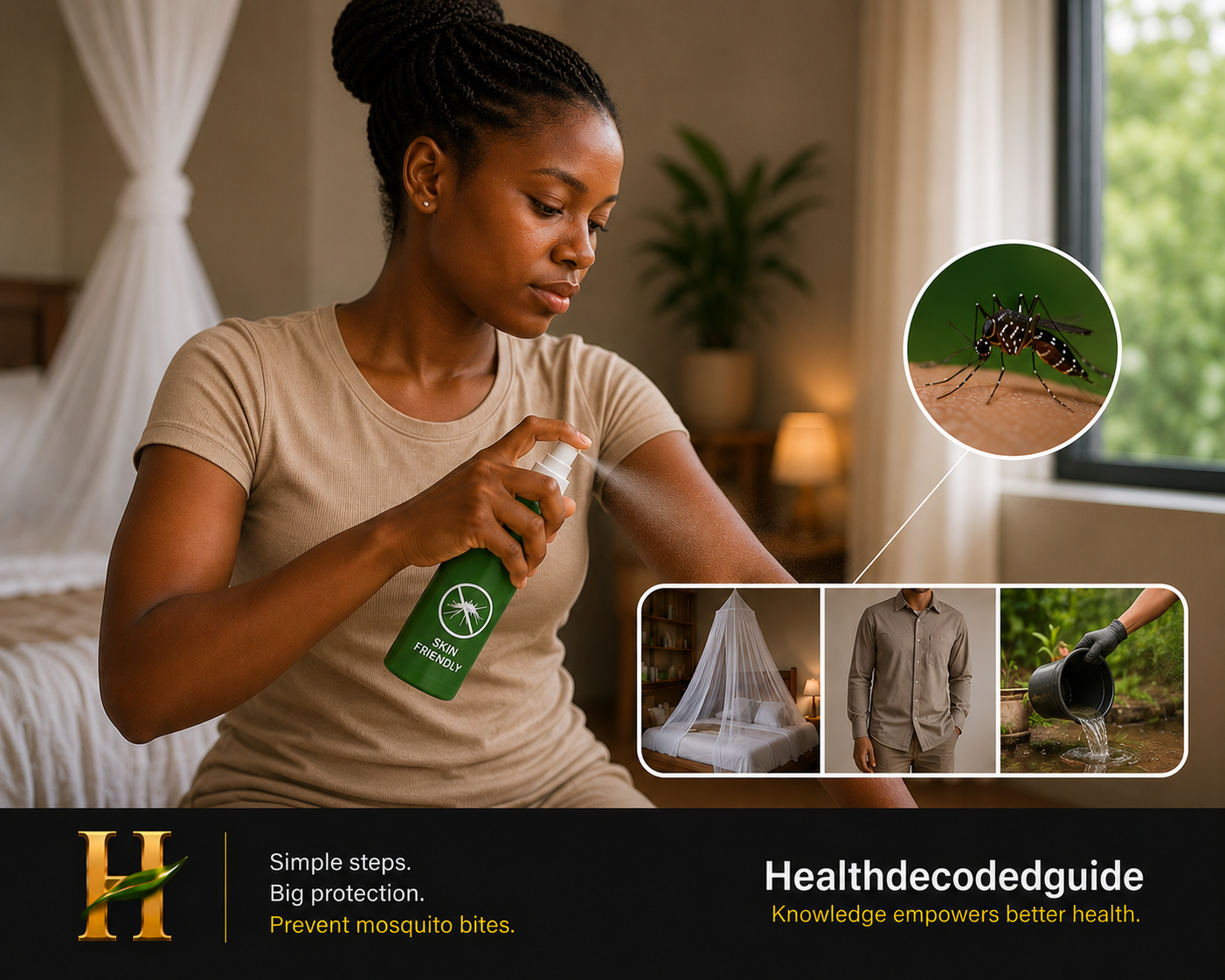
Reducing mosquito bites lowers the chance of malaria infection.
• use insect repellent on exposed skin
• wear long sleeves and trousers, especially in the evening
• install window and door screens where possible
• stay in well-screened or air-conditioned rooms when available
• use mosquito nets during sleep
👉 Malaria-carrying mosquitoes usually bite between dusk and dawn.
5️⃣ Reduce mosquitoes around the home
Reducing mosquito breeding areas helps protect both families and communities.
• remove standing water around the home
• cover water storage containers
• clear blocked gutters and drains
• support community mosquito-control programmes
• cooperate with indoor residual spraying where available
👉 Community mosquito control works best when everyone participates.
6️⃣ Preventive malaria medicines
Some people benefit from preventive malaria medication.
This includes:
• travellers visiting malaria-risk areas
• certain pregnant women in recommended regions
• children receiving seasonal malaria chemoprevention in eligible countries
👉 The correct medicine depends on your destination, age, pregnancy status, and local malaria resistance patterns.
7️⃣ Malaria vaccination
Malaria vaccines are now available in some countries for children living in areas with moderate to high malaria transmission.
• vaccines reduce severe malaria
• several doses are required
• vaccination should be combined with mosquito prevention measures
• vaccinated children can still develop malaria
👉 Vaccination adds protection but does not replace mosquito nets or other preventive measures.
8️⃣ Malaria prevention during pregnancy
Pregnant women are at increased risk of severe malaria and pregnancy complications.
Prevention may include:
• sleeping under treated mosquito nets
• attending antenatal care regularly
• intermittent preventive treatment where recommended
• seeking early medical care for fever
👉 Never start malaria medicine during pregnancy without medical advice.
9️⃣ Malaria prevention for travellers
Before travelling to a malaria-risk area:
• check whether malaria occurs at your destination
• obtain recommended preventive medication before departure
• continue medication exactly as instructed
• prevent mosquito bites throughout your trip
• seek medical care promptly if fever develops during or after travel
👉 Fever after returning from a malaria-risk area should always be assessed urgently.
🔟 Common prevention mistakes
• not using mosquito nets every night
• stopping preventive medication too early
• relying only on mosquito coils
• assuming previous malaria infection gives lifelong immunity
• delaying medical assessment for fever
👉 Previous malaria infection does not provide complete protection against future infections.
🩺When to seek urgent medical care 🚨
Seek urgent medical care if someone develops:
• fever after possible malaria exposure
• repeated vomiting
• confusion or unusual drowsiness
• difficulty breathing
• seizures
• inability to drink or breastfeed
👉 These may indicate severe malaria or another life-threatening illness requiring immediate treatment.
🟢 Important message
Malaria is preventable.
Using insecticide-treated mosquito nets, preventing mosquito bites, following local vaccination programmes, and seeking early testing for fever can save lives.
👉 Prevention remains important even if you have had malaria before.
FAQ
• Can mosquito nets prevent malaria?
Yes. Sleeping under an insecticide-treated mosquito net is one of the most effective ways to reduce malaria transmission.
• Can I still get malaria while using a mosquito net?
Yes. Nets greatly reduce the risk but do not provide complete protection.
• Is there a malaria vaccine?
Yes. WHO recommends malaria vaccines for eligible children in certain malaria-endemic countries.
• Do mosquito coils prevent malaria?
Mosquito coils may reduce mosquito exposure but should not replace treated mosquito nets or other proven prevention methods.
• Can I get malaria more than once?
Yes. Previous malaria infection does not provide lifelong immunity.
• Should travellers take malaria medication?
Some travellers should. The correct medicine depends on the destination and individual health factors.
🔗 Related Health Topics
• Malaria Symptoms
• Fever in Children
• Why Malaria Keeps coming back
• Mosquito Bite Prevention
• Malaria vs Dengue Fever
• Malaria Prevention
• Fever
📚 Medical References
• World Health Organization (WHO). Malaria: https://www.who.int/health-topics/malaria
• World Health Organization (WHO). Questions and Answers on Malaria: https://www.who.int/news-room/questions-and-answers/item/malaria
• World Health Organization (WHO). Malaria Vaccines (RTS,S and R21): https://www.who.int/news-room/questions-and-answers/item/q-a-on-rts-s-malaria-vaccine
• World Health Organization (WHO). WHO Guidelines for Malaria: https://iris.who.int/handle/10665/376572
• Centers for Disease Control and Prevention (CDC). Preventing Malaria: https://www.cdc.gov/malaria/prevention/index.html
• Centers for Disease Control and Prevention (CDC). Yellow Book – Malaria: https://www.cdc.gov/yellowbook/hcp/travel-associated-infections-diseases/malaria.html
• National Health Service (NHS). Malaria. Available from: https://www.nhs.uk/conditions/malaria
• Mayo Clinic. Malaria: https://www.mayoclinic.org/diseases-conditions/malaria
⚠️ Medical Disclaimer
This article is for educational purposes only and does not replace professional medical advice.
If you have symptoms or concerns, please consult a qualified healthcare professional.