Read in: English | Pidgin
🔎 Quick Summary
Malaria can come back due to new mosquito bites, incomplete treatment, or hidden parasites in the liver that reactivate later.
1️⃣ Introduction
Many people notice that malaria seems to “keep coming back,” even after treatment.
This can feel frustrating and confusing.
In reality, there are different reasons why malaria may return, and understanding them helps guide proper treatment and prevention.
2️⃣ How the condition develops
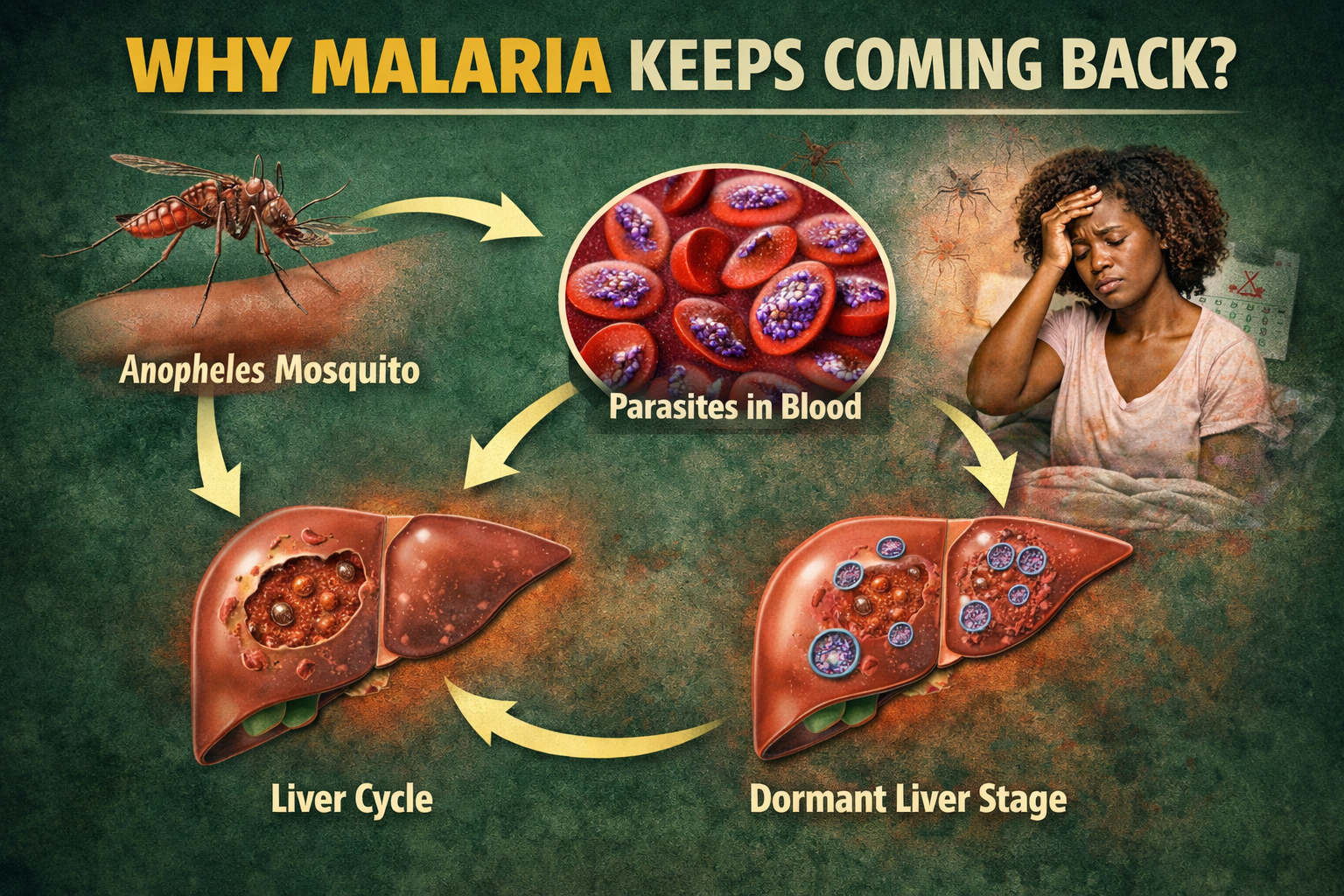
Malaria is caused by a parasite that enters the body through a mosquito bite.
After entering the bloodstream:
• the parasite first goes to the liver
• it multiplies silently
• then it enters the blood and infects red blood cells
👉 This cycle is what causes symptoms like fever and chills because the body is fight the infection.
3️⃣ Early symptoms
When malaria comes back, symptoms may include:
• fever
• chills
• sweating
• headache
• body aches
• fatigue
These symptoms may feel similar to previous episodes.
4️⃣ Symptom explanation
Malaria symptoms happen because the parasite:
• enters and destroys red blood cells
• this triggers the body’s immune response
👉 The repeated breaking of red blood cells causes fever cycles, chills, and weakness.
5️⃣ Why malaria keeps coming back
There are three main reasons:
🔹 1. Reinfection (most common)
You get bitten again by another infected mosquito.
👉 This is the most common reason in high-risk areas.
🔹 2. Incomplete treatment
If treatment is:
• not completed
• incorrect
• or resistance occurs
👉 some parasites may survive and continue multiplying. During this time, you may feel well because the number of parasites is too low to trigger an immune reaction to cause noticeable malaria symptoms.
🔹 3. Relapse (hidden liver stage)
Some types of malaria parasites (like Plasmodium vivax and Plasmodium ovale) can hide in the liver.
👉 These hidden parasites can “wake up” weeks or months later and cause symptoms again.
💡 Simple explanation:
The parasite can “sleep” in the liver and come back later — even without a new mosquito bite. This can happen weeks or months after the first infection.
In some cases, people may notice it returning during periods of stress or illness, but the exact trigger is not always clear.
6️⃣ Comparison note
Malaria coming back is different from:
• typhoid recurrence
• repeated viral infections
👉 Malaria has a unique life cycle, especially with liver stages.
7️⃣ When it becomes dangerous
🚨 Seek urgent care if:
• persistent high fever
• confusion
• difficulty breathing
• severe weakness
⚠️ Repeated malaria can lead to complications like anemia.
8️⃣ Prevention / management
To reduce recurrence:
• use mosquito nets
• avoid mosquito bites🦟
• complete all medications✔️
• follow doctor instructions
💧 Hydration and rest are also important during recovery.
9️⃣ Diagnosis / testing
Doctors may use:
• rapid diagnostic tests
• blood smear
👉 Re-testing may be needed if symptoms return.
🔟 Important message
Malaria coming back does not always mean treatment failed.
It could be a new infection or a relapse.
Proper diagnosis helps guide the right treatment.
🔹 FAQ
🔹 Why do I keep getting malaria again and again?
Because of repeated mosquito bites or relapse from hidden parasites.
🔹 Can malaria stay in the body?
Yes, some types can hide in the liver.
🔹 Does malaria mean my immunity is weak?
Not necessarily — exposure plays a major role.
🔹 Can I prevent recurrence?
Yes, by avoiding mosquito bites and completing treatment.
🔹 When should I get tested again?
If symptoms return after treatment.
Related Health Topics
🔹 Malaria – Symptoms and Causes
🔹 Malaria vs Dengue – Difference
🔹 Malaria vs Typhoid – Difference
🔹 Typhoid Fever – Causes
🔹 Dengue Fever – Symptoms
🔹 Fever – Warning Signs
Medical References
• World Health Organization – Malaria
• Centers for Disease Control and Prevention – Malaria lifecycle
• National Health Service – Malaria
• Mayo Clinic – Malaria
• Peer-reviewed infectious disease literature
Medical Disclaimer
This article is for educational purposes only and does not replace professional medical advice, diagnosis, or treatment.
Always consult a qualified healthcare professional if you have symptoms or concerns about your health.