

Read in: English | Pidgin English
🩺 Medically reviewed by the Health Decoded Guide Editorial Team · Last reviewed: July 2026
🔎 Quick Summary
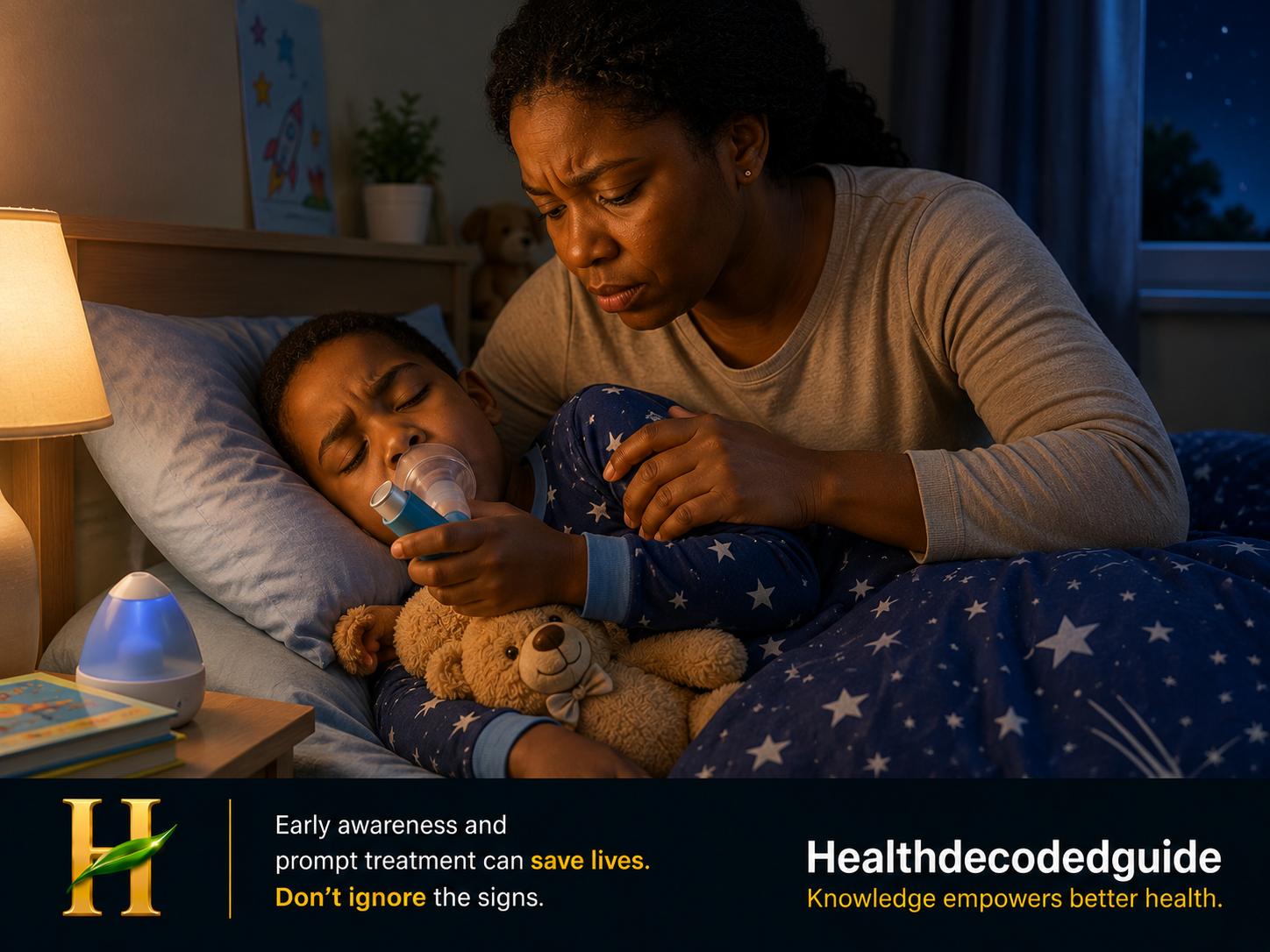
Night-time asthma happens when asthma symptoms become worse during the night or early morning, often disturbing a child's sleep.
Frequent night-time symptoms may be a sign that your child's asthma is not well controlled and needs medical review.
1️⃣ Introduction
Many children with asthma notice that their symptoms are worse at night.
A child who regularly wakes because of coughing, wheezing or shortness of breath should not simply be expected to "grow out of it."
Night-time asthma often means the airways remain inflamed even when your child seems well during the day.
👉🏽 Sleeping through the night without asthma symptoms is one of the goals of good asthma control.
2️⃣ Why does asthma get worse at night?
Several factors can make asthma symptoms more noticeable during sleep.
These include:
• natural overnight changes in airway inflammation
• cooler nighttime air
• lying flat for long periods
• exposure to bedroom allergens
• untreated allergies or nasal congestion
Some children may also have reflux, which can worsen coughing at night.
👉🏽 Night-time symptoms are often a clue that asthma treatment may need adjusting.
3️⃣ Common symptoms
Children may experience:
• coughing that wakes them from sleep
• wheezing during the night
• shortness of breath
• chest tightness
• restless sleep
• waking tired the next morning
Symptoms often occur between midnight and the early morning hours.
👉🏽 A child who repeatedly wakes because of coughing should be assessed, especially if this happens more than occasionally.
4️⃣ Common triggers
Night-time asthma may be triggered by:
Bedroom allergens
• dust mites
• pet dander
• mould
Environmental factors
• cold air
• cigarette smoke
• air pollution
Medical conditions
• allergic rhinitis (hay fever)
• viral respiratory infections
• gastro-oesophageal reflux disease (GERD)
👉🏽 Sometimes more than one trigger is contributing to night-time asthma symptoms.
5️⃣ How is it diagnosed?
A healthcare professional may:
• ask how often symptoms wake your child
• review daytime asthma symptoms
• examine your child
• assess inhaler technique
• perform spirometry in older children
👉🏽 Keeping an asthma symptom diary can help identify patterns and triggers.
6️⃣ Treatment
Treatment may include:
Preventer inhalers
• Usually inhaled corticosteroids taken regularly to reduce airway inflammation.
Reliever inhalers
• Used during asthma symptoms according to your child's asthma action plan.
Managing triggers
• Treating allergies
• Reducing dust mites
• Avoiding cigarette smoke
• Managing reflux if present
👉🏽 Children should never change or stop asthma medicines without medical advice.
7️⃣ Helping your child sleep better
Parents can help by:
• following the asthma action plan
• giving medicines exactly as prescribed
• keeping the bedroom as free from allergens as possible
• washing bedding regularly
• attending regular asthma reviews
👉🏽 If your child is waking with asthma symptoms, it is important to tell their healthcare professional rather than simply increasing reliever inhaler use.
8️⃣ Possible complications
Poorly controlled night-time asthma may lead to:
• poor sleep quality
• daytime tiredness
• difficulty concentrating at school
• missed school days
• increased risk of severe asthma attacks
👉🏽 Frequent night-time symptoms usually mean asthma is not optimally controlled.
9️⃣ When to seek emergency medical care 🚨
Seek immediate medical attention if your child:
• struggles to breathe
• cannot speak because of breathlessness
• lips or fingernails become blue or grey
• does not improve after using the prescribed reliever inhaler
• becomes unusually sleepy or difficult to wake
👉🏽 Severe asthma symptoms during the night should be treated as a medical emergency.
🟢 Important message
Children with well-controlled asthma should rarely wake because of coughing or breathing difficulties.
If night-time symptoms are becoming frequent, speak with your child's healthcare professional. Adjusting treatment and reducing triggers can often improve both asthma control and sleep quality.
👉🏽 Better asthma control during the day usually leads to better sleep at night.
FAQ
• Is coughing at night always caused by asthma?
No. Night-time coughing can also occur with viral infections, allergies, reflux and other conditions.
• How often should a child wake because of asthma?
Frequent night-time waking is not considered good asthma control and should be discussed with a healthcare professional.
• Can dust mites make asthma worse at night?
Yes. Dust mites are one of the most common bedroom triggers for allergic asthma.
• Should my child sleep sitting up?
No. Most children do not need to sleep upright. If breathing difficulties occur at night, they should be medically assessed.
• Will better asthma control improve sleep?
In many children, yes. Effective treatment often reduces night-time symptoms and improves sleep quality.
🔗 Related Health Topics
• Asthma in Children
• Allergic Asthma in Children
• Exercise-Induced Asthma in Children
• Severe Asthma in Children
• Hay Fever (Allergic Rhinitis)
• Wheeze in Children
• Asthma Action Plan (coming soon)
• How to Use an Inhaler with a Spacer
📚 Medical References
• Global Initiative for Asthma (GINA). Global Strategy for Asthma Management and Prevention
• World Health Organization (WHO). Asthma
• National Health Service (NHS). Asthma
• Centers for Disease Control and Prevention (CDC). Asthma
• American Academy of Pediatrics (HealthyChildren.org). Asthma in Children
⚠️ Medical Disclaimer
This article is for educational purposes only and does not replace professional medical advice.
If your child has frequent night-time asthma symptoms or develops severe breathing difficulty, seek medical care promptly. Severe asthma attacks require immediate emergency treatment.