

English
Published: 23 July 2026
🩺 Medically reviewed by the Health Decoded Guide Editorial Team· Last reviewed: July 2026
🔍 Quick Summary
Hay fever (allergic rhinitis) is an allergic reaction that affects the nose and eyes when the immune system overreacts to harmless substances such as pollen, dust mites or animal dander.
It can affect both children and adults and may occur during certain seasons or throughout the year.
Although it is not usually dangerous, symptoms can interfere with sleep, work, school and daily activities if left untreated.
1️⃣ Introduction
Hay fever, also called allergic rhinitis, is a common allergy that causes inflammation inside the nose after exposure to allergens.
Depending on the trigger, symptoms may occur only during certain seasons or throughout the year.
• affects both children and adults
• not caused by bacteria or viruses
• cannot be spread from one person to another
👉 Hay fever is caused by the immune system reacting to harmless substances as though they were dangerous.
2️⃣ How it happens
When a person with allergies breathes in an allergen:
• the immune system mistakenly identifies it as harmful
• antibodies trigger the release of histamine and other chemicals
• these chemicals cause swelling, itching and increased mucus production
👉 Histamine is responsible for many of the classic allergy symptoms such as sneezing, itching and a runny nose.
3️⃣ Types
Seasonal allergic rhinitis
• triggered by pollen from trees, grasses or weeds
• symptoms occur during specific times of the year
Perennial allergic rhinitis
• symptoms occur throughout the year
• commonly caused by dust mites, mould, cockroaches or pet dander
👉 Identifying the trigger can help reduce symptoms and improve treatment.
4️⃣ Common causes
Outdoor allergens
• tree pollen
• grass pollen
• weed pollen
Indoor allergens
• dust mites
• mould
• pet dander
• cockroach allergens
5️⃣ Symptom explanation
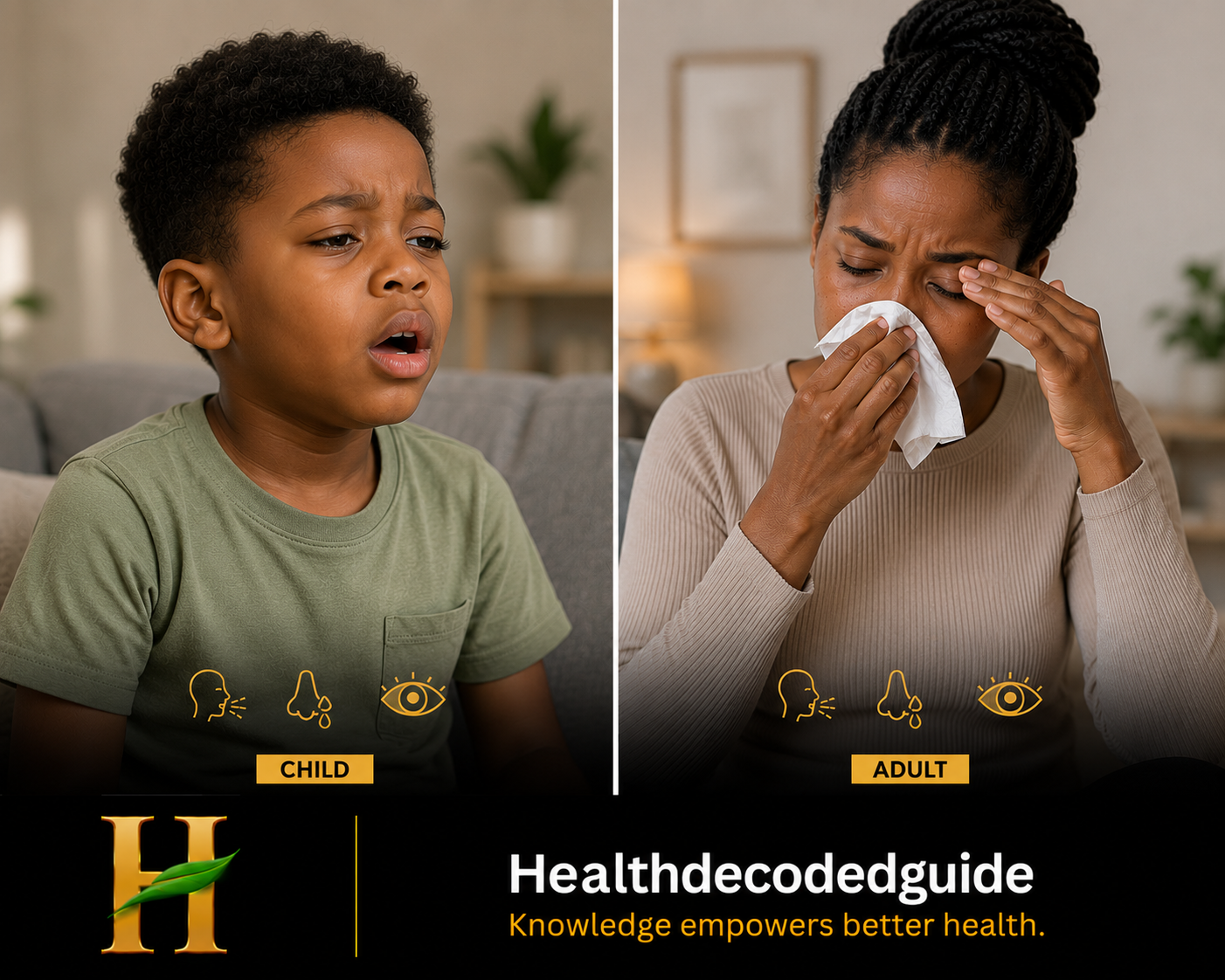
• frequent sneezing
• runny or blocked nose
• itchy nose, throat or eyes
• watery or red eyes
• reduced sense of smell
👉 These symptoms occur because allergy chemicals cause inflammation and increased mucus production in the nose and eyes.
6️⃣ Associated symptoms
• postnasal drip
• cough, especially at night
• headaches or facial pressure
• poor sleep due to nasal blockage
• tiredness and reduced concentration
👉 Poor sleep is one reason hay fever can affect school performance, work productivity and overall quality of life.
7️⃣ When it becomes dangerous 🚨
Seek medical attention if:
• breathing becomes difficult or wheezing develops
• facial pain, fever or thick green nasal discharge suggests a sinus infection
• symptoms remain severe despite treatment
• symptoms significantly affect sleep or daily activities
👉 These may indicate:
• asthma or another allergic condition
• a complication such as sinusitis that needs further assessment
8️⃣ Management and treatment
• avoid known allergy triggers whenever possible
• keep windows closed during high pollen seasons
• shower and change clothes after spending time outdoors
• use saline nasal rinses to help clear allergens
• antihistamines, nasal steroid sprays or other medicines may be recommended by a healthcare professional
👉 Effective treatment often combines avoiding triggers with appropriate medication.
9️⃣ Diagnosis
Diagnosis is usually based on:
• your symptoms and when they occur
• physical examination
• allergy testing when the trigger is unclear
👉 Knowing exactly what causes your allergies can help guide treatment and prevention.
🔟Hay fever in children
Read in: Pidgin English
Young children may not always be able to explain their symptoms. Instead, parents or caregivers may notice:
- frequent nose rubbing ("allergic salute")
- mouth breathing
- snoring or poor-quality sleep
- difficulty concentrating at school
- itchy, watery or red eyes
👉🏽 Persistent hay fever can affect a child's sleep, learning and daily activities. If symptoms continue or interfere with school or play, they should be assessed by a healthcare professional.
🟢Important Message
Hay fever is common and usually not serious, but persistent symptoms should not be ignored. Early treatment can improve sleep, concentration and overall quality of life.
👉 Managing your allergy triggers and using appropriate treatment can help you stay active and comfortable throughout the year.
FAQ
• Is hay fever contagious?
No. Hay fever is an allergic reaction and cannot spread from one person to another.
• Can hay fever develop later in life?
Yes. Some people develop allergies during adulthood even if they had no symptoms as a child.
• Can hay fever cause fever?
No. Despite its name, hay fever does not usually cause a fever.
• Can hay fever trigger asthma?
Yes. Allergies can worsen asthma symptoms in some people.
• Can I prevent hay fever completely?
Not always, but avoiding known triggers and using appropriate treatment can help reduce symptoms.
🧠 Why We Delay
Many people think hay fever is "just a seasonal nuisance" and try to ignore persistent symptoms. Others mistake it for repeated colds, especially when nasal congestion and sneezing continue for weeks.
Ignoring ongoing allergies can affect sleep, concentration and daily life, and may increase the risk of complications such as sinus infections or poorly controlled asthma.
👉 Persistent allergy symptoms deserve proper assessment, even if they seem mild.
🔗 Related Health Topics
• Asthma
• Asthma in Children
• Allergic Asthma in Children
• Eczema
• Sinusitis
• Food Allergies (coming soon)
📚 Medical References
• National Health Service (NHS). Allergic rhinitis.
• National Library of Medicine (MedlinePlus). Allergies
• Mayo Clinic. Hay fever (Allergic rhinitis).
• American Academy of Allergy, Asthma & Immunology (AAAAI). Allergic Rhinitis.
• American College of Allergy, Asthma & Immunology (ACAAI). Hay Fever (Allergic Rhinitis).
⚠️ Medical Disclaimer
This article is for educational purposes only and does not replace professional medical advice.
If your symptoms are severe, persistent or affecting your breathing, please consult a qualified healthcare professional.