

Read in: English | Pidgin English
🩺 Medically reviewed by the Health Decoded Guide Editorial Team · Last reviewed: July 2026
🔎 Quick Summary
Severe asthma is an uncommon but serious form of asthma where symptoms remain difficult to control despite appropriate treatment.
Children with severe asthma often need regular follow-up with asthma specialists to reduce the risk of severe attacks and improve their quality of life.
1️⃣ Introduction
Most children with asthma achieve good symptom control with the correct medicines and regular follow-up.
However, a small number continue to have frequent symptoms or severe asthma attacks despite receiving appropriate treatment.
These children may have severe asthma and often require specialist care.
👉🏽 Severe asthma is different from occasional asthma flare-ups. It refers to asthma that remains difficult to control even with appropriate treatment.
2️⃣ What is severe asthma?
Severe asthma is asthma that remains poorly controlled despite:
• using prescribed medicines correctly
• taking preventer inhalers regularly
• avoiding known triggers
• treating other contributing conditions
Before diagnosing severe asthma, doctors first check whether symptoms may be due to incorrect inhaler technique, missed medicines or another medical condition.
👉🏽 Many children thought to have severe asthma actually improve once these issues are addressed.
3️⃣ Symptoms
Children with severe asthma may have:
• frequent wheezing
• persistent cough
• shortness of breath
• chest tightness
• symptoms during the day and night
• frequent need for reliever inhalers
• repeated asthma attacks
👉🏽 Severe asthma often affects sleep, school attendance and everyday activities.
4️⃣ Who is at higher risk?
Some children have a greater risk of severe asthma because of:
• uncontrolled allergies
• exposure to cigarette smoke
• frequent viral infections
• obesity
• poor adherence to asthma medicines
• severe allergic asthma
👉🏽 Identifying and managing these risk factors can sometimes improve asthma control.
5️⃣ How is it diagnosed?
A specialist may:
• review your child's asthma history
• assess inhaler technique
• check whether medicines are being taken regularly
• perform lung function tests
• arrange allergy testing
• investigate other conditions that may mimic asthma
👉🏽 Confirming severe asthma takes time because doctors first rule out other possible causes of poor asthma control.
6️⃣ Treatment
Treatment may include:
Optimising inhaler therapy
• Adjusting preventer medicines.
Treating contributing conditions
• Managing allergies, eczema or hay fever.
Advanced therapies
• Biologic medicines for selected children with severe asthma.
Ongoing specialist care
• Regular reviews with a paediatric respiratory or asthma specialist.
👉🏽 The treatment plan is tailored to each child's specific type of asthma.
7️⃣ Living with severe asthma
Parents can help by:
• following the asthma action plan
• giving medicines exactly as prescribed
• attending all follow-up appointments
• recognising early signs of worsening asthma
• avoiding known triggers
• ensuring teachers and caregivers understand the child's asthma plan
👉🏽 Good communication between families, schools and healthcare professionals helps keep children safer.
8️⃣ Possible complications
Without good control, severe asthma may lead to:
• repeated hospital admissions
• emergency department visits
• interrupted sleep
• missed school
• reduced physical activity
• life-threatening asthma attacks
👉🏽 Regular specialist care aims to reduce these risks and improve your child's quality of life.
9️⃣ When to seek emergency medical care 🚨
Seek immediate medical attention if your child:
• struggles to breathe
• cannot speak because of breathlessness
• lips or fingernails become blue or grey
• becomes unusually sleepy or confused
• symptoms do not improve after using the prescribed reliever inhaler
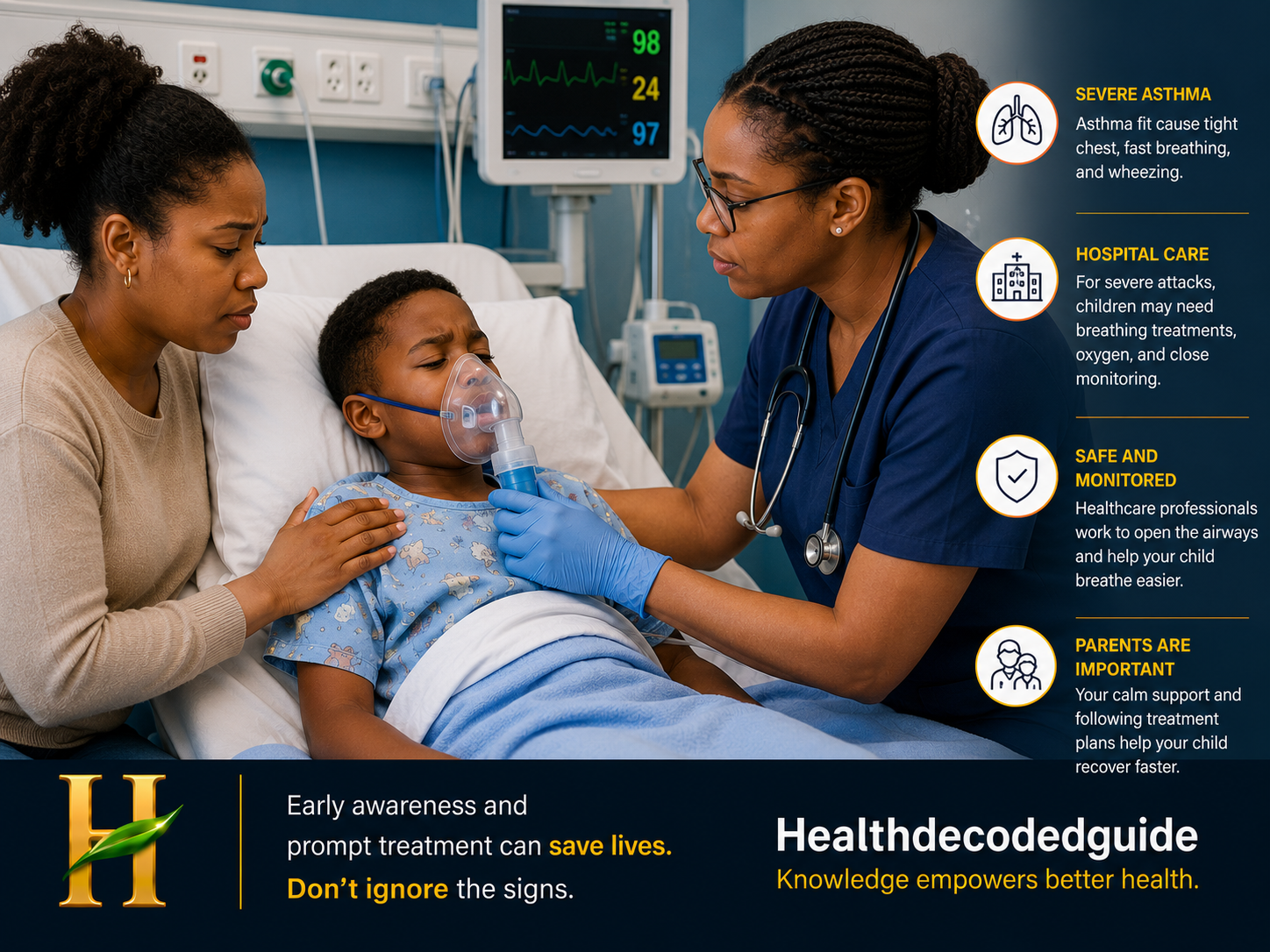
👉🏽 Severe asthma attacks require immediate emergency treatment.
🟢 Important message
Although severe asthma can be frightening, effective treatments are available.
Working closely with your child's healthcare team, using medicines correctly and attending regular follow-up appointments can help reduce asthma attacks and improve your child's daily life.
👉🏽 Many children with severe asthma achieve much better symptom control with specialist care and an individualized treatment plan.
FAQ
• Is severe asthma common in children?
No. Most children with asthma do not have severe asthma and respond well to standard treatment.
• Can severe asthma be cured?
There is currently no cure, but treatment can help control symptoms and reduce severe attacks.
• What are biologic medicines?
Biologic medicines are specialised treatments used for selected children whose severe asthma remains uncontrolled despite standard therapy.
• Does severe asthma always require hospital admission?
No. The goal of treatment is to reduce the need for emergency visits and hospital admissions.
• Can children with severe asthma still attend school?
Yes. With a personalised asthma action plan and appropriate treatment, many children continue to attend school and participate safely in activities.
🔗 Related Health Topics
• Asthma in Children
• Allergic Asthma in Children
• Exercise-Induced Asthma in Children
• Night-time Asthma in Children
• Preschool Wheeze
• Eczema
• Asthma Action Plan (coming soon)
• How to Use an Inhaler with a Spacer (coming soon)
📚 Medical References
• Global Initiative for Asthma (GINA). Global Strategy for Asthma Management and Prevention
• World Health Organization (WHO). Asthma
• National Health Service (NHS). Asthma
• Centers for Disease Control and Prevention (CDC). Asthma
• American Academy of Pediatrics (HealthyChildren.org). Asthma in Children
⚠️ Medical Disclaimer
This article is for educational purposes only and does not replace professional medical advice.
If your child develops severe breathing difficulty or asthma symptoms that do not improve after using prescribed medication, seek emergency medical care immediately.