

Read in: English | Pidgin English
🩺 Medically reviewed by the Health Decoded Guide Editorial Team · Last reviewed: July 2026
🔎 Quick Summary
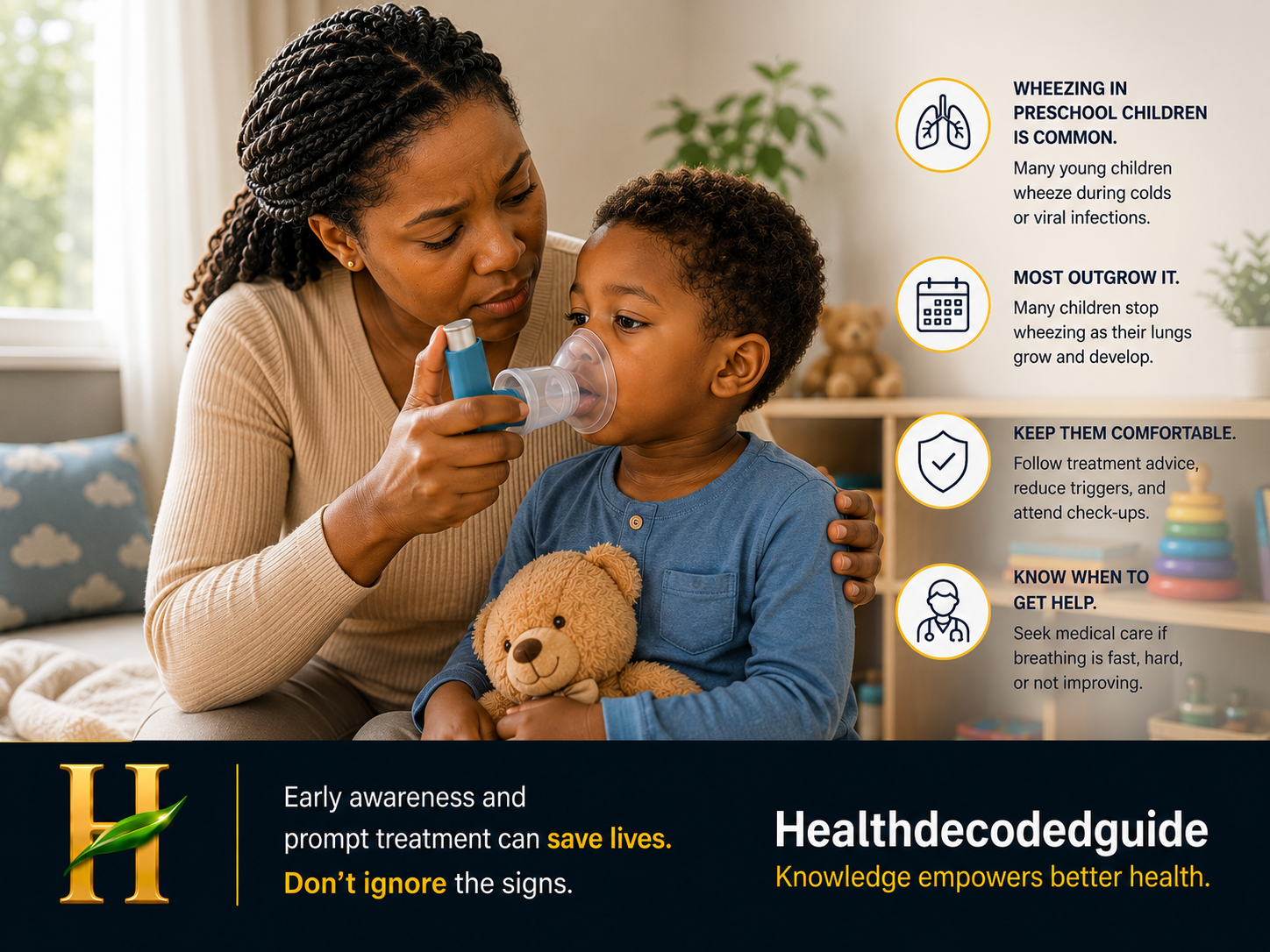
Preschool wheeze is a common condition that affects children younger than 5 years of age.
Many episodes are triggered by viral infections, and most children improve as they grow older.
Although some preschool children later develop asthma, many do not.
1️⃣ Introduction
Wheezing is a high-pitched whistling sound that happens when air flows through narrowed airways.
Preschool wheeze describes wheezing episodes in children under 5 years old, especially during viral infections.
Because young children's airways are naturally smaller, they are more likely to wheeze when they become inflamed.
👉🏽 Wheezing in a preschool child does not automatically mean they have asthma.
2️⃣ Why does preschool wheeze happen?
Several factors make young children more likely to wheeze.
These include:
• Small airways
• Viral respiratory infections
• Sensitive airways
• Exposure to cigarette smoke
• Family history of asthma or allergies
During a viral infection, the airways become swollen and produce more mucus, making it harder for air to pass through.
👉🏽 As children's airways grow larger, many stop wheezing altogether.
3️⃣ Types of preschool wheeze
Episodic (viral) wheeze
• Symptoms mainly occur during colds.
• The child is usually well between illnesses.
Multiple-trigger wheeze
• Symptoms may occur with viral infections, exercise, laughing, crying or exposure to allergens.
• These children are more likely to develop asthma later.
👉🏽 Identifying the pattern of wheezing helps guide treatment and follow-up.
4️⃣ Common symptoms
Children may have:
• Wheezing
• Cough
• Fast breathing
• Mild shortness of breath
• Chest tightness (older preschool children may describe this)
Symptoms often begin during a cold and improve over several days.
👉🏽 Some parents mistake wheezing for noisy breathing. A healthcare professional can help tell the difference.
5️⃣ How is it diagnosed?
Diagnosis is usually based on:
• Your child's symptoms
• Medical history
• Physical examination
• Pattern of wheezing episodes
Breathing tests are often difficult to perform reliably in children younger than 5 years.
👉🏽 Doctors often diagnose preschool wheeze based on the overall pattern rather than a single episode.
6️⃣ Treatment
Treatment depends on how often symptoms occur and how severe they are.
It may include:
• Reliever inhalers delivered with a spacer
• Short courses of other medicines in selected cases
• Preventer inhalers for children with frequent wheezing episodes
• Treating viral illnesses supportively
👉🏽 Not every child with preschool wheeze needs daily asthma medication.
7️⃣ Helping your child at home
Parents can help by:
• Giving medicines exactly as prescribed
• Using a spacer correctly
• Keeping children away from cigarette smoke
• Encouraging fluids during viral illnesses
• Following the child's wheeze or asthma action plan if provided
👉🏽 Learning how to recognise worsening symptoms can help parents seek treatment early.
8️⃣ Can preschool wheeze become asthma?
Some children eventually develop asthma, particularly if they have:
• Frequent wheezing
• Eczema
• Allergies
• A strong family history of asthma
Many children, however, completely outgrow preschool wheeze.
👉🏽 Most preschool children who wheeze during viral infections do not develop persistent asthma.
9️⃣ When to seek emergency medical care 🚨
Seek immediate medical attention if your child:
• Struggles to breathe
• Breathes very fast
• Has blue or grey lips
• Cannot drink because of breathing difficulty
• Becomes unusually sleepy
• Wheezing continues to worsen despite treatment
👉🏽 Young children can become unwell quickly, so severe breathing difficulty should always be treated as an emergency.
🟢 Important message
Preschool wheeze is common and is often triggered by viral infections.
Although it can be frightening for parents, many children improve as they grow older and never develop asthma. Regular follow-up with your healthcare professional helps ensure your child receives the most appropriate care.
👉🏽 Early assessment helps distinguish preschool wheeze from asthma and other breathing conditions.
FAQ
• Is preschool wheeze the same as asthma?
No. Many preschool children wheeze with viral infections but never develop asthma.
• Will my child outgrow preschool wheeze?
Many children stop wheezing as their airways grow and mature.
• Can preschool wheeze happen without a cold?
Yes. Some children wheeze with exercise, allergens or other triggers.
• Does every wheezing episode need antibiotics?
No. Most episodes are caused by viral infections, so antibiotics are usually not helpful unless there is a bacterial infection.
• Should my child use an inhaler?
Some children benefit from inhalers, but treatment depends on the frequency and severity of symptoms.
🔗 Related Health Topics
• Wheeze in Children
• Asthma in Children
• Allergic Asthma in Children
• Exercise-Induced Asthma in Children
• Night-time Asthma in Children
• Severe Asthma in Children
• Bronchiolitis
• Eczema
📚 Medical References
• Global Initiative for Asthma (GINA). Global Strategy for Asthma Management and Prevention (Children 5 Years and Younger)
• National Health Service (NHS). Asthma in children
• American Academy of Pediatrics (HealthyChildren.org). Wheezing and Asthma in Young Children
• Centers for Disease Control and Prevention (CDC). Asthma
• World Health Organization (WHO). Asthma
⚠️ Medical Disclaimer
This article is for educational purposes only and does not replace professional medical advice.
If your child develops severe breathing difficulty, persistent wheezing or symptoms that worsen despite treatment, seek immediate medical care.