

Read in: English | Pidgin English
🩺 Medically reviewed by theHealth Decoded Guide Editorial Team · Last reviewed: July 2026
🔎 Quick Summary
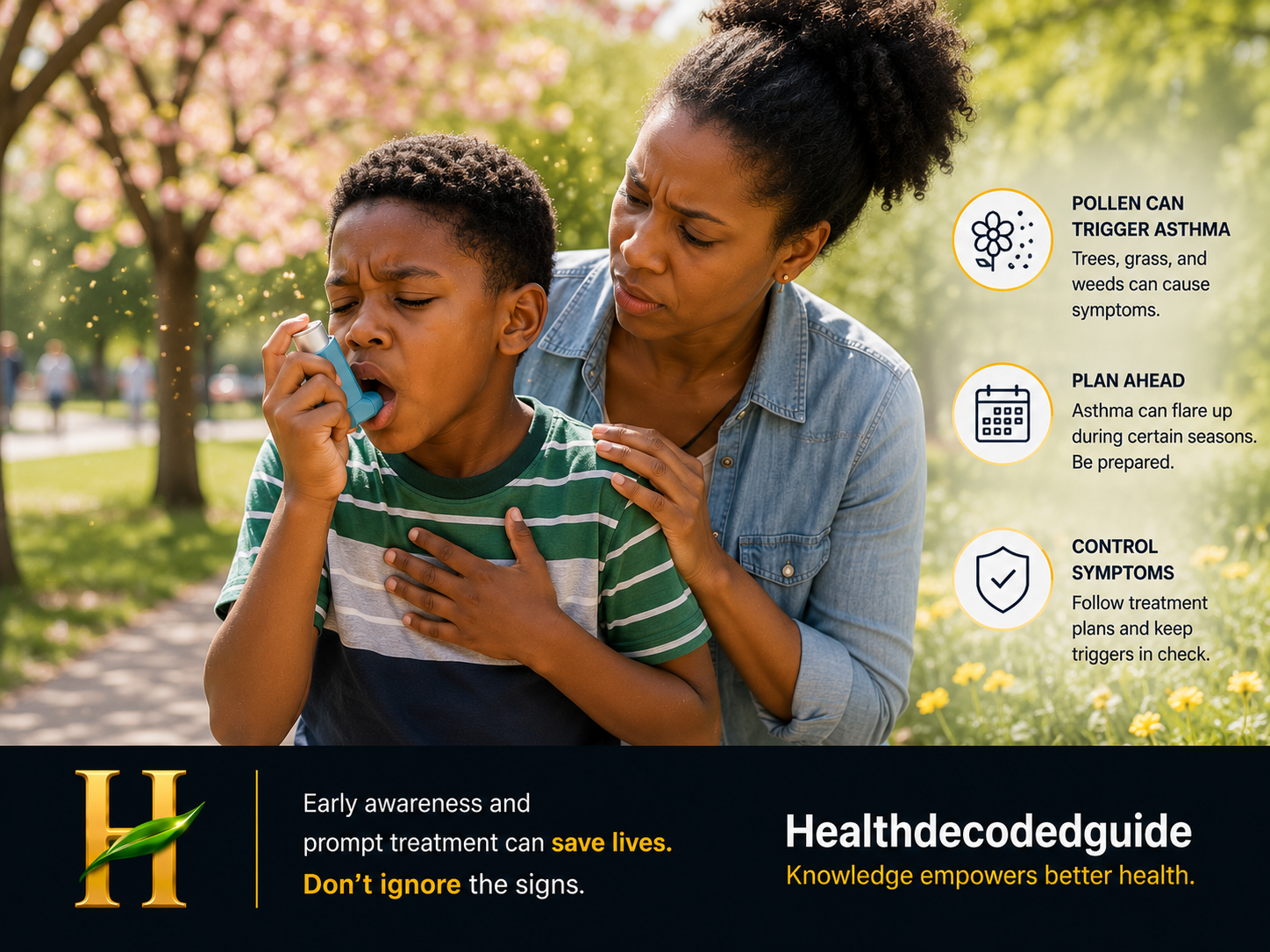
Some children notice that their asthma becomes worse during certain times of the year.
Seasonal asthma is often triggered by changes in the environment, such as pollen, harmattan dust, mould or cold weather. Knowing your child's seasonal triggers can help reduce asthma attacks.
1️⃣ Introduction
Seasonal asthma refers to asthma symptoms that become worse during particular seasons or weather conditions.
While some children have asthma symptoms throughout the year, others mainly experience flare-ups during specific months when allergens or environmental conditions change.
👉🏽 Recognising seasonal patterns can help parents prepare before symptoms become severe.
2️⃣ Why does seasonal asthma happen?
During certain seasons, children may be exposed to more asthma triggers.
These include:
• increased pollen
• higher levels of dust
• mould spores
• cold, dry air
• smoke or air pollution
These triggers cause inflammation and narrowing of the airways, making breathing more difficult.
👉🏽 Different children react to different seasonal triggers, so not every child experiences asthma in the same way.
3️⃣ Common seasonal triggers
Spring
• Tree pollen
• Grass pollen
Summer
• Grass pollen
• Outdoor air pollution
Rainy season
• Mould growth
• Damp indoor environments
Harmattan or dry season
• Dust
• Dry air
Winter
• Cold air
• Viral respiratory infections
👉🏽 In many parts of West Africa, harmattan dust is a common trigger, while pollen and cold weather may play a bigger role in other regions.
4️⃣ Symptoms
Children may develop:
• Wheezing
• Persistent cough
• Shortness of breath
• Chest tightness
• Night-time cough
• Reduced ability to exercise
Some children may also have:
• Sneezing
• Itchy eyes
• Runny nose
👉🏽 Asthma symptoms together with allergy symptoms often suggest seasonal allergens are contributing.
5️⃣ How is it diagnosed?
A healthcare professional may:
• Ask when symptoms occur during the year
• Review asthma and allergy history
• Perform a physical examination
• Request spirometry in older children
• Recommend allergy testing when appropriate
👉🏽 Keeping track of when symptoms occur each year can help identify seasonal patterns.
6️⃣ Treatment
Treatment may include:
Preventer inhalers
• Taken regularly to reduce airway inflammation.
Reliever inhalers
• Used during asthma symptoms according to the asthma action plan.
Allergy management
• Treating hay fever when present.
• Reducing exposure to seasonal triggers where possible.
👉🏽 Starting preventer medicines before a child's usual asthma season may help reduce flare-ups for some children. Your healthcare professional will advise if this is appropriate.
7️⃣ Reducing seasonal triggers
Parents can help by:
• Checking local pollen forecasts if pollen is a trigger.
• Keeping windows closed during high pollen days when practical.
• Showering and changing clothes after outdoor activities during high pollen seasons.
• Reducing dust inside the home during harmattan.
• Fixing damp areas to reduce mould growth.
• Avoiding cigarette smoke.
👉🏽 Small seasonal adjustments can make a meaningful difference for many children with asthma.
8️⃣ Possible complications
Poorly controlled seasonal asthma may lead to:
• Frequent asthma attacks
• Missed school days
• Interrupted sleep
• More emergency visits
• Reduced participation in sports
👉🏽 Reviewing your child's asthma before their usual trigger season may help prevent complications.
9️⃣ When to seek emergency medical care 🚨
Seek immediate medical attention if your child:
• Has severe difficulty breathing.
• Cannot speak because of breathlessness.
• Lips or fingernails become blue or grey.
• Does not improve after using the prescribed reliever inhaler.
• Becomes unusually sleepy or confused.
👉🏽 Severe asthma attacks require immediate emergency treatment.
🟢 Important message
Seasonal asthma can often be managed successfully with good planning, the correct medicines and avoiding known triggers where possible.
Learning what time of year your child's asthma usually worsens can help you prepare before symptoms begin.
👉🏽 Preventing asthma flare-ups is often easier than treating them once they have started.
FAQ
• Can weather changes trigger asthma?
Yes. Cold air, dry air and sudden weather changes can trigger asthma symptoms in some children.
• Does harmattan affect asthma?
Yes. Harmattan dust can irritate the airways and trigger asthma flare-ups in susceptible children.
• Can pollen make asthma worse?
Yes. Pollen is a common seasonal trigger, especially in children who also have hay fever.
• Should my child stay indoors during high pollen days?
Some children benefit from reducing outdoor exposure during periods of very high pollen, especially if pollen is a known trigger.
• Can seasonal asthma be prevented?
While asthma cannot always be prevented, avoiding triggers and following the prescribed treatment plan can greatly reduce seasonal flare-ups.
🔗 Related Health Topics
• Asthma in Children
• Allergic Asthma in Children
• Exercise-Induced Asthma in Children
• Night-time Asthma in Children
• Severe Asthma in Children (coming soon)
• Hay Fever (Allergic Rhinitis) (coming soon)
• Wheeze in Children
• How to Use an Inhaler with a Spacer (coming soon)
📚 Medical References
• Global Initiative for Asthma (GINA). Global Strategy for Asthma Management and Prevention
• World Health Organization (WHO). Asthma
• National Health Service (NHS). Asthma
• Centers for Disease Control and Prevention (CDC). Asthma
• American Academy of Pediatrics (HealthyChildren.org). Asthma in Children
⚠️ Medical Disclaimer
This article is for educational purposes only and does not replace professional medical advice.
If your child has worsening asthma symptoms or develops severe breathing difficulty, seek medical care promptly. Severe asthma attacks require immediate emergency treatment.