

Read in: English | Pidgin English
🩺 Medically reviewed by the Health Decoded Guide Editorial Team · Last reviewed: July 2026
🔎 Quick Summary
Exercise-induced asthma happens when physical activity triggers asthma symptoms such as coughing, wheezing or shortness of breath.
With proper treatment and planning, most children with exercise-induced asthma can safely participate in sports and other physical activities.
1️⃣ Introduction
Many children enjoy running, football, swimming and other sports.
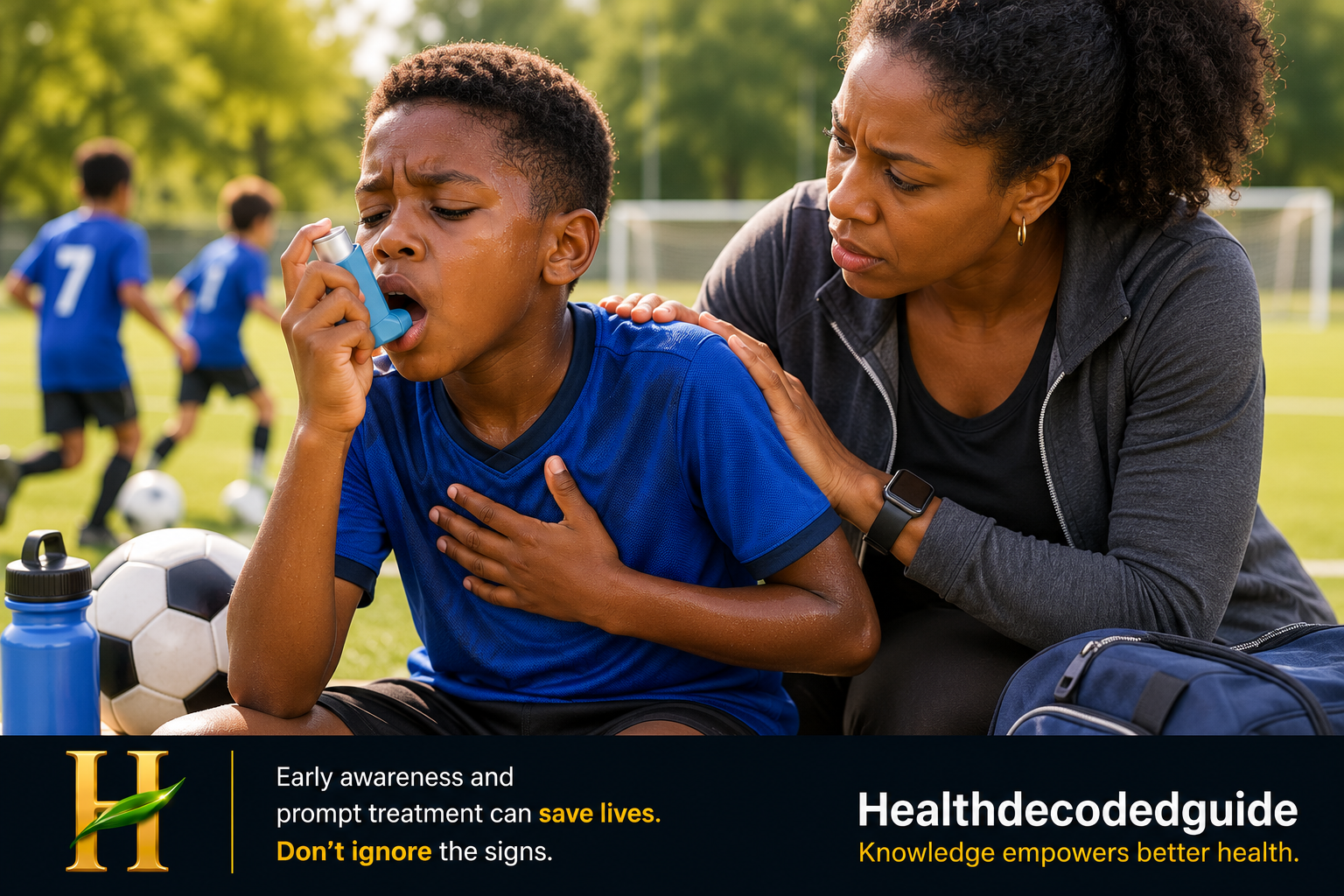
For some children with asthma, exercise can temporarily narrow the airways, causing breathing difficulties during or shortly after physical activity.
Exercise is important for children's health, so the goal is not to avoid activity but to control asthma well enough for children to stay active.
👉🏽 Children with well-controlled asthma should usually be able to participate in sports alongside their peers.
2️⃣ What is exercise-induced asthma?
Exercise-induced asthma, also called exercise-induced bronchoconstriction (EIB), occurs when exercise causes the airways to narrow.
This often happens because rapid breathing during exercise causes the airways to lose heat and moisture, making them more sensitive.
Symptoms usually improve with appropriate treatment and rest.
👉🏽 Exercise itself is not harmful—the airway narrowing that happens during or after exercise causes the symptoms.
3️⃣ Common symptoms
Symptoms usually begin during exercise or within 5–15 minutes after stopping.
Children may experience:
• Coughing during or after exercise
• Wheezing
• Shortness of breath
• Chest tightness
• Needing to stop playing because of breathing difficulty
• Unusual tiredness during sports
👉🏽 If your child repeatedly avoids exercise because of breathing problems, asthma may be a possible cause.
4️⃣ Common triggers
Exercise symptoms may be worse when children exercise in:
• Cold, dry air
• High pollen seasons
• Air pollution
• Areas with cigarette smoke
• During or shortly after a viral infection
👉🏽 Many children notice fewer symptoms when exercising in warm, humid environments than in cold weather.
5️⃣ How is it diagnosed?
A healthcare professional may:
• Ask about symptoms during exercise
• Review your child's asthma history
• Perform a physical examination
• Request spirometry in older children
• Recommend an exercise challenge test if needed
👉🏽 Not every child who becomes breathless during exercise has asthma. Other conditions can cause similar symptoms.
6️⃣ Treatment
Treatment may include:
Reliever inhaler
• Used shortly before exercise if recommended by your child's healthcare professional.
Preventer inhaler
• Taken regularly if asthma symptoms occur frequently.
Good asthma control
• Keeping everyday asthma well controlled often reduces exercise-related symptoms.
👉🏽 Children should only use asthma medicines according to their healthcare professional's instructions.
7️⃣ Helping your child stay active
Parents can help by encouraging children to:
• Warm up before exercise
• Carry their reliever inhaler if prescribed
• Follow their asthma action plan
• Stay well hydrated
• Tell teachers or coaches about their asthma
• Avoid exercising when asthma symptoms are poorly controlled
👉🏽 Most children with asthma can safely play football, swim, run and enjoy physical education when their asthma is well managed.
8️⃣ Possible complications
Poorly controlled exercise-induced asthma may lead to:
• Avoiding sports
• Reduced fitness
• Missed school activities
• More frequent asthma attacks
• Reduced confidence during physical activity
👉🏽 Proper asthma management helps children stay active while reducing the risk of flare-ups.
9️⃣ When to seek emergency medical care 🚨
Seek immediate medical attention if your child:
• Has severe difficulty breathing
• Cannot speak because of breathlessness
• Lips or fingernails become blue or grey
• Symptoms do not improve after using the prescribed reliever inhaler
• Becomes unusually sleepy or confused
👉🏽 A severe asthma attack is a medical emergency and should be treated immediately.
🟢 Important message
Exercise should not stop a child from enjoying an active lifestyle.
With good asthma control, the correct use of inhalers and an asthma action plan, most children with exercise-induced asthma can safely take part in sports and physical activities.
👉🏽 The goal of treatment is not to avoid exercise—it is to help your child exercise safely and confidently.
FAQ
• Can children with exercise-induced asthma play sports?
Yes. Most children can safely participate in sports when their asthma is well controlled.
• Which sports are best for children with asthma?
Many children do well with swimming, walking, cycling and team sports when their asthma is properly managed.
• Should my child use an inhaler before exercise?
Some children are advised to use a reliever inhaler before exercise. Follow your healthcare professional's instructions.
• Does every child who coughs after exercise have asthma?
No. Other conditions, including poor fitness or respiratory infections, can also cause coughing after exercise.
• Can children outgrow exercise-induced asthma?
Some children experience fewer symptoms as they grow older, while others continue to have asthma into adulthood.
🔗 Related Health Topics
• Asthma in Children
• Allergic Asthma in Children
• Night-time Asthma in Children
• Severe Asthma in Children
• Wheezing in Children
• How to Use an Inhaler with a Spacer (coming soon)
• Asthma Action Plan (coming soon)
📚 Medical References
• Global Initiative for Asthma (GINA). Global Strategy for Asthma Management and Prevention
• National Health Service (NHS). Asthma in children
• Centers for Disease Control and Prevention (CDC). Asthma
• American Academy of Pediatrics (HealthyChildren.org). Asthma in Children
• American Thoracic Society. Exercise-induced Bronchoconstriction Guidelines
⚠️ Medical Disclaimer
This article is for educational purposes only and does not replace professional medical advice.
If your child develops breathing difficulties during exercise or has symptoms that do not improve with prescribed asthma medication, seek medical advice promptly. Severe breathing difficulty requires immediate emergency medical care.