🌍 English
Published on August 19, 2026 at 6:39 PM
🩺 Medically reviewed by Priscilla Afiakurue, MD, Family Medicine Physician | Founder & Lead Medical Editor · Last reviewed: September 2026
🔍 Quick Summary
Sleep paralysis is a temporary state where you are conscious but unable to move or speak while falling asleep or waking up.
It can feel frightening, and some people may sense pressure on their chest, see or hear things, or feel as though someone is in the room. These experiences can feel completely real, but sleep paralysis itself is usually harmless.
👉 Understanding what is happening in the brain and body can make the experience much less frightening.
1️⃣ Introduction
During sleep paralysis, your awareness returns before your body's normal sleep-related muscle paralysis has completely switched off.
For a short period, you may:
• be aware of your surroundings
• be unable to move your body
• be unable to speak
• experience frightening sensations or hallucinations
Episodes usually last seconds to a few minutes.
You are awake enough to know what is happening, while part of your body is temporarily still behaving as though you are asleep.
2️⃣ How it happens
Sleep happens in different stages, including rapid eye movement (REM) sleep.
During REM sleep:
• dreaming is common
• brain activity increases
• most voluntary muscles are temporarily prevented from moving
• this helps stop you physically acting out most dreams
Sleep paralysis can occur when awareness and REM muscle paralysis temporarily overlap.
Your brain may become conscious before your normal muscle control has fully returned.
3️⃣ Types
Sleep-onset paralysis
• happens while you are falling asleep
• awareness may remain while the body enters REM-related muscle paralysis
Sleep-offset paralysis
• happens while waking up
• awareness returns before normal muscle movement has fully returned
Both can produce the same frightening feeling of being awake but temporarily unable to move.
4️⃣ Common causes and triggers
Sleep paralysis can happen to otherwise healthy people.
Factors associated with episodes include:
Sleep disruption
• not getting enough sleep
• irregular sleep schedules
• jet lag or shift work
Other factors
• stress
• sleeping on the back in some people
• narcolepsy
• other sleep disturbances
An occasional episode does not necessarily mean you have an underlying sleep disorder.
5️⃣ Symptoms
During an episode, you may:
• be unable to move
• be unable to speak
• feel awake and aware
• feel pressure on your chest
• feel frightened or panicked
• sense that another person or presence is nearby
Some people also see, hear or feel things that are not actually present.
These experiences are sometimes called sleep-related hallucinations.
They can happen when features of dreaming temporarily overlap with waking awareness.
👉 This can make the experience feel extremely real, even though what you see, hear or sense may be part of the sleep-paralysis episode.
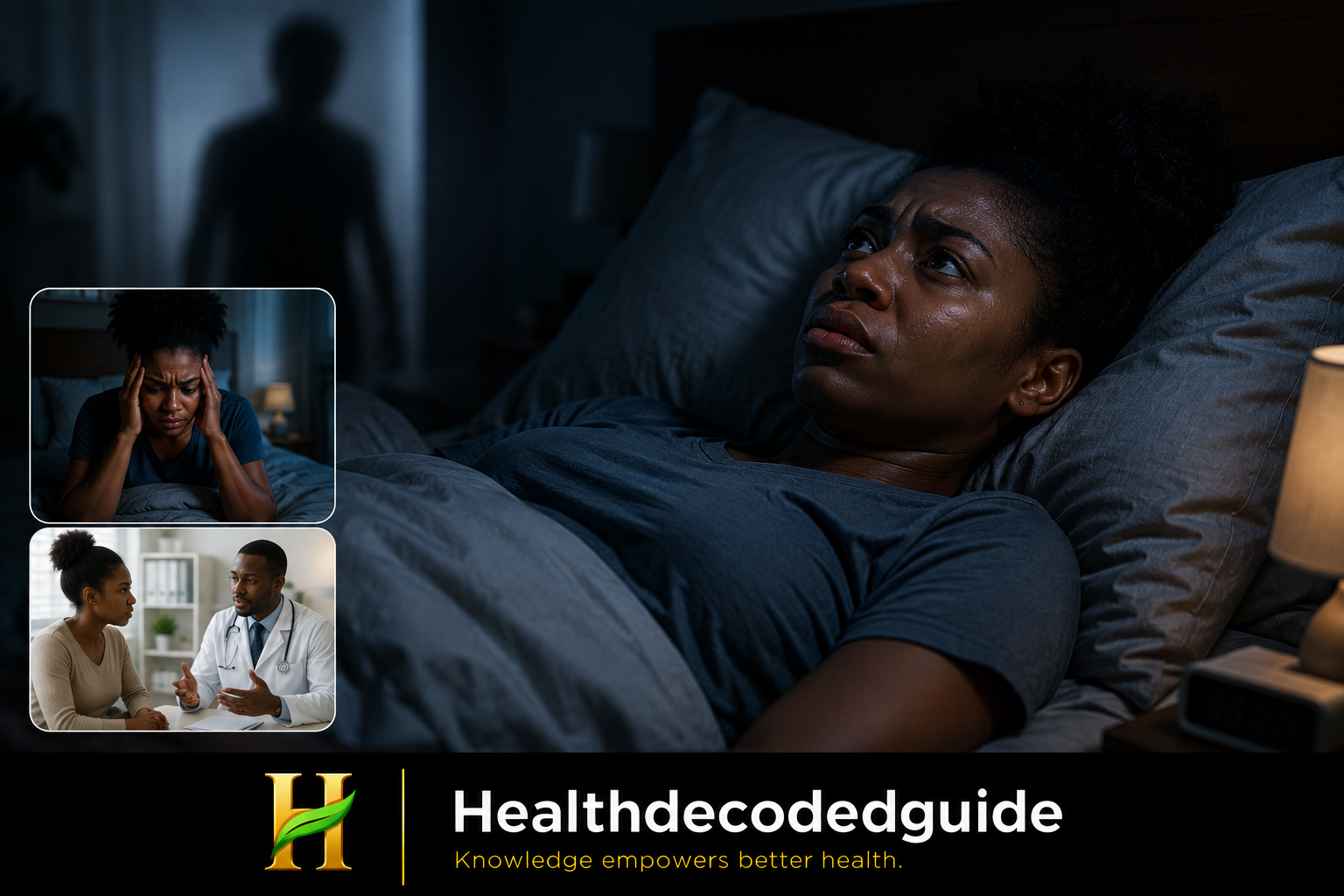
6️⃣ Why can it feel like someone is in the room?
This is one of the most frightening parts of sleep paralysis.
During the transition between dreaming and waking:
• dream imagery may continue
• sounds may seem real
• shadows may appear like people or figures
• chest pressure may feel as though something is sitting on you
• fear can make the experience feel even more threatening
Different cultures have historically interpreted these experiences in different ways.
The experience itself is real—the frightening explanation your brain creates during that moment may not reflect what is actually happening around you.
7️⃣ 🩺 When it becomes concerning
Arrange medical assessment if:
• episodes happen frequently
• you become afraid to sleep
• poor sleep is affecting everyday life
• you have extreme daytime sleepiness
• you suddenly fall asleep during normal activities
• you experience sudden episodes of muscle weakness while awake
👉 These may indicate:
• another sleep disorder such as narcolepsy
• need for further medical or sleep assessment
Sleep paralysis by itself usually does not require emergency treatment.
8️⃣ Management / treatment
For occasional sleep paralysis, treatment may not be necessary.
Things that may help include:
• getting enough sleep regularly
• keeping a consistent sleep and waking schedule
• reducing significant sleep deprivation
• managing stress where possible
• treating another sleep disorder if one is identified
During an episode, reminding yourself that the experience is temporary may help reduce panic.
👉 The episode will pass and normal movement returns.
9️⃣ Diagnosis
Sleep paralysis is usually identified from the description of what happens around sleep or waking.
A healthcare professional may ask about:
• when the episodes occur
• sleep routine and sleep deprivation
• daytime sleepiness
• medicines or substances
• other unusual sleep symptoms
Further sleep testing may be considered when another sleep disorder is suspected.
For most people with occasional typical episodes, extensive testing is not necessary.
🟢 Important Message
Sleep paralysis can feel terrifying because your mind may be awake while your body temporarily cannot move, and dream-like experiences can enter your awareness.
But the episode itself is usually brief and harmless.
👉 What you experienced was real. Understanding how sleep and waking can temporarily overlap may help explain why it felt so frightening.
FAQ
• Can sleep paralysis make you feel like someone is pressing you down?
Yes. Some people experience chest pressure or the sensation that someone or something is sitting on them during an episode.
• Why do people see figures or hear voices?
Dream-like hallucinations can continue briefly while awareness returns, causing images, sounds or sensations that feel extremely real.
• Can sleep paralysis kill you?
Sleep paralysis itself is not considered life-threatening. Normal muscle control returns when the episode ends.
• Does sleep paralysis mean I have a mental health condition?
No. Sleep paralysis can occur in otherwise healthy people. Frequent episodes or significant daytime sleepiness may warrant assessment for an underlying sleep disorder.
🧠 Why We Delay
Because sleep paralysis can involve chest pressure, frightening figures, voices or the feeling that someone is present, people may explain the experience according to cultural or spiritual beliefs and may not realise there could also be a recognised sleep-related explanation.
Understanding sleep paralysis does not dismiss how frightening the experience felt. Knowing what the body may be doing gives you another way to make sense of it and recognise when medical assessment may help.
👉 The experience can feel completely real and still have a biological explanation worth understanding.
🔗 Related Health Topics
• Sleep Problems
• Sleep Apnea
• Insomnia
• Narcolepsy
• Anxiety vs Panic Attacks
• Sleep and Recovery
📚 Medical References
• National Health Service (NHS)Sleep paralysis..
• Cleveland Clinic Sleep Paralysis..
• MedlinePlus Sleep paralysis.
• National Institute of Neurological Disorders and Stroke (NINDS)Narcolepsy.
• National Heart, Lung, and Blood Institute (NHLBI) Sleep Deprivation and Deficiency.
⚠️ Medical Disclaimer
This article is for educational purposes only and does not replace professional medical advice.
If sleep paralysis happens frequently, significantly disrupts your sleep or occurs with severe daytime sleepiness or other unusual sleep symptoms, consult a healthcare professional.