Lower Belly Pain: Wetin Fit Cause Pain for Lower Belle?

Read in: English | Pidgin English
Published on February 02/2026 at 7:07 PM
🩺 Medically reviewed by the Health Decoded Guide Editorial Team · Last reviewed: August 2026
🔍 Quick Breakdown
Pelvic pain na pain wey person dey feel for d lower part of d belle, around d area between belly button and private area.
Many different things fit cause am—from period pain and urine infection to bowel, muscle or reproductive-organ problems.
👉🏾 Most pelvic pain get treatable cause, but sudden or very serious pain need quick medical attention.
🟧 Wetin be pelvic pain and where e dey come from?
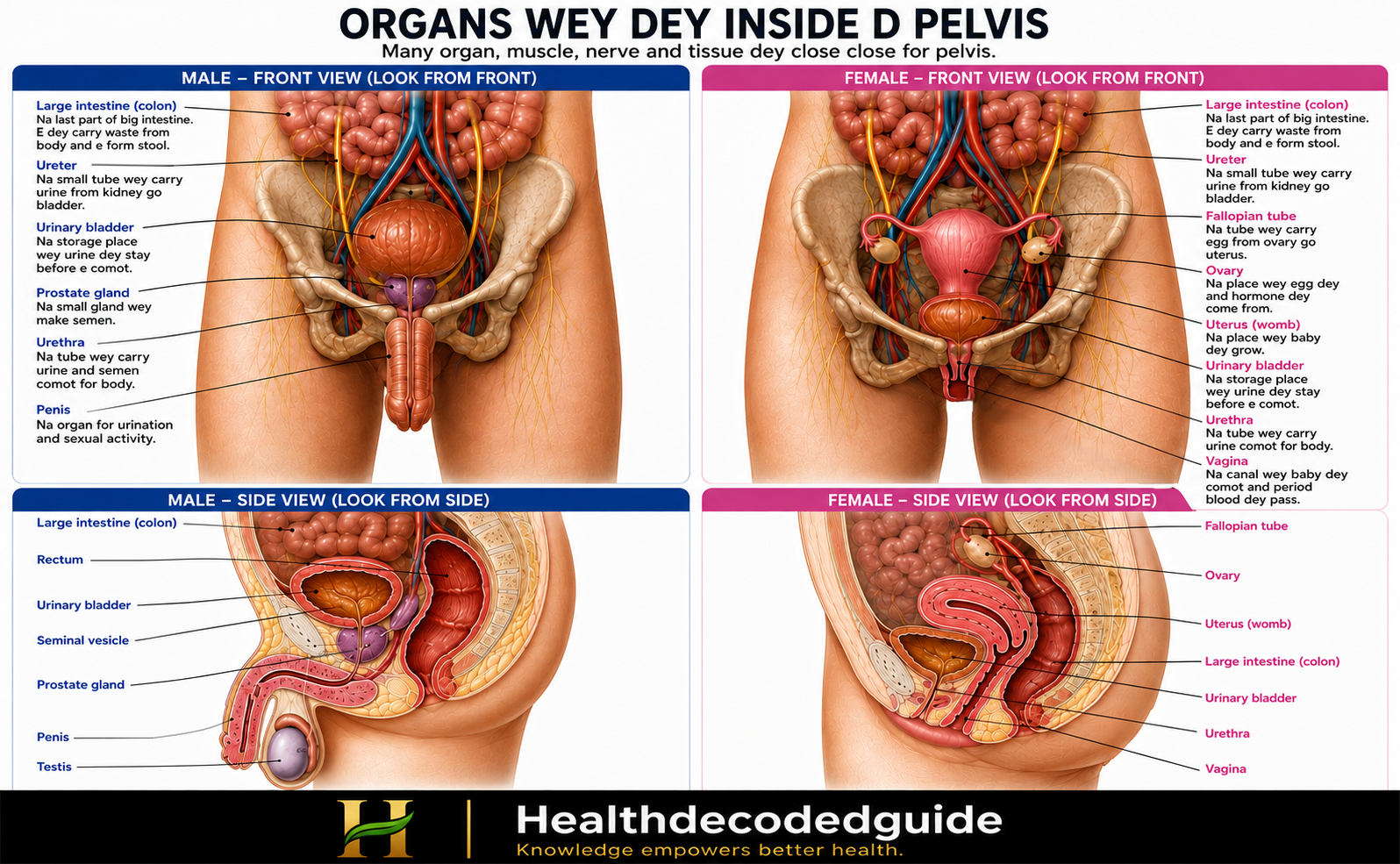
Many organs dey close together inside d pelvis.
Dis area contain:
• bladder and d tubes wey carry urine
→ d bladder na where urine dey store before you urinate, while d urinary tract help carry urine comot from d body
• bowel (intestine)
→ d part of d digestive system wey process food and waste product
• reproductive organs
→ for women, e include d womb, ovaries and fallopian tubes
→ for men, na d prostate and other reproductive structures dey around this area
• muscles, nerves and other tissues
→ problem with any of dem fit also cause pelvic pain
Because many different organs dey close together for d pelvis, where you feel d pain no always tell you exactly which organ d problem come from.
🟧 Wetin dey happen for your body?
Pelvic pain fit start if:
• infection or inflammation affect one organ
• muscle or nerve for d area become irritated
• ovarian cyst dey cause pressure, rupture or twist
• bowel or urinary problem develop
• reproductive organ get inflammation or another problem
D pain fit start suddenly, or e fit gradually develop and continue for months.
Na why healthcare professional usually dey ask plenty questions about when/how d pain start and other symptoms wey follow am.
🟧 Why e dey happen?
Pelvic pain happen when one of d organs, muscles, nerves or
tissues inside or around d pelvis become irritated, inflamed, stretched or get another problem.
Different things fit cause am:
• Period or reproductive-organ problems
→ period cramps dey happen when d womb muscles contract.
Conditions like endometriosis, fibroids, ovarian cysts or
pelvic inflammatory disease fit also irritate d area or put pressure on tissues inside d pelvis dey cause pain.
• Urinary problems
→ urine infection fit irritate d bladder or urinary tract, while kidney or
urinary stones fit cause pain as dem move through d urinary tract.
• Bowel problems
→ constipation fit stretch d bowel, while conditions like irritable bowel syndrome or
appendicitis fit cause pain or inflammation around d lower abdomen and pelvis.
• Pregnancy-related problems
→ conditions like ectopic pregnancy, where pregnancy dey grow outside d womb,
fit cause serious pelvic pain and internal bleeding. This one fit be emergency o.
Because many organs and tissues dey close together for d pelvis,
different problems fit cause pain for almost d same area.
👉🏾 Sometimes examination and tests na wetin doctor need to find where d pain really dey come from.
🟧 How you go know say e dey?
D pain fit feel different from person to person.
You fit notice:
• dull pain wey no dey completely disappear
• sharp or stabbing pain
• cramps
• pressure or heaviness for lower belle
• pain wey dey come and go
• pain during sex, urination or when you dey stool
Other symptoms fit include vaginal bleeding or discharge, fever, vomiting or changes in toilet habit.
Tell healthcare professional about d other symptoms too—dem fit provide important clue about d cause.
🟧 How pelvic pain fit feel?
• write done when d pain start and how long e dey last
• pay attention to whether e relate to period, sex, urine or wen u wan go toilet (bowel movement)
• use appropriate pain medicine if healthcare professional advise
• drink enough fluid and avoid things wey you notice dey worsen d pain
• seek medical assessment if d pain persist, return frequently or become worse
No just continue to cover persistent pelvic pain with painkiller without knowing wetin dey cause am o.
🟧 Real life example
Amaka dey normally get small cramps whenever her period come, so she don already dey used to lower belle pain.
But after some months:
• d pain begin start even when she no dey menstruate
• sex begin dey painful
• sometimes d pain strong reach where e affect her work
At first, she tell herself say maybe na “normal woman pain.”
When d symptoms continue, she finally visit clinic.
Doctor ask her more about d pain, examine her and arrange further assessment.
After investigation, dem discover say endometriosis na d likely cause her pelvic pain.
Her doctor explain d condition and discuss different treatment options with her.
Amaka begin treatment and also start to keep track of when d pain dey happen and wetin dey make am worse.
During follow-up, her doctor continue monitor how she dey respond and adjust her treatment as e dey necessary.
Na then Amaka realise say she no need simply endure d pain because she think say na part of being a woman.
👉🏾 Pelvic pain fit dey common, but persistent or severe pain no be something you suppose just learn to live with.
🟧 🩺 When you suppose go hospital 🚨
• sudden or very severe pelvic pain
• pain with fainting or serious dizziness
• heavy vaginal bleeding with pain
• severe pain if you dey pregnant or pregnancy fit possible
• pain with high fever or persistent vomiting
• sudden severe testicle pain
These symptoms fit mean ectopic pregnancy, ovarian torsion, serious infection, appendicitis, testicular torsion or another emergency.
Abeg go do hospital fast fast.
🟢 Final Reassurance
Pelvic pain common, and plenty of d causes dey treatable.
D important thing na to pay attention when d pain different from your normal, or no dey improve or begin interfere with your everyday life.
👉🏾 You no need endure persistent lower belle pain because you think say “na normal” pain o. Proper medical assessment fit help find d cause.
📚 Reference
For full medical references, see the English version of this article.
⚠️ Disclaimer
This article na for education only. E no replace doctor advice.
If pelvic pain severe, persistent or come with other worrying symptoms, abeg see healthcare professional.
🔗 Related Health Topics
• Period Pain
• Endometriosis
• Pelvic Inflammatory Disease (PID)
• Ovarian Cysts
• Urinary Tract Infection (UTI)
👉🏾 If you still get questions or prefer full medical detail, read the English version.