Sleep Apnea | When Breathing Dey Stop During Sleep
Read in: English | Pidgin English
Published on August 19, 2026 at 9:37 PM
🩺 Medically reviewed by Marvin Brown-Gogo, MD, Family Medicine Physician | Medical Reviewer · Last reviewed: September 2026
🔍 Quick Breakdown
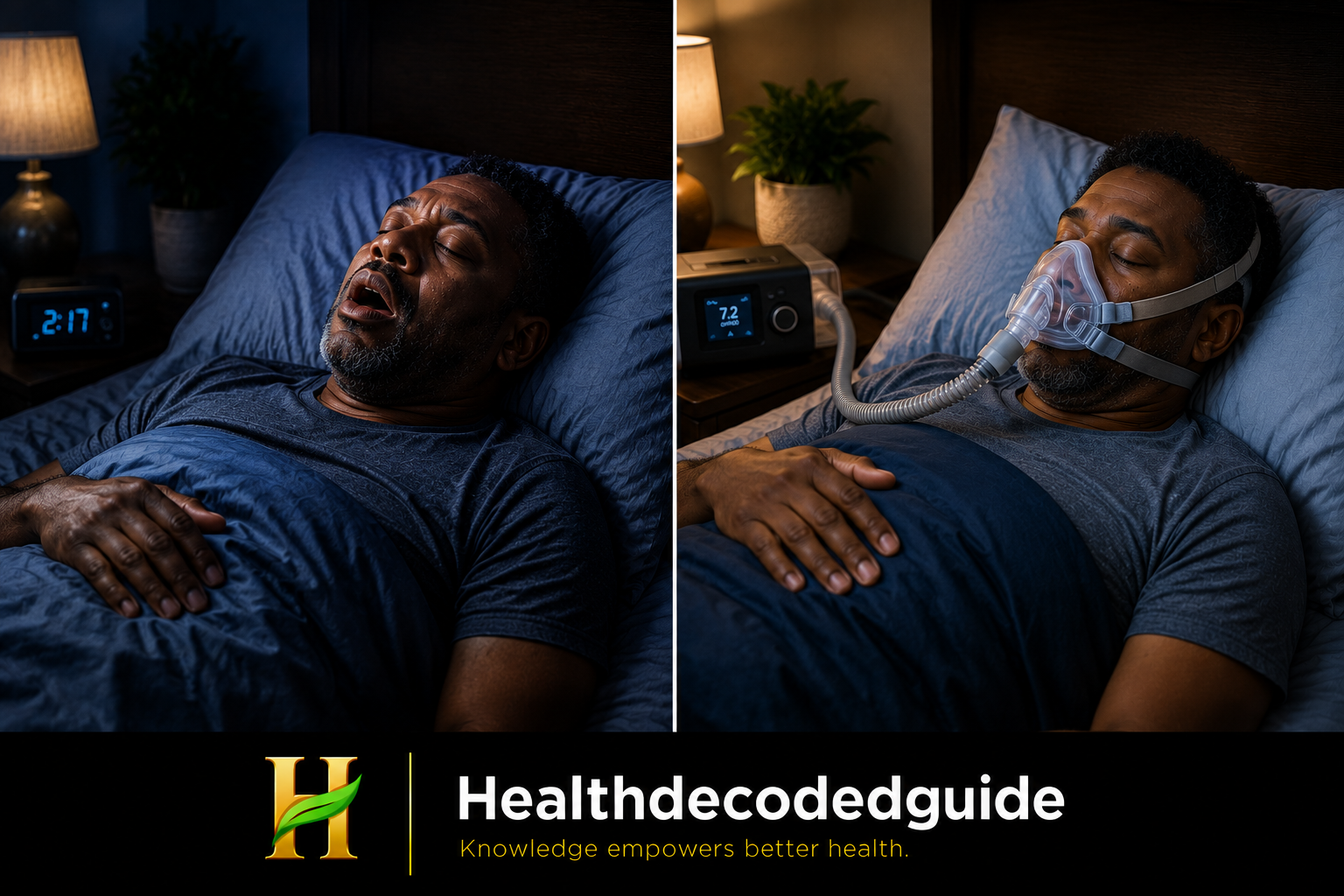
Sleep apnea na condition where person breathing dey stop or reduce for short periods while d person dey sleep.
D person fit no even know say e dey happen. Sometimes na d partner or family member first notice loud snoring, silence
when breathing stop, then sudden e gasp or e dey make choking noise.
No be everybody wey snore get sleep apnea—but snoring plus repeated breathing pauses deserve proper medical check up.
🟧 Wetin really dey happen during sleep apnea?
Normally, when you sleep, breathing suppose continue without stopping.
But with sleep apnea, something dey interrupt this normal breathing.
During one episode:
• airflow fit reduce or completely stop
• oxygen level fit drop
• d brain notice say breathing get problem
• d brain go briefly wake d body
• breathing start again
This fit happen again and again throughout d night, sometimes d person no go remember say anything d next morning.
You fit think say you sleep for eight hours, but your brain and body fit don dey wake briefly many times during that sleep.
🟧 Why breathing dey stop?
Sleep apnea no dey happen the same way for everybody.
E get two main types:
1. Obstructive sleep apnea (OSA) — d most common type
When person sleep, d muscles around d throat naturally relax.
For some people, d muscle relax too much so:
• d airway go dey too narrow or temporarily close
• air no fit pass normally
• d person body still dey try breathe, but d airway don block
D brain go briefly wake d person to make d airway open again.
This one fit happen many times during d night, sometimes without d person even knowing.
2. Central sleep apnea (CSA) — dis on dey less common
For dis type, no be because something block d airway.
Instead, d brain no send d correct signal to d muscles wey control breathing, so d body go stop trying to breathe for short time (like for some seconds).
D main difference simple:for obstructive sleep apnea, your body dey try breathe but d airway block.
For central sleep apnea, d brain temporarily no send d proper signal make breathing continue.
🟧 Why e dey happen?
For obstructive sleep apnoea, different things fit increase d chance say d airway go narrow or close during sleep.
• Excess body weight
→ extra tissue around d upper airway fit make am easier for d airway to narrow during sleep
• Natural shape of d airway
→ some people naturally get narrower throat or other body features wey dey increase their risk
• Large tonsils or adenoids
→ dis one na important cause, especially for children
• Age
→ d risk generally increase as person dey older
• Alcohol
→ alcohol, especially close to bedtime, fit make d throat muscles relax to much
• Smoking and some sleep medicines
→ these fit also increase d risk for some people
But no assume say sleep apnea na only people wey get excess body weight dey get am.
Slim people fit get am too, especially if other risk factors dey..
For central sleep apnea, d cause different because d airway no actually block.
E fit happen because of conditions wey affect how d brain control breathing, including:
• some heart or nerve conditions
• use of certain medicines, especially opioid medicines
Sometimes, doctors no fit find one clear cause.
E good to know which type of sleep apnea person get because d cause and treatment fit dey different.
🟧 How you go know say e dey?
D interesting thing be say another person fit notice d problem before you.
During sleep, partner or family member fit notice:
• loud snoring
• breathing suddenly stop
• silence for some seconds
• sudden choking or snorting noise
• restless sleep
During daytime, you fit notice:
• person dey sleepy
• morning headache
• difficulty concentrating
• irritability (mood swings)
• dry mouth when you wake up
• feeling tired even after long sleep
If person dey sleep plenty hours but still dey unusually tired every day, d quality of d sleep fit be d problem.
🟧 Wetin you fit do?
If you or your partner suspect sleep apnoea:
• pay attention to whether breathing actually dey stop during sleep
• arrange medical check up
• tell healthcare professional if daytime sleepiness/tiredness dey
• reduce alcohol, especially close to bedtime
• work towards healthy weight if excess weight dey contribute
• follow prescribed treatment if diagnosis don confirm
Treatment fit include CPAP, one machine wey dey gently push air through mask to help keep d airway open during sleep.
Some people fit benefit from oral device, positional treatment, treatment of airway problems or surgery depending on d cause.
Sleep apnea get effective treatments—but d first step na recognise am.
🟧 Real life example
For some months, Nifreke girlfriend, Chidinma, notice say him mood don change.
One evening she tell am:
“You just dey vex anyhow these days.” U dey do like woman wey get period.
Nifreke fire back:
“Na because I dey work hard! Person no fit tire again?”
Chidinma laugh say:
“Work hard ke? You wey dey sleep every afternoon and you still dey complain say you tire?”
One day for work, Nifreke colleague notice plenty mistakes for document wey e prepare.
“Guy, you dey okay? You review this thing at all? You dey look tired these days o. Abeg go check yourself, maybe na thyroid problem.”
Dat one worry Nifreke, so e go see doctor.
→ Initial tests no show any obvious cause.
After some visits, Chidinma sef follow am go see doctor.
As dem dey discuss him tiredness, she con say:
“Doctor, e dey snore well-well for night o. Sometimes e go quiet like e no dey breathe.” Me sef no fit sleep some nights.
Na dat information make doctor suspect sleep apnea.
Sleep testing later confirm am, and Nifreke begin use CPAP to help keep him airway open during sleep.
With time:
• him daytime sleepiness reduce
• him concentration improve
• even him mood improve
Nifreke realise say e dey spend plenty hours for bed, but e no dey actually get good-quality sleep.
👉🏾 Sleep apnoea no only show for night.
Daytime tiredness, poor concentration and mood changes fit be signs too.
And sometimes na person wey dey sleep beside you go first notice wetin dey happen
—but if dem no know wetin to look out for, dem fit think say na ordinary snoring.
🟧 🩺 When you suppose go hospital
Arrange medical assessment if:
• somebody repeatedly notice say you stop breathing during sleep
• you dey wake up choking or gasping
• daytime sleepiness serious
• you dey fall asleep during normal activities
• your pikin dey stop breathing during sleep
• snoring come with plenty breathing pauses
If sleepiness dey make you struggle to stay awake while driving, no drive o!
🟢 Final Reassurance
Sleep apnea common and treatment dey available.
Loud snoring alone no automatically mean say person get sleep apnoea. Wetin dey more important na if person breathing dey stop many times for night or person gasp/chock/cough during sleep or serious daytime tiredness dey follow.
👉🏾 If person tell you say “you dey stop breathing when you sleep,” no dismiss am because you no remember anything.
Na exactly because you dey asleep you fit no know say e dey happen.
📚 Reference
For full medical references, see the English version of this article.
⚠️ Disclaimer
This article na for education only. E no replace doctor advice.
If somebody notice repeated breathing pauses while you sleep, or you get serious daytime sleepiness, abeg see healthcare professional.
🔗 Related Health Topics
• Sleep Wahala
• Sleep and Recovery
• Insomnia
• Sleep Paralysis
• High Blood Pressure
👉🏾 If you still get questions or prefer full medical detail, read the English version.