Sleep Paralysis | Why You Fit Wake Up but No Fit Move?
🌍 Pidgin English
Published on August 19, 2026 at 6:39 PM
🩺 Medically reviewed by Marvin Brown-Gogo, MD, Family Medicine Physician | Medical Reviewer · Last reviewed: September 2026
🔍 Quick Breakdown
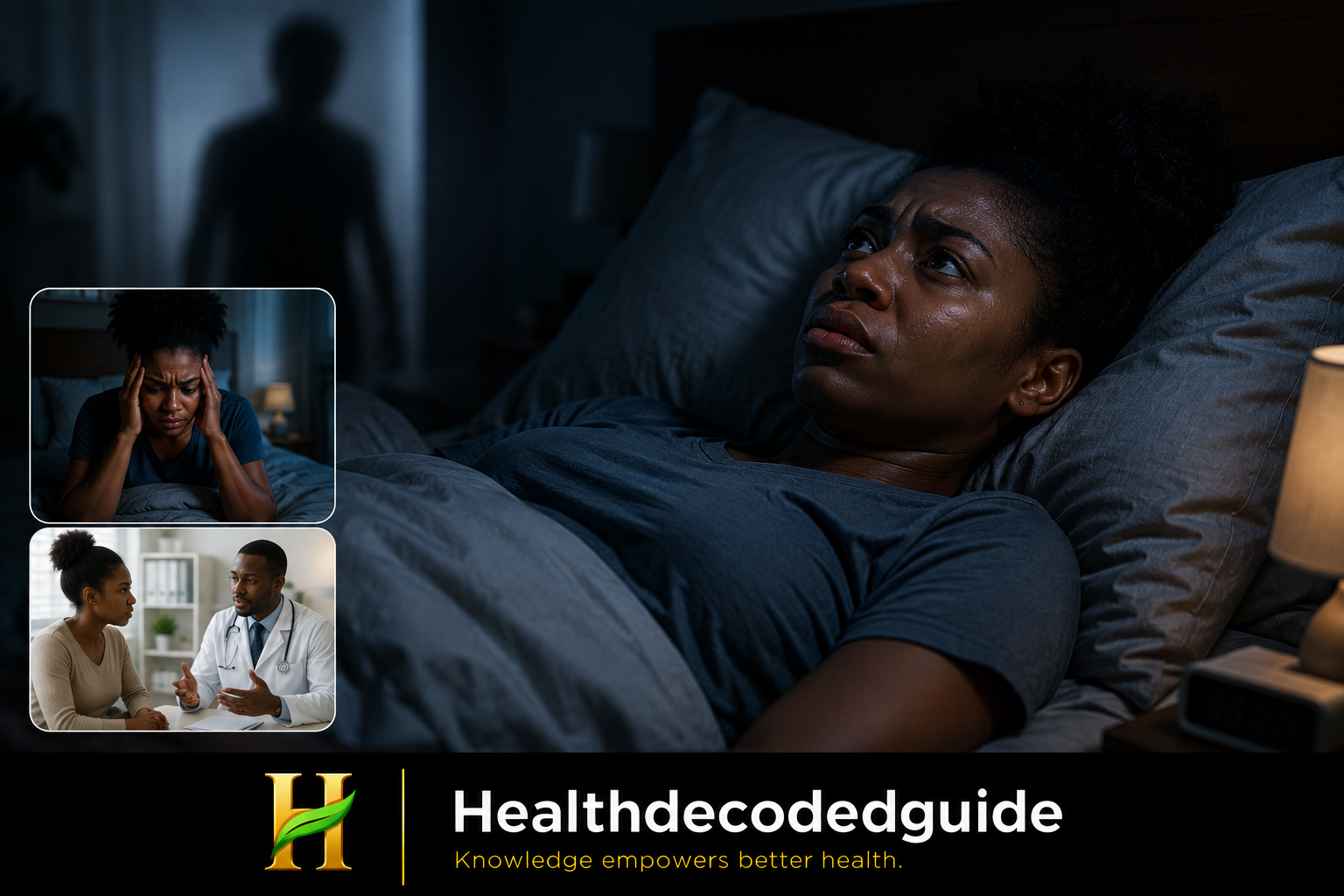
Imagine say you wake up for night. You know where you dey, you fit even see your room—
but when you try move your body or call somebody, nothing happen, no fit move!
Sometimes you fit even feel pressure like something dey press your chest, hear something or get strong feeling say another person dey inside d room.
Dis experience make person fear well well, but e dey usually happen during wetin doctors dey call sleep paralysis.
This na when your brain don become aware/awake but your body still temporarily dey inside part of d sleep cycle/process.
👉🏾 D experience dey real, but sleep paralysis itself usually no dey dangerous, read below make we explain am.
🟧 Wetin really dey happen during sleep paralysis?
When you sleep, your body no just remain for one type of sleep throughout d night.
You dey move through different stages of sleep throughout d night.
(Read more about how normal sleep cycles work for our [Sleep and Recovery] article.)
One of these stages na REM sleep—d stage where plenty dreaming dey happen.
During REM sleep:
• your brain dey active
• you fit dey dream
• most of your body muscles go dey more relaxed
• dis one dey help make sure say your body no dey follow do everything wey you dey do for your dream
→ for example, you fit dey run or waka for your dream, but your real body still dey lie down for bed
All this na normal part of REM sleep.
But sometimes,
your awareness fit return before your muscles don fully come out of this temporary paralysis—and na this experience we dey call sleep paralysis.
👉🏽 So your mind don wake up—but for those few moments, your body never completely follow.
🟧 Why e fit feel like something dey press you?
Na dis part dey make sleep paralysis dey scary.
Because your brain still dey transition from dreaming to full wakefulness, part of d dream experience fit follow you enter that moment.
You fit:
• feel pressure for your chest
• hear voice, footsteps or other sounds
• see shadow or figure
• feel like somebody dey stand near you
• feel like something dey hold you down
Because you no fit move, fear fit make everything feel even more worse/intense.
Wetin you feel during that moment dey very real to you—but d brain fit still dey produce dream-like feeling as you dey wake up.
🟧 Why e dey happen?
Sometimes no clear reason dey.
But some things fit make sleep paralysis more likely.
• You no dey sleep enough
→ serious sleep deprivation fit disturb your normal sleep pattern.
• Your sleeping time no regular
→ sleeping and waking at very different times fit affect your sleep cycle.
• Stress
→ periods of plenty stress fit sometimes increase am.
• Sleeping on your back
→ some people notice say e dey happen more wen dem sleep for their back.
• Another sleep problem
→ sleep paralysis fit sometimes happen together with conditions like narcolepsy.
👉🏾 If e happen once or occasionally, e no automatically mean say something serious dey wrong with you o.
🟧 How you go know say na sleep paralysis fit dey happen?
D typical experience usually happen as you dey fall asleep or wake up.
You fit notice say:
• you know say you dey awake
• you no fit move your body
• you try talk but voice no come out
• you feel pressure for chest
• fear suddenly catch you
• you see, hear or feel something wey seem completely real
After seconds or few minutes, normal movement return.
D experience fit feel like say e last very long, especially when fear catch you,
but most times e dey last only some seconds to few minutes.
For some people, e fit happen more than once during d same night.
🟧 Wetin you fit do?
If sleep paralysis dey happen sometimes:
• remind yourself say d episode go pass
• try focus on slow, calm breathing until your body fit move again
• try maintain regular sleeping and waking time (good sleep routine)
• make sure say you dey get enough sleep
• notice whether stress, lack of sleep or serious tiredness dey make d episodes happen more often
→ Read more about Sleep and Recovery.
If d experience dey happen many times,
you fit keep record of when e happen, how often, how long e last and anything wey you notice before d episode,
then discuss am with healthcare professional.
Understanding wetin dey happen fit to reduce d fear, so you fit remain calm during d episode and e fit make am easier for you to settle back to sleep again.
🟧 Real life example
One night, Kunle new girlfriend, Sotonye, wake up because she hear am dey talk for sleep.
Kunle eyes still dey close, and some of wetin e dey talk no really make sense.
Few nights later, Kunle wake around 2 AM and notice something strange:
• e know say e don wake, but him body no fit move
• e try call Sotonye, but voice no come out
• e feel like say another person dey inside d room with am
When e finally fit move, fear catch am. E tell Sotonye say:
“Something just hold me down for night.”
Sotonye remember how Kunle dey talk strangely for sleep few nights before.
She fear too, con say:
“You sure say no be spiritual attack?”
Later, Kunle tell him papa wey be nurse.
Him papa say e don hear similar experience from other people before and advise am make e discuss am with doctor.
Doctor explain say sleep talking and sleep paralysis na two different sleep experiences, and both fit happen without any supernatural cause.
Kunle also notice say d episodes dey happen more when e no dey get enough sleep.
E begin improve him sleep routine. D sleep paralysis no disappear completely,
but because e understand wetin dey happen, e no dey fear am like before and e fit settle back to sleep more easily after e happen.
👉🏽 Sometimes even if person understand sometime wey dey happen for their body, e no mean say d experience go stop immediately
—but e fit remove some of d fear wey come with am and help you know wetin to do when e happen.
🟧 🩺 When you suppose go hospital
Sleep paralysis itself usually no be emergency.
But arrange medical assessment if:
• e dey happen frequently
• fear of another episode dey make you avoid sleep
• you dey extremely sleepy during daytime
• you dey suddenly fall asleep during normal activities
• sleep problems seriously dey affect your everyday life
These signs fit mean say another sleep condition like narcolepsy or other medical condition fit be cause or dey contribute to d problem.
🟢 Final Reassurance
Sleep paralysis fit be one of those experiences wey dey scary because you dey conscious but your body no dey respond
—and wetin you see, hear or feel fit seem completely real.
But for most people, d episode dey pass within short time and normal sleep fit continue.
👉🏾 No dismiss wetin you experience—but understanding wetin your brain and body fit dey do during sleep and waking cycle fit help you make sense of am without fear.
📚 Reference
For full medical references, see the English version of this article.
⚠️ Disclaimer
This article na for education only. E no replace doctor advice.
🔗 Related Health Topics
• Sleeping wahala
• Sleep Apnea
• Night Terrors
• Insomnia
• Anxiety vs Panic Attacks
• Sleep and Recovery
👉🏾 If you still get questions or prefer full medical detail, read the English version.