Read in: English | Pidgin English
Published on August 19, 2026 at 9:37 PM
🩺 Medically reviewed by Priscilla Afiakurue, MD, Family Medicine Physician | Founder & Lead Medical Editor · Last reviewed: September 2026
🔍 Quick Summary
Sleep apnoea is a condition where breathing repeatedly stops or becomes significantly reduced during sleep.
These interruptions can disturb sleep and reduce oxygen levels. Treatment can improve sleep, daytime functioning and reduce some of the longer-term health risks associated with untreated sleep apnoea.
👉 Loud snoring alone does not always mean sleep apnoea, but snoring with breathing pauses, choking or significant daytime sleepiness deserves assessment.
1️⃣ Introduction
When you sleep, you should continue breathing regularly without repeatedly waking to restart your breathing.
With sleep apnoea, breathing becomes interrupted many times during the night.
• breathing may stop for short periods
• oxygen levels may fall
• the brain briefly wakes the body to restore breathing
• this cycle can happen repeatedly without the person remembering it
👉 You may think you slept throughout the night while your brain and body were actually being repeatedly disturbed.
2️⃣ How it happens
The mechanism depends on the type of sleep apnoea.
In the most common form, muscles around the throat relax during sleep and the airway becomes too narrow or closes.
This can cause:
• reduced or stopped airflow
• falling oxygen levels
• brief awakening by the brain
• reopening of the airway
• breathing to restart, sometimes with a gasp or snort
👉 These repeated interruptions can prevent the body from getting good-quality restorative sleep.
3️⃣ Types
Obstructive sleep apnoea (OSA)
• the most common type
• the upper airway repeatedly narrows or closes during sleep
• breathing effort continues but airflow is reduced or blocked
Central sleep apnoea
• the brain temporarily does not send the appropriate signals to the breathing muscles
• less common than obstructive sleep apnoea
Some people can have features of both.
👉 Knowing the type matters because treatment can be different.
4️⃣ Common causes
Factors that increase the risk of obstructive sleep apnoea
• overweight or obesity
• naturally narrow upper airway
• enlarged tonsils or adenoids, particularly in children
• increasing age
• alcohol, especially close to bedtime
• smoking
• certain medicines that cause sedation
Other anatomical and medical factors can also contribute.
👉 Sleep apnoea can affect people of different body sizes—being overweight is an important risk factor, but it is not the only cause.
5️⃣ Symptoms
During sleep, another person may notice:
• loud snoring
• pauses in breathing
• gasping, choking or snorting
• restless sleep
During the day, the person may experience:
• excessive sleepiness
• morning headaches
• poor concentration
• irritability or mood changes
• waking with a dry mouth
👉 Sometimes the person sleeping beside you notices the breathing problem before you do.
6️⃣ Associated symptoms or complications
Untreated obstructive sleep apnoea can be associated with:
• high blood pressure
• increased cardiovascular risk
• problems with concentration and memory
• mood changes
• increased risk of accidents due to sleepiness
• reduced quality of life
In children, sleep apnoea may sometimes appear as behavioural problems, difficulty concentrating or poor school performance rather than obvious daytime sleepiness.
👉 Sleep apnoea affects more than sleep—it can affect daytime functioning and overall health.
7️⃣ 🩺 When it becomes dangerous
Seek medical assessment if:
• someone repeatedly notices that you stop breathing during sleep
• you wake repeatedly choking or gasping
• you have severe daytime sleepiness
• you fall asleep while driving, working or during other activities requiring alertness
• a child has repeated breathing pauses during sleep
👉 These may indicate:
• clinically significant sleep apnoea
• need for sleep assessment and treatment
Do not drive if you are struggling to stay awake.
8️⃣ Management / treatment
Treatment depends on the type and severity.
It may include:
• weight management when appropriate
• reducing alcohol, particularly before sleep
• changing sleep position in selected cases
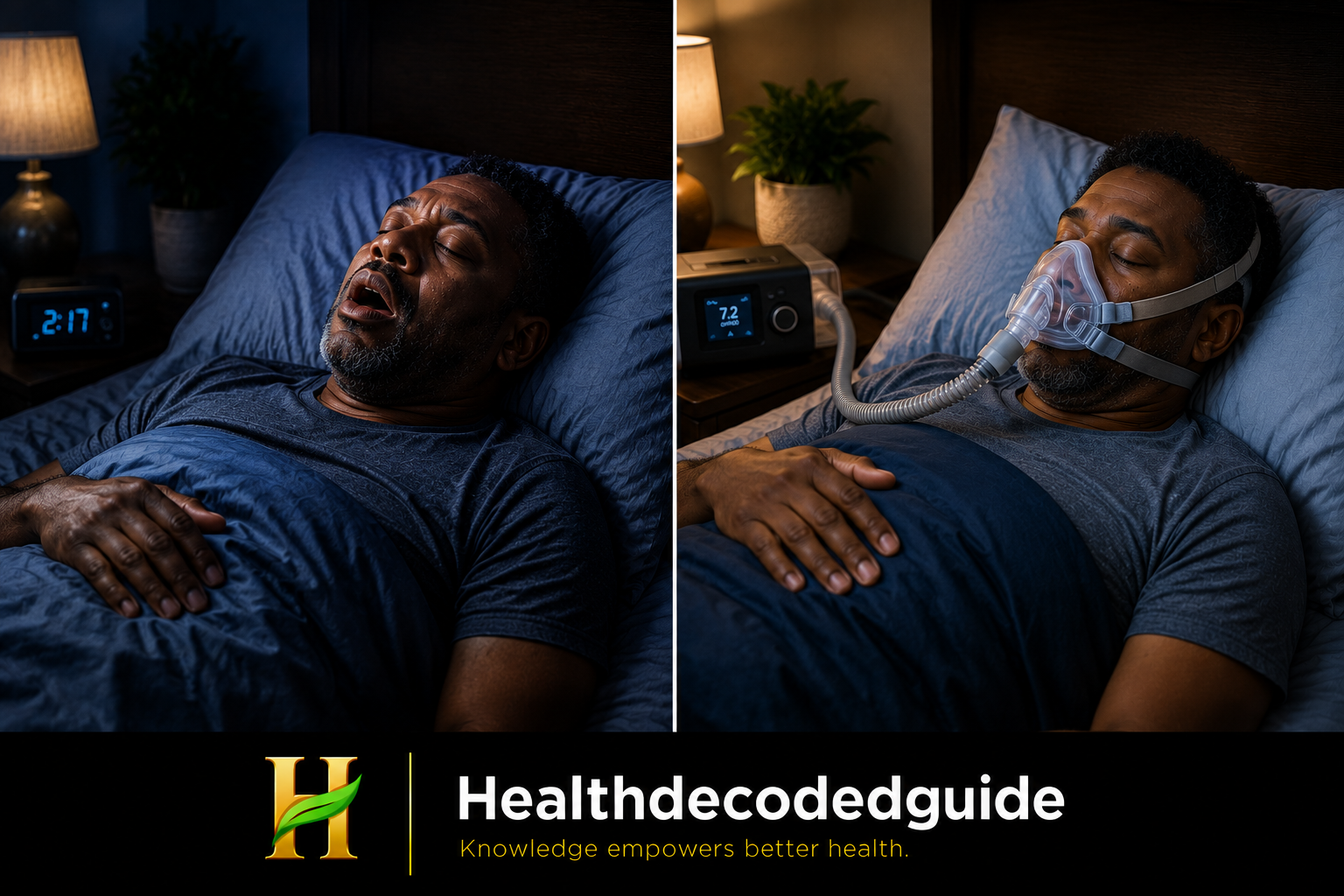
• continuous positive airway pressure (CPAP)
• oral appliances for selected people
• treatment of contributing nasal or airway problems
• surgery in some cases
For children with enlarged tonsils or adenoids, specialist assessment may be recommended.
👉 Effective treatment can make a major difference to sleep quality and daytime energy.
9️⃣ Diagnosis
Assessment may include:
• medical and sleep history
• information from a partner or family member
• examination of the mouth, throat and airway
• overnight sleep study or home sleep apnoea testing in appropriate adults
Sleep testing can measure breathing, oxygen levels and other changes during sleep.
👉 Snoring alone cannot diagnose sleep apnoea—a sleep assessment helps determine whether breathing is actually being interrupted.
🟢 Important Message
Sleep apnoea is common and treatable, but many people do not realise they have it because the breathing interruptions happen while they are asleep.
👉 If someone regularly tells you that you snore loudly, stop breathing and then gasp during sleep—especially if you are exhausted during the day—do not simply dismiss it as “normal snoring.”
FAQ
• Does everyone who snores have sleep apnoea?
No. Snoring is common and does not automatically mean sleep apnoea. Repeated breathing pauses, gasping and significant daytime sleepiness are more concerning.
• Can slim people have sleep apnoea?
Yes. Body weight is only one risk factor. Airway anatomy, age, tonsil size and other factors can contribute.
• Can children have sleep apnoea?
Yes. Enlarged tonsils or adenoids are common contributors to obstructive sleep apnoea in children.
• Does CPAP cure sleep apnoea?
CPAP controls obstructive sleep apnoea while it is being used by keeping the airway open. Whether the underlying condition later improves depends on its cause.
🧠 Why We Delay
Snoring is often treated as a joke or simply something the person sleeping beside you has to tolerate. Because the person with sleep apnoea is asleep when the breathing pauses occur, they may have no idea anything unusual is happening.
Repeated breathing pauses and significant daytime sleepiness are different from ordinary snoring. Assessment can identify the problem, and effective treatments are available.
👉 Don't just listen to how loud the snoring is—pay attention to whether breathing repeatedly stops.
🔗 Related Health Topics
• Sleep Problems
• Sleep and Recovery
• Insomnia
• Sleep Paralysis
• High Blood Pressure
📚 Medical References
• National Health Service (NHS). Sleep apnoea.
• National Heart, Lung, and Blood Institute (NHLBI). What Is Sleep Apnea?
• Mayo Clinic. Sleep apnea - Symptoms and causes.
• American Academy of Sleep Medicine (AASM), Sleep Education. Obstructive Sleep Apnea.
• National Institute for Health and Care Excellence (NICE). Obstructive sleep apnoea/hypopnoea syndrome and obesity hypoventilation syndrome in over 16s: assessment and management (NG202).
⚠️ Medical Disclaimer
This article is for educational purposes only and does not replace professional medical advice.
If you have repeated breathing pauses during sleep, severe daytime sleepiness or other concerning symptoms, consult a healthcare professional.