Wetin Dey Cause Cancer? Wetin fit increase d risk to get am?
Pidgin English
Published on August 9, 2026 at 12:38 AM
🩺 Medically reviewed by the Health Decoded Guide Editorial Team · Last reviewed: August 2026
🔍 Quick Breakdown
Cancer dey happen when changes inside d DNA of some cells affect how those cells dey grow, divide and survive.
Different things fit contribute to these changes.
Sometimes na things wey person dey exposed to, sometimes na inherited genes,
and sometimes d changes simply happen as cells dey divide and person dey grow older.
👉🏾 To get one cancer risk factor no mean say you must get cancer o.
🟧 So, wetin really dey cause cancer?
Dis question no always get one simple answer.
For one person, several things fit contribute over many years:
• lifestyle and environment
• certain infections like HPV
• inherited genes
• ageing
• random mistakes when cells dey divide
Another person fit develop cancer without any clear (obvious) reason wey doctors fit identify.
👉🏾 Cancer no usually come from one single event. Different factors fit work together over time to cause am.
🟧 Wetin these risk factors dey do for your body?
Your cells get something wey dem dey call DNA and e dey carry instructions or like rules about how your cells suppose behave.
DNA na short form for Deoxyribonucleic acid.
Some cancer risk factors fit:
• damage d DNA
• and dis go interfere with how d cells dey repair damage
• e go encourage abnormal cells to survive
• allow more DNA changes to gather over time
Your body dey normally repair plenty of these problems.
👉🏾 Cancer fit develop when plenty abnormal changes gather over time
and d body normal protection systems no longer fit control d abnormal cells properly.
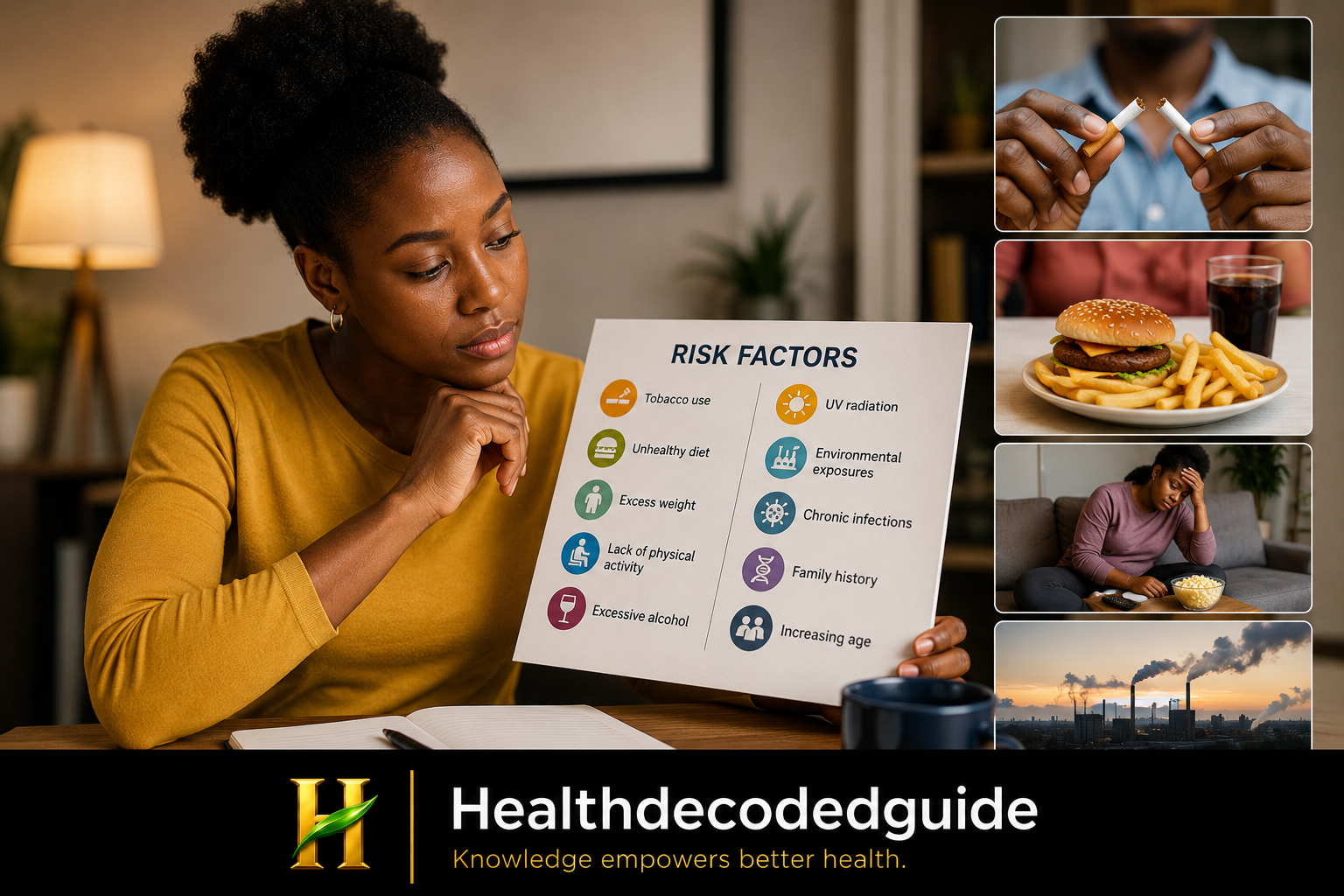
🟧 Which things fit increase d risk to get cancer?
• Tobacco
→ cigarette and other tobacco products contain chemicals wey fit damage cells and cause different cancers.
• Alcohol
→ drinking alcohol dey increase d risk of several cancers, and generally d more person drinks, d more d risk.
• Too much UV radiation
→ repeated/too much exposure to strong sunlight or tanning beds fit damage skin cells.
• Certain infections
→ HPV, hepatitis B, hepatitis C and H. pylori infection fit increase d risk of certain cancers.
👉🏾 Some of these risks fit reduce through vaccination, treatment or lifestyle changes.
🟧 How genes and age take enter d matter?
No be everything wey increase cancer risk dey under person control.
Some people fit inherit genetic changes from their parents wey increase their chance of developing some particular type of cancer.
As person dey grow older, normally:
• d cells for d body don divide many times
• DNA changes/damage fit gradually dey accumulate
• and d body repair systems fit become less effective
👉🏾 Even though family history (i.e person for your family get cancer) fit increase risk, e no mean say you too must get cancer.
🟧 Wetin you fit do
You no fit prevent every cancer, but you fit reduce some risk factors.
• avoid tobacco
• reduce alcohol
• protect your skin from too much sun
• maintain healthy weight and stay physically active
• take recommended HPV and hepatitis B vaccines
• attend recommended cancer screening
👉🏾 D aim no be to achieve zero risk—that one no possible. D aim na to reduce d risks wey you fit control.
🟧 Real life example
Chuka never smoke before, e dey exercise regularly and e dey try chop healthy food.
When one of him relatives develop cancer, e begin wonder:
“How person wey dey live healthy still fit get cancer?”
After e discuss with healthcare professional, e understand say:
• unhealthy lifestyle na only one part of cancer risk
• age and genetic changes fit contribute
• sometimes cancer develop without one clear preventable cause
After e understand, e decide to:
• continue him healthy lifestyle
• to check him family medical history
• attend recommended screening when e reach d appropriate age
👉🏾 Healthy living still dey very important because e fit reduce cancer risk—but e no make anybody completely immune.
👉🏾 Cancer diagnosis no automatically mean say d person do something wrong.
🟧 🩺 When you suppose go hospital 🚨
Talk to healthcare professional if:
• several close family members get d same or related cancers
• cancer dey happen unusually young age for your family
• you know say inherited cancer-related gene dey your family
• you get significant exposure to known cancer-causing substance e.g through your work place
• you notice unexplained symptoms wey dey last weeks and months
👉🏾 Early medical advice fit help determine whether you need screening, monitoring or even genetic counselling.
🟢 Final Reassurance
You fit reduce some cancer risks, but nobody fit control every factor wey contribute to cancer.
If person develop cancer, e no automatically mean say d person cause am through food, lifestyle or something dem do wrong.
👉🏾 Focus on wetin you fit control—healthy choices, recommended vaccination, screening and to go check unusual symptoms early.
📚 Reference
For full medical references, see the English version of this article.
⚠️ Disclaimer
This article na for education only. E no replace doctor advice.
If you dey concerned about your cancer risk, family history or any unexplained symptoms, abeg see healthcare professional.
🔗 Related Health Topics
• Wetin Be Cancer?
• How Cancer Dey Develop
• Benign vs Malignant Tumours
• How Cancer Dey Spread
• Cancer Prevention (coming soon)
👉🏾 If you still get questions or prefer full medical detail, read the English version.