Read in: English | Pidgin English
🩺 Medically reviewed by the Health Decoded Guide Editorial Team · Last reviewed: July 2026
🔍 Quick Summary
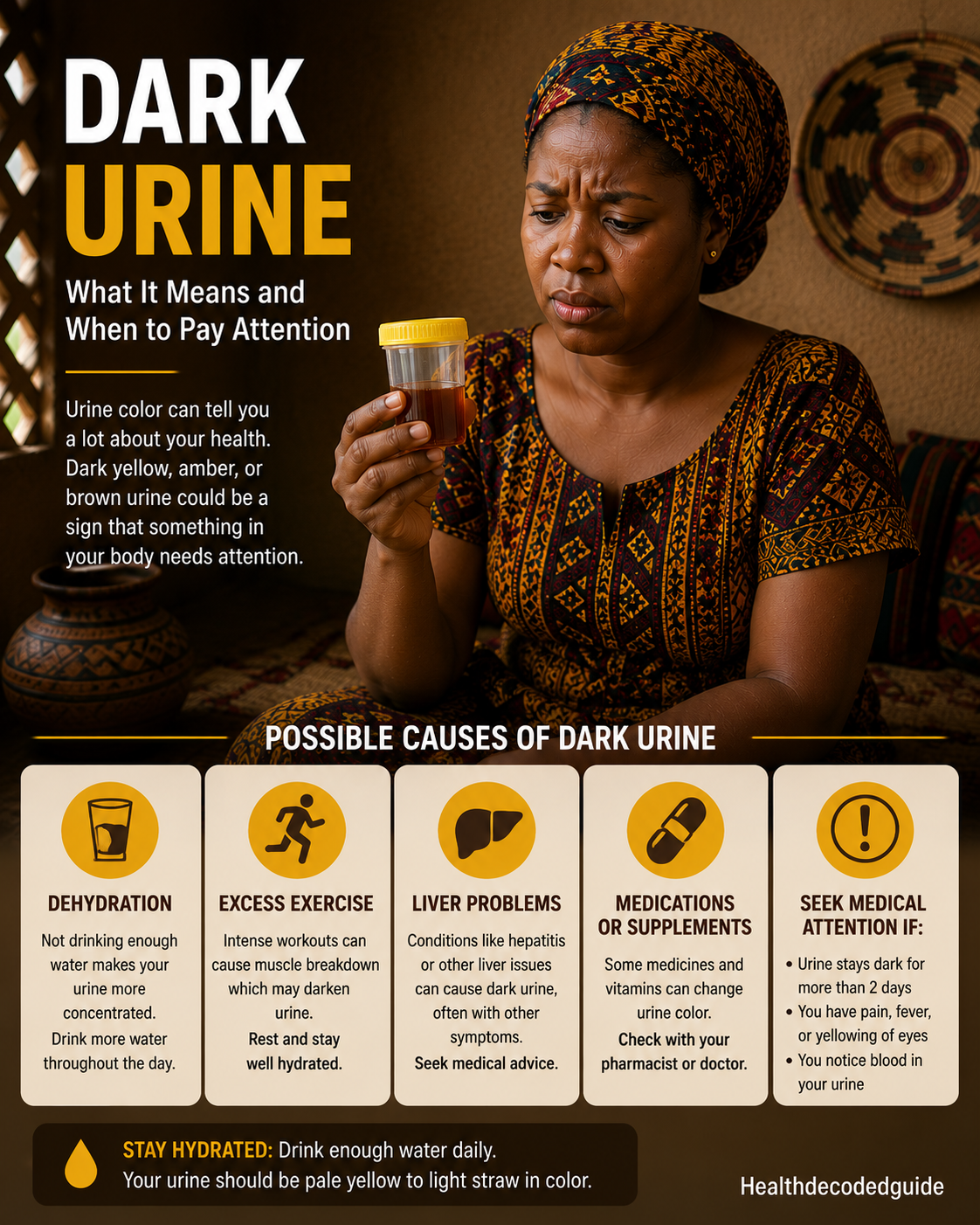
Dark urine can range from deep yellow to brown or tea-colored.
It is often caused by dehydration but may also signal liver, kidney, or blood-related conditions.
Persistent or very dark urine should be medically assessed.
1️⃣ Introduction
Urine color can give important clues about health.
• normal urine is usually pale yellow
• darker urine may occur occasionally or persistently
• some causes are harmless, while others may need urgent medical attention
👉 Not all dark urine is dangerous, but patterns and associated symptoms matter.
2️⃣ How it happens
The urine color depends on waste products and fluid balance.
• dehydration concentrates urine, making it darker
• breakdown of red blood cells or muscle can change the urine color
• liver or bile problems may cause dark brown or tea-colored urine
👉 The body removes waste through urine, so changes can reflect internal processes.
3️⃣ Classification
• Dark yellow urine
- often due to dehydration
- improves with fluid intake
• Brown or tea-colored urine
- may suggest liver or bile issues
- can also occur with certain medications
• Reddish or cola-colored urine
- may indicate blood or muscle breakdown
- needs medical evaluation
👉 The shade of urine can help guide possible causes.
4️⃣ Common causes
- not drinking enough fluids
- excessive sweating or illness
• Liver-related causes
- hepatitis
- bile duct problems
• Kidney or urinary causes
- infections
- blood in urine
• Other factors
- certain medications or foods
- intense exercise (muscle breakdown)
👉 Some foods like beetroot or medications can temporarily change urine color.
5️⃣ Symptoms
• darker than usual urine color
• strong-smelling urine
• reduced urine output in dehydration
👉 Concentrated waste products make urine appear darker.
6️⃣ Associated symptoms
• yellowing of eyes or skin (jaundice)
• abdominal pain
• fever or burning urination
• weakness
• muscle pain
👉 Dark urine with jaundice often points toward liver or bile-related problems.
7️⃣🩺 When it becomes dangerous 🚨
• dark urine with yellow eyes or skin
• blood in urine
• severe muscle pain with dark urine
👉 These may indicate:
• liver disease or bile obstruction
• kidney problems or muscle breakdown (rhabdomyolysis)
8️⃣ Management / treatment
• increase fluid intake if dehydration suspected
• treat underlying conditions such as infection or liver disease
• review medications if they may affect urine color
Supportive Measures
• drink water regularly
• monitor urine color changes
• seek medical advice for persistent symptoms
• avoid excessive alcohol intake
👉 Early hydration can quickly improve dehydration-related dark urine.
9️⃣ Diagnosis
• medical history and symptom review
• urine tests and blood tests
• imaging or further investigations if needed
👉 Doctors assess both urine color and associated symptoms to identify the cause.
🟢 Important message
Dark urine is often due to dehydration but can sometimes signal more serious health problems.
Monitoring symptoms and seeking medical advice when needed helps prevent complications.
👉 Persistent dark urine or symptoms like jaundice or pain should never be ignored.
FAQ
• Is dark urine always dangerous?
No. It is often due to dehydration, but persistent changes should be checked.
• Can dehydration cause dark urine?
Yes. Concentrated urine becomes darker when fluid intake is low.
• What color urine is concerning?
Brown, tea-colored, or red urine may require medical evaluation.
• Can medications change urine color?
Yes. Some drugs and foods can temporarily affect urine color.
• When should emergency help be sought?
If dark urine occurs with jaundice, severe pain, or muscle weakness.
🔗 Related Health Topics
• Dehydration
• Chronic Kidney Disease
• Liver Cirrhosis
• Urinary Tract Infections
• Swelling in the Legs or Body
📚 Medical References
• World Health Organization (WHO). Hepatitis B.
• National Health Service (NHS). Jaundice.
• Mayo Clinic. Urine color – Symptoms and causes.
• Centers for Disease Control and Prevention (CDC). Chronic Kidney Disease (CKD).
• National Institute for Health and Care Excellence (NICE). Jaundice in adults.
• American College of Gastroenterology (ACG). Liver Disease.
⚠️ Medical Disclaimer
This article is for educational purposes only and does not replace professional medical advice.
If you have symptoms or concerns, please consult a qualified healthcare professional.