Read in: English | Pidgin English
🩺 Medically reviewed by the Health Decoded Guide Editorial Team
🔍 Quick Summary
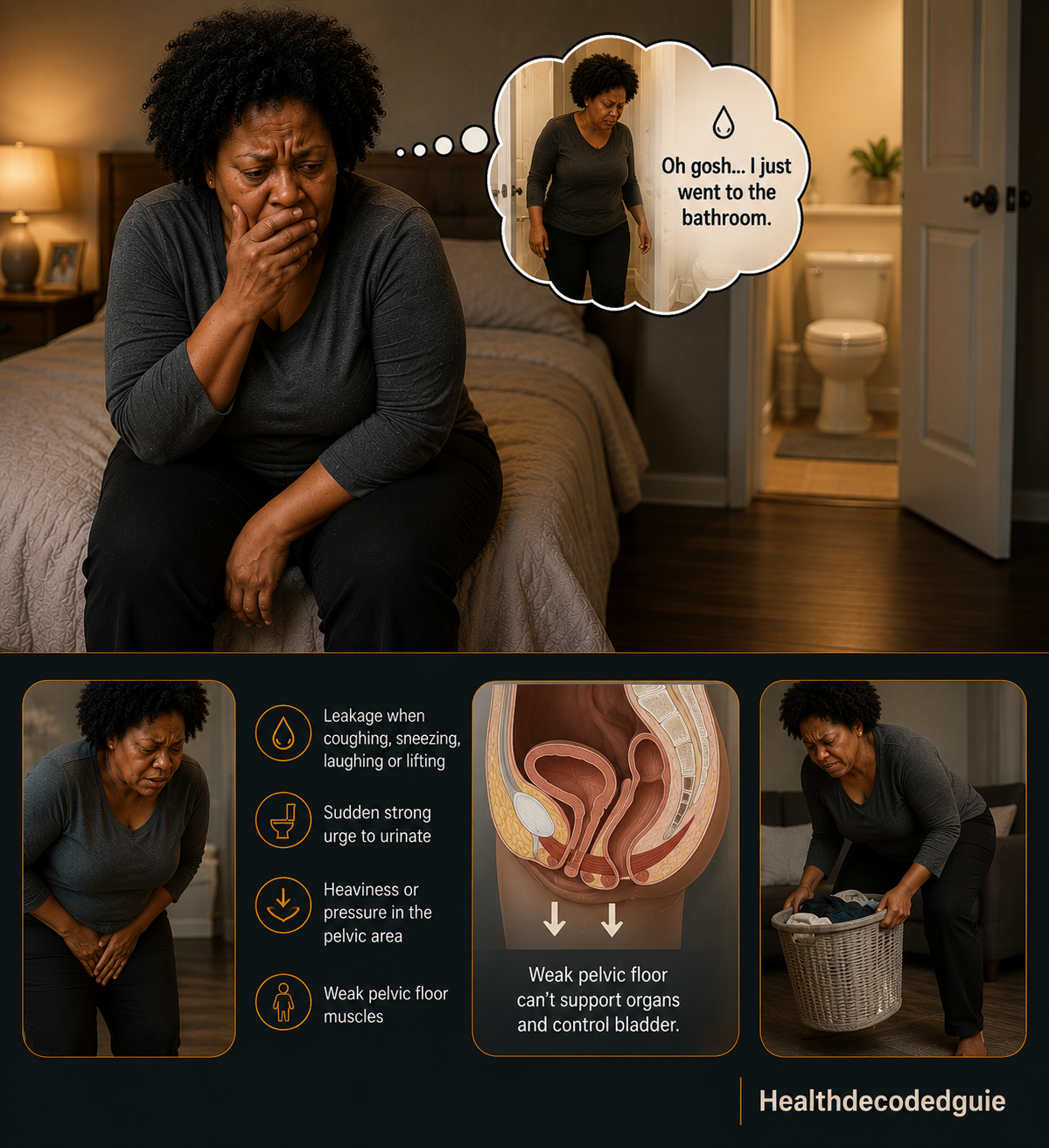
Leaking urine during coughing, laughing, sneezing, or exercise is commonly called stress incontinence.
It usually happens when pelvic floor muscles become weakened and cannot fully support the bladder.
The condition is common, especially after childbirth or with aging, and treatment options are available.
1️⃣ Introduction
The bladder stores urine until the body is ready to urinate.
• pelvic floor muscles help keep the bladder closed
• pressure on the abdomen increases during coughing or laughing
• weak muscles may allow urine leakage
👉 Stress incontinence does not mean emotional stress — it refers to physical pressure on the bladder.
2️⃣ How it happens
Normal bladder control depends on muscle support and nerve coordination.
• coughing or sneezing suddenly increases abdominal pressure
• weakened pelvic floor muscles may fail to hold urine properly
• bladder support may reduce after childbirth or aging
👉 Even small increases in pressure can trigger leakage in some women.
3️⃣ Types/Classifications
• Mild stress incontinence
- small urine leakage
- usually during coughing or sneezing
• Moderate stress incontinence
- leakage during exercise or walking
- more frequent accidents
• Severe stress incontinence
- leakage with minimal movement
- stronger effect on daily life
👉 Symptoms can gradually worsen over time without support or treatment.
4️⃣ Common causes
• Pregnancy and childbirth
- stretching of pelvic floor muscles
- tissue and nerve changes
• Aging and menopause
- muscle weakening
- reduced tissue support
• Lifestyle and health factors
- obesity
- chronic cough
- constipation
👉 Repeated pressure on pelvic muscles can weaken bladder support over time.
5️⃣ Symptoms
• urine leakage during coughing
• leakage when laughing, sneezing, or exercising
• difficulty holding urine during physical activity
👉 Leakage occurs because pressure temporarily overwhelms weakened bladder support.
6️⃣ Associated symptoms
• pelvic heaviness
• frequent urination
• waking up at night to urinate
• reduced confidence during exercise or social activities
👉 Some women also have symptoms of overactive bladder or pelvic floor weakness.
7️⃣🩺 When it becomes dangerous 🚨
• blood in urine
• severe pelvic pain
• inability to urinate normally
👉 These may indicate:
• infection or urinary tract problems
• conditions needing urgent medical evaluation
8️⃣ Management / treatment
• pelvic floor exercises (Kegels)
• bladder training and lifestyle changes
• medications or surgical treatment in some cases
Supportive Measures
• maintain healthy body weight
• avoid excessive caffeine and smoking
• treat chronic cough or constipation
• practice pelvic floor exercises regularly
👉 Pelvic floor strengthening often improves symptoms significantly.
9️⃣ Diagnosis
• symptom history and physical examination
• pelvic assessment
• urine tests or bladder studies in some cases
👉 Doctors often diagnose stress incontinence based on the pattern of leakage.
🟢 Important message
Stress incontinence is common and treatable.
Many women feel embarrassed discussing urine leakage, but effective treatments and support are available.
👉 Leaking urine during coughing or laughing should not simply be ignored.
FAQ
• Why do I leak urine when I cough?
Pressure from coughing can overwhelm weakened pelvic floor muscles.
• Is stress incontinence common after childbirth?
Yes. Pregnancy and childbirth may weaken pelvic support.
• Can pelvic floor exercises help?
Yes. Many women improve with regular pelvic floor training.
• Is surgery always needed?
No. Many cases improve with conservative treatment first.
• When should medical help be sought?
If symptoms worsen, affect daily life, or involve pain or blood in urine.
🔗 Related Health Topics
• Urinary Incontinence in Women
• Pelvic Floor Weakness
• Overactive Bladder
• Frequent Urination in Women
• Pelvic Organ Prolapse
• Pelvic Floor Exercises
📚 Medical References
• World Health Organization (WHO). WHO recommendations on integrated care for older people (declines in intrinsic capacity, including urinary incontinence): https://www.who.int/publications/i/item/9789241550109
• National Health Service (NHS). Urinary incontinence: https://www.nhs.uk/conditions/urinary-incontinence/
• Mayo Clinic. Stress incontinence – Symptoms and causes: https://www.mayoclinic.org/diseases-conditions/stress-incontinence/symptoms-causes/syc-20355727
• American College of Obstetricians and Gynecologists (ACOG). Urinary Incontinence: https://www.acog.org/womens-health/faqs/urinary-incontinence
• National Institute for Health and Care Excellence (NICE). Urinary incontinence and pelvic organ prolapse in women: management (NG123): https://www.nice.org.uk/guidance/ng123
• International Continence Society (ICS). Stress Urinary Incontinence (SUI): https://www.ics.org/committees/standardisation/terminologydiscussions/sui
⚠️ Medical Disclaimer
This article is for educational purposes only and does not replace professional medical advice.
If you have symptoms or concerns, please consult a qualified healthcare professional.