Malaria vs Typhoid: How Person Fit Know the Difference
Pidgin English
Published on March 8, 2026 at 12:35 AM
🩺 Medically reviewed by the Health Decoded Guide Editorial Team · Last reviewed: July 2026
🔍 Quick Breakdown
Malaria and typhoid na two common sickness wey plenty people dey get for Africa and other tropical countries.
Because both of dem fit cause:
fever
headache
body weakness
and tiredness
E fit easy to confuse dem. But malaria and typhoid no be the same sickness.
Malaria dey spread through mosquito bite, while typhoid fever dey spread through contaminated food or dirty water.
👉🏾 If you get fever wey no dey improve or you dey feel seriously sick, make healthcare worker examine you. Na laboratory test fit show the real cause.
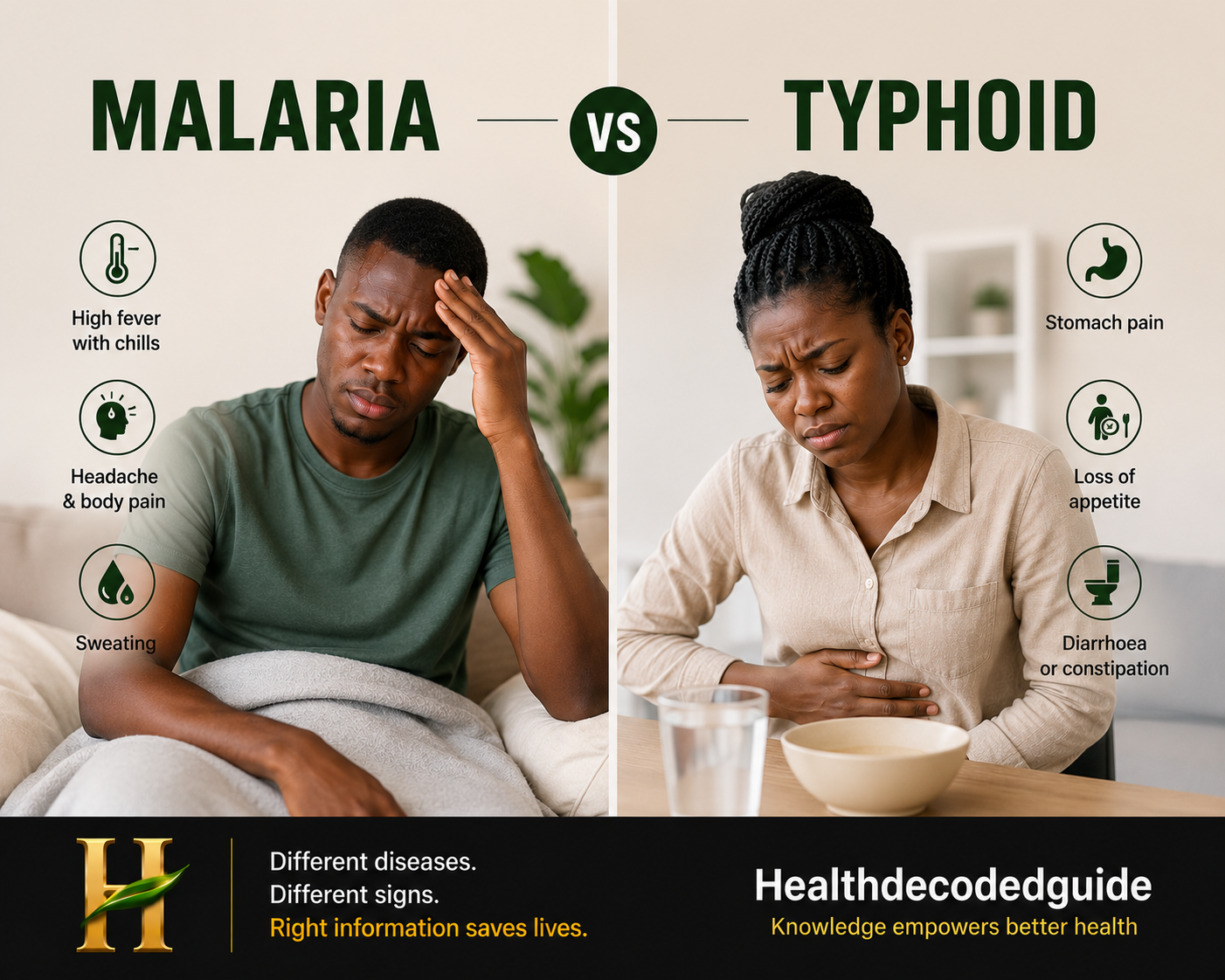
| Feature | Malaria | Typhoid Fever |
|---|---|---|
| Wetin dey cause am? | Parasite wey infected mosquito transmit | Bacteria (Salmonella Typhi) |
| How e dey spread? | Bite from infected mosquito | Dirty food or contaminated drinking water |
| How symptoms dey start? | Usually sudden | Usually small-small before e become worse |
| Fever | High fever with chills and sweating | Fever wey gradually rise and fit remain high |
| Headache | Common | Common |
| Body weakness | Common | Common |
| Body pain | Common | Fit happen |
| Belle pain | Less common | Common |
| Running stomach or constipation | Less common | Common |
| Loss of appetite | Fit happen | Very common |
| Main treatment | Antimalarial medicine | Antibiotics |
🟧 Wetin Be Malaria?
Malaria na infection wey parasite dey cause. Person dey get am when infected female mosquito bite am.
After the parasite enter body, e begin attack the red blood cells.
Common symptoms include:
Without treatment, malaria fit become very serious.
🟧 Wetin Be Typhoid Fever?
Typhoid fever na bacterial infection wey Salmonella Typhi dey cause.
E dey spread mainly through dirty food or contaminated drinking water.
Common symptoms include:
-
Persistent fever
-
Headache
-
Loss of appetite
-
Running stomach or constipation
Without treatment, typhoid fever fit lead to serious complications.
🟧 Why Plenty People Dey Confuse Dem?
Both malaria and typhoid fit start with:
-
Headache
-
Weakness
-
Tiredness
For many communities, once person get fever, people dey quickly assume say na malaria.
But no be every fever be malaria.
Typhoid, dengue fever, flu and plenty other infections fit also cause similar symptoms.
Because the symptoms fit look alike, healthcare worker usually need laboratory tests before dem fit know the exact sickness.
🟧 Real Life Example
One afternoon, Musa begin get high fever, headache and body pain.
Him family quickly buy malaria medicine because dem believe say na malaria.
After two days, the fever still no improve
Musa begin complain of serious stomach pain and e fit no chop food.
When dem carry am go hospital, laboratory tests show say na typhoid fever.
After the correct treatment start, Musa gradually recover.
👉🏾Abeg no always assume say every fever na malaria. Proper test fit help person receive the correct treatment early.
🟧 Wetin Healthcare Worker Fit Do?
If you get fever, healthcare worker go ask questions about your symptoms,
whether mosquito fit bite you, wetin you don chop recently and where you don travel.
Dem fit also recommend tests like:
-
Malaria rapid test or blood smear
-
Blood culture for typhoid fever
-
Other tests if necessary
These tests help confirm d real cause before treatment begin.
🟧 Wen You Suppose go hospital?🚨
Go hospital or health centre immediately if you get:
-
High or persistent fever
-
Serious weakness
-
Plenty vomiting
-
Severe belle pain
Early treatment fit prevent serious complications.
🟧 Final Advice
Malaria and typhoid fever fit look alike for the beginning, but dem no be d same sickness.
Malaria dey spread through mosquito bite, while typhoid fever dey spread through contaminated food or dirty water.
👉🏾 No guess the cause of fever by yourself. Make healthcare worker examine you and do the necessary tests so you fit receive the correct treatment.
📚 Medical References
Medical information for this article come from trusted international health organisations and evidence-based medical resources.
For the full list of medical references, see the English version of this article.
⚠️ Disclaimer
This article na for education purpose only. E no replace medical advice, diagnosis or treatment from qualified healthcare professional.
For the complete medical disclaimer, see the English version of this article.