

Read in: English | Pidgin English
🩺 Medically reviewed by the Health Decoded Guide Editorial Team · Last reviewed: July 2026
🔍 Quick Summary
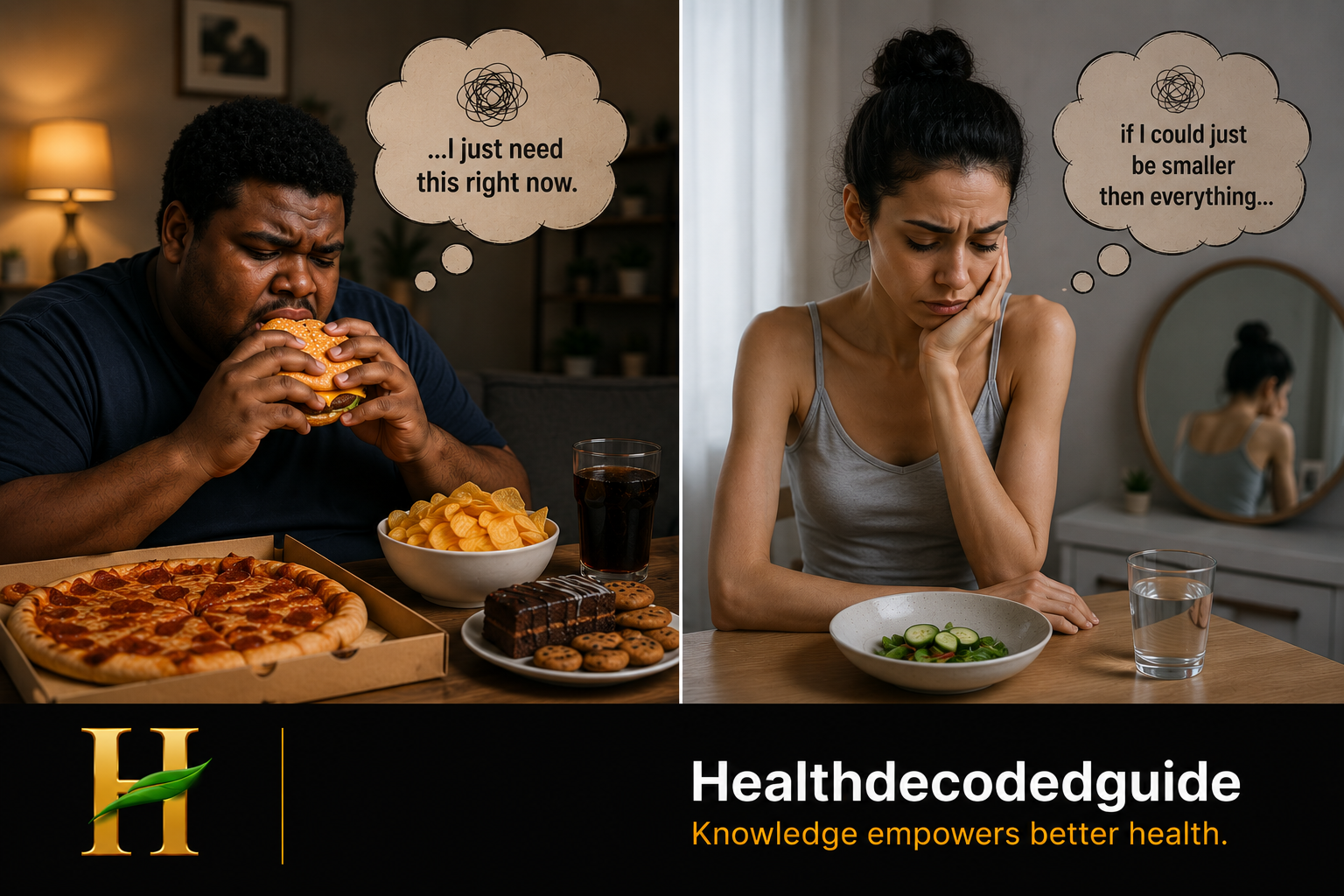
Eating disorders are conditions that affect how a person eats and relates to food.
They can impact both physical and mental health—but recovery is possible.
1️⃣ Introduction
Eating disorders involve unhealthy patterns of eating and thoughts about food or body image.
• may involve eating too little, too much, or irregular patterns
• often linked to emotions and self-image
• can affect people of all ages
👉 It is not just about food—it is about how a person feels and copes.
2️⃣ How it happens
Eating behavior is influenced by both the brain and emotions.
• thoughts about body and control affect eating
• stress and emotions can trigger patterns
• brain reward and restriction cycles develop
👉 Over time, patterns become difficult to break without support.
3️⃣ Types
• Anorexia nervosa
- severe restriction of food
- intense fear of weight gain
- may become dangerously underweight
• Bulimia nervosa
- cycles of overeating followed by compensatory behaviors
- such as self-induced vomiting, fasting or excessive exercise
• Binge eating disorder
- episodes of eating unusually large amounts of food
- feeling unable to stop eating
- no regular compensatory behaviors
👉🏽 Each type has different patterns but all are serious mental health conditions that need support and treatment.
4️⃣ Common causes
• Psychological factors
- low self-esteem
- need for control
- anxiety, depression or perfectionism
• Social and environmental factors
- body image pressure
- cultural or social media influences
- bullying or negative comments about weight
• Biological factors
- family history
- genetic factors may increase the risk
👉🏽 Eating disorders usually develop because of several factors working together—not just one single cause.
5️⃣ Symptom
Eating disorders affect both the way a person eats and the way they think about food and their body.
Common symptoms include:
• changes in eating habits → eating much less, avoiding certain foods, binge eating, or using unhealthy ways to control weight
• obsession with weight or body shape → constantly thinking about food, weight, calories or appearance
• guilt or distress after eating → feeling ashamed, anxious or guilty after meals, even after eating a normal amount
• distorted body image → seeing yourself as overweight even when you are underweight or at a healthy weight
These symptoms happen because eating disorders affect both thoughts and emotions, making food, weight
and body image become overwhelming concerns.
6️⃣ Associated symptoms
- weight changes (loss or gain, depending on the type)
- fatigue or weakness
- dizziness or fainting
- anxiety or low mood
- heart palpitations (especially with severe weight loss, dehydration or electrolyte imbalance)
- social withdrawal or avoiding meals with other people
👉 Physical and emotional symptoms often occur together.
7️⃣ 🩺When it becomes dangerous 🚨
• severe or rapid weight loss
• fainting, severe weakness or dehydration
• inability to eat or drink enough
• chest pain, heart palpitations or difficulty breathing
• repeated vomiting or vomiting blood
• thoughts of self-harm or suicide
👉🏽 These may indicate serious complications that need urgent medical assessment and treatment.
8️⃣ Management / treatment
Treatment usually involves a combination of:
• psychological therapy
• nutritional support
• regular medical monitoring
• treatment of any underlying mental health conditions, such as anxiety or depression
👉🏽 Recovery takes time, but with the right treatment and support, many people improve and go on to live healthy lives.
9️⃣ Diagnosis
• clinical assessment
• eating behavior evaluation
• physical health assessment
👉 Diagnosis focuses on patterns and impact.
🟢 Important message
Eating disorders are serious—but treatable.
👉 Early support improves recovery and long-term health.
FAQ
• Are eating disorders only about weight?
No, they involve emotional and psychological factors.
• Can people recover?
Yes, with proper support and treatment.
• Can eating disorders affect men?
Yes. Eating disorders can affect people of any gender, age or body size.
• Is eating disorder the same as being on a diet?
No. An eating disorder is a mental health condition, not simply a choice to diet or lose weight.
• When should I see a doctor?
If eating habits, weight changes or concerns about food and body image are affecting your health or daily life, seek medical advice as early as possible.
🔗 Related Health Topics
• Depression
• Anxiety
• PTSD
• Sleep problems
• Building Health Habits
• Healthy lifestyle and Weight management
📚 Medical References
• National Health Service (NHS). Eating disorders.
• Mayo Clinic. Eating disorders.
• National Institute for Health and Care Excellence (NICE). Eating disorders: recognition and treatment (NG69).
• American Psychiatric Association (APA). What Are Eating Disorders?
• National Institute of Mental Health (NIMH). Eating Disorders.
⚠️ Medical Disclaimer
This article is for educational purposes only and does not replace professional medical advice.
If you or someone you know is struggling, seek help from a qualified healthcare professional.