Read in: English | Pidgin English
🩺 Medically reviewed by the Health Decoded Guide Editorial Team · Last reviewed: July 2026.
🔍 Quick Summary
An asthma action plan is a personalised written guide that helps people with asthma recognise worsening symptoms and know exactly what to do.
It explains which medicines to take, when to adjust treatment and when emergency medical care is needed.
👉 Following an asthma action plan can help prevent severe asthma attacks and reduce emergency hospital visits.
1️⃣ Introduction
An asthma action plan is a written plan created with your healthcare professional.
It helps you manage asthma safely at home and tells you what to do if your symptoms change.
• suitable for both adults and children
• personalised to your asthma
• should be reviewed regularly
👉 Every person with asthma should have an asthma action plan.
2️⃣ How does an asthma action plan work?
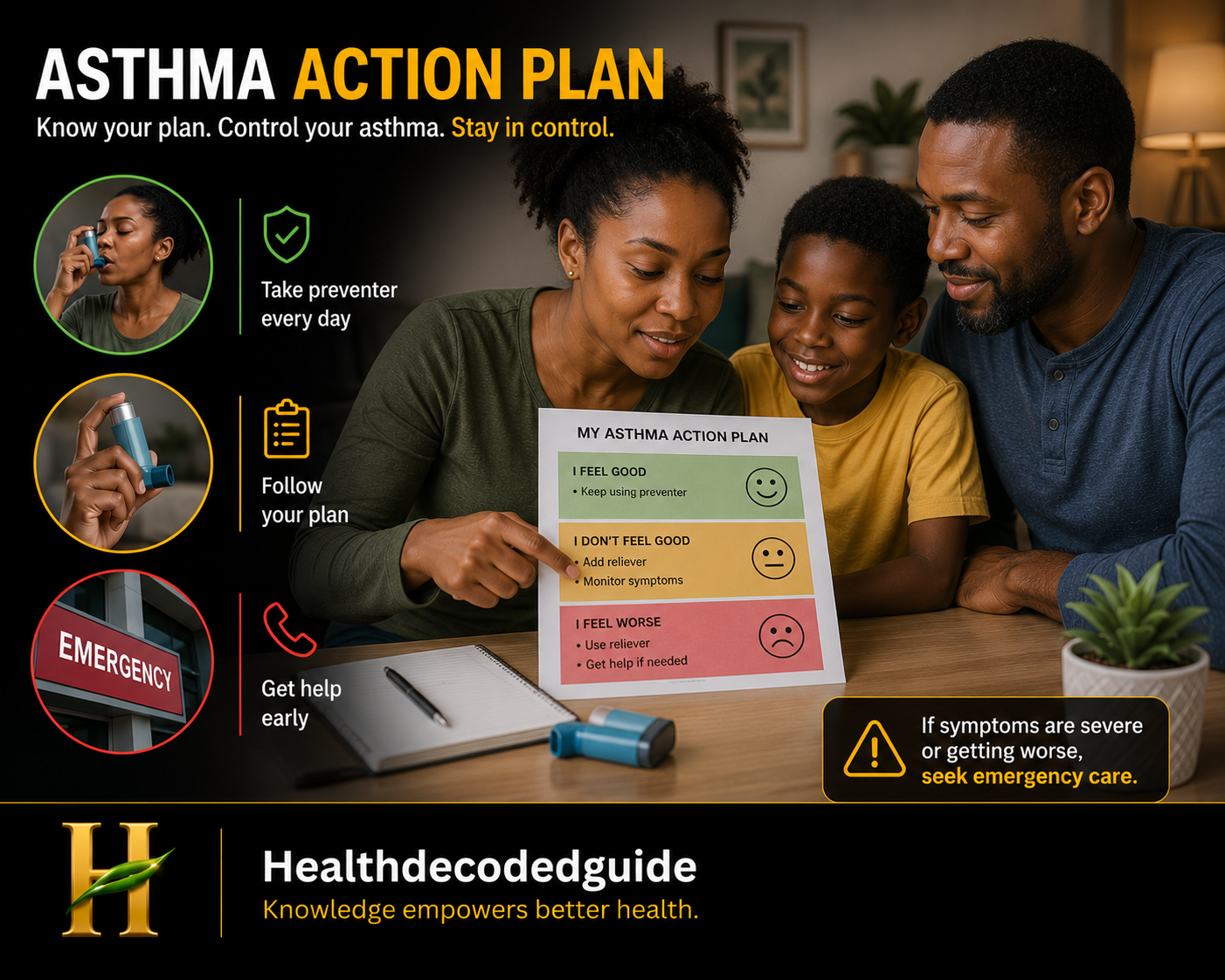
Most asthma action plans divide asthma into three zones based on your symptoms, peak flow readings (if used) and how well your asthma is controlled.
The plan tells you:
• which medicines to take every day
• what to do if symptoms begin to worsen
• when to seek urgent or emergency medical care
👉 The goal is to recognise worsening asthma early before it becomes a severe asthma attack.
3️⃣ The three asthma zones
🟢 Green Zone – Asthma under control
• little or no cough, wheeze or breathlessness
• able to do normal daily activities
• sleeping well at night
• continue taking your regular preventer medicines
Continue following your treatment plan.
────────────────────
🟡 Yellow Zone – Asthma getting worse
• coughing, wheezing or chest tightness increase
• waking at night because of asthma
• needing your reliever inhaler more often
• exercise becoming more difficult
Follow your action plan. This may include increasing treatment
or contacting your healthcare professional.
────────────────────
🔴 Red Zone – Medical emergency
• severe shortness of breath
• unable to speak full sentences
• reliever inhaler not helping
• lips or fingertips turning blue or grey
👉 Seek emergency medical care immediately.
4️⃣ What should your asthma action plan include?
Your asthma action plan should clearly explain:
• your regular asthma medicines
• when and how to use your reliever inhaler
• when to increase or adjust treatment (if advised)
• your asthma triggers
• emergency contact numbers
• when to call emergency services
👉 A written plan is easier to follow during stressful situations than relying on memory.
5️⃣ Who should have an asthma action plan?
An asthma action plan is recommended for:
• adults with asthma
• teenagers with asthma
• children with asthma (with parents or caregivers)
• people who have previously had severe asthma attacks
👉 Even people with mild asthma can benefit from having an action plan.
6️⃣ Common mistakes
• stopping preventer medicines when feeling well
• relying only on the reliever inhaler
• waiting too long before seeking medical help
• not recognizing worsening symptoms
• not updating the action plan after treatment changes
👉 Many severe asthma attacks happen because early warning signs are missed.
7️⃣ When should you seek emergency medical care? 🚨
• severe breathlessness
• difficulty speaking because of breathlessness
• reliever inhaler not helping
• blue or grey lips or fingertips
• symptoms rapidly worsening
👉 Never delay emergency treatment if these signs are present.
8️⃣ Keeping your action plan up to date
Your asthma action plan should be reviewed:
• at least once a year
• after any severe asthma attack
• whenever your medicines change
• if your asthma becomes difficult to control
👉 An up-to-date action plan helps ensure you always know what to do.
9️⃣ Related tools that support your asthma action plan
Your healthcare professional may also recommend:
• a peak flow meter
• correct inhaler technique
• a spacer device (if appropriate)
• regular asthma reviews
👉 These tools help you monitor your asthma and use your medicines effectively.
🟢 Important Message
An asthma action plan is more than a piece of paper—it is a practical guide that helps you recognise worsening asthma early and respond quickly.
👉 Understanding your plan and following it correctly can reduce asthma attacks, hospital admissions and emergency situations.
FAQ
• Do I still need an asthma action plan if my asthma is mild?
Yes. Even people with mild asthma can suddenly develop worsening symptoms. An action plan helps you know what to do early.
• Is an asthma action plan the same as asthma management?
No. Asthma management includes all aspects of controlling asthma, while an asthma action plan is one part of that management. It provides step-by-step instructions for different asthma situations.
• Can children use an asthma action plan?
Yes. Parents, caregivers and older children should understand the plan and know how to follow it.
• Do I need a peak flow meter to use an asthma action plan?
Not always. Some action plans use peak flow readings, while others rely mainly on symptoms.
• How often should my asthma action plan be reviewed?
At least once a year, and sooner if your asthma changes, your medicines change or you have an asthma attack.
🧠 Why We Delay
Many people believe they will remember what to do if their asthma worsens. However, during an asthma attack, anxiety and breathlessness can make it difficult to think clearly.
Others continue using only their reliever inhaler without recognizing that their asthma is becoming less controlled.
A written asthma action plan provides clear instructions before an emergency develops, helping people recognise worsening symptoms early and seek the right treatment at the right time.
👉 The best time to prepare for an asthma attack is before it happens.
🔗 Related Health Topics
• Asthma Attack
• Asthma in Children
• Hay fever (Allergic Rhinitis)
• Wheezing in Children
• Allergic asthma
• Common Cold
📚 References
• Global Initiative for Asthma (GINA). Global Strategy for Asthma Management and Prevention.
• National Health Service (NHS). Asthma.
• Asthma + Lung UK. Your asthma action plan.
• Centers for Disease Control and Prevention (CDC). About Asthma.
• American Lung Association. Managing Asthma.
• American Academy of Allergy, Asthma & Immunology (AAAAI). Asthma.
⚠️ Disclaimer
This article is for educational purposes only and should not replace professional medical advice, diagnosis or treatment. Always follow the advice of your healthcare professional and seek immediate medical attention if you develop severe asthma symptoms or signs of an asthma attack.