🌍 English
Published on August 6, 2026 at 8:00 AM
🩺 Medically reviewed by the Health Decoded Guide Editorial Team · Last reviewed: August 2026
🔍 Quick Summary
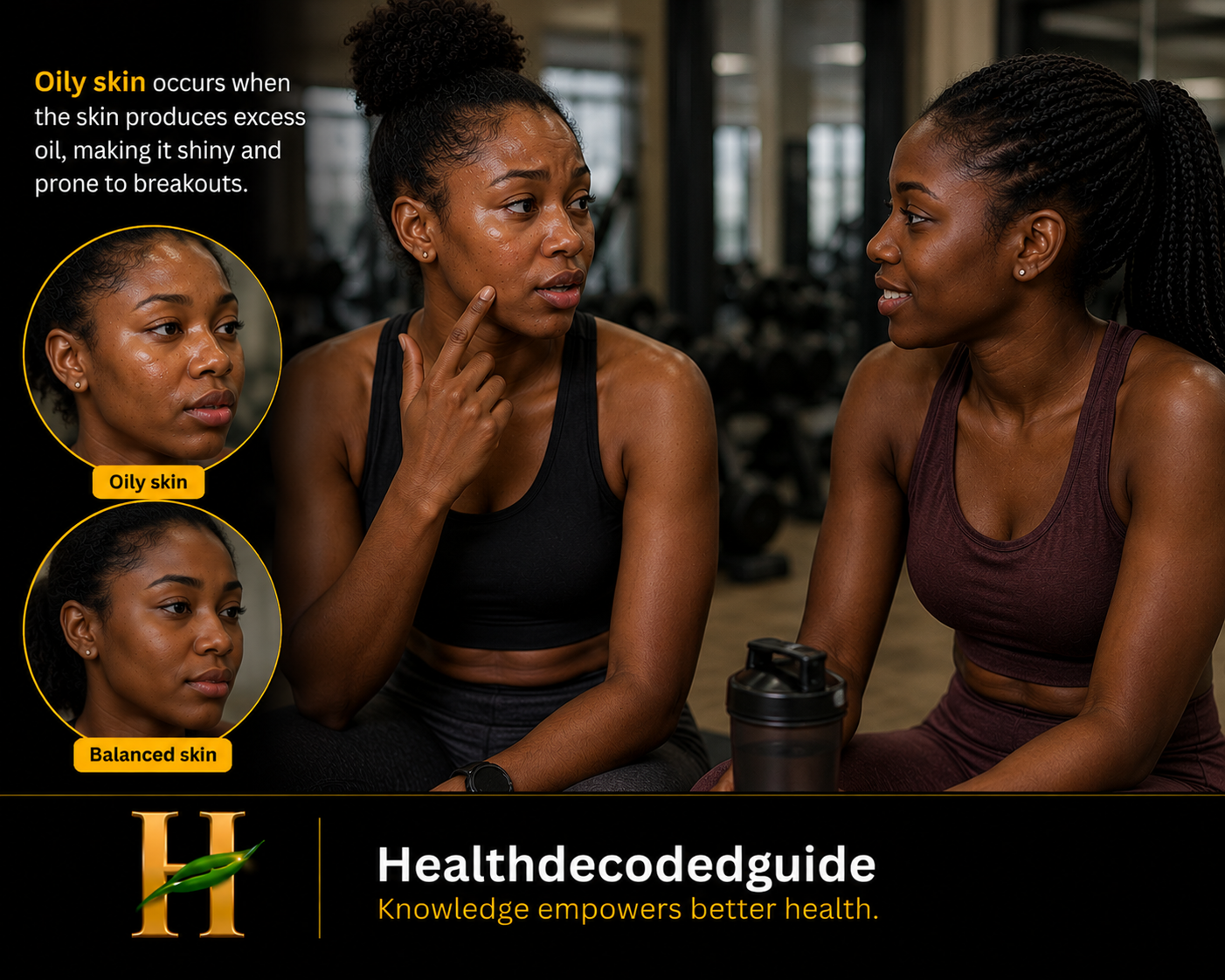
Oily skin develops when the skin produces more natural oil (sebum) than it needs.
Although oily skin is not a disease, excess oil can contribute to acne and clogged pores. With the right skincare routine, most people can keep oily skin under control.
1️⃣ Introduction
Sebum is the natural oil produced by glands in the skin. It helps protect and moisturise the skin.
• everyone produces sebum
• too much sebum can make the skin look shiny
• oily skin is common during puberty but can affect adults too
👉 Oily skin is normal for many people and does not mean your skin is dirty.
2️⃣ How it happens
The sebaceous glands produce sebum to protect the skin.
• hormones can increase oil production
• excess oil mixes with dead skin cells
• pores may become blocked, increasing the risk of acne
👉 Excess oil itself is not harmful, but blocked pores can lead to skin problems.
3️⃣ Types
Naturally oily skin
• caused mainly by genetics
• often begins during puberty
Temporary oily skin
• may occur because of hormonal changes, stress, hot weather or certain skincare products
👉 The amount of oil your skin produces can change over time.
4️⃣ Common causes
Hormonal changes
• puberty
• menstrual cycles
• pregnancy
• polycystic ovary syndrome (PCOS)
Other factors
• family history
• hot or humid weather
• stress
• using products that irritate the skin
• overwashing the face
👉 Washing your face too often can sometimes make oily skin worse.
5️⃣ Symptoms
• shiny skin, especially on the forehead, nose and chin (T-zone)
• enlarged pores
• blackheads
• whiteheads
• frequent acne breakouts
👉 Oily skin commonly affects the face but may also affect the chest and back.
6️⃣ Associated symptoms or complications
• acne
• clogged pores
• post-inflammatory dark spots
• reduced self-confidence in some people
👉 Managing excess oil can help reduce the risk of acne and breakouts.
7️⃣ 🩺 When it becomes dangerous 🚨
• severe acne with painful cysts
• acne causing permanent scars
• sudden severe oily skin together with other hormonal symptoms
• skin irritation or rash after using skincare products
👉 These may indicate:
• severe acne or an underlying hormonal condition
• need for medical assessment
8️⃣ Management / treatment
• wash your face gently twice daily
• use non-comedogenic moisturisers and sunscreen
• avoid harsh scrubbing
• use products containing salicylic acid or niacinamide if appropriate
• seek medical advice if acne becomes severe
👉 Healthy skin is about balance—not removing every drop of oil.
9️⃣ Diagnosis
• medical history
• examination of the skin
• assessment for hormonal conditions if symptoms suggest one
👉 Oily skin is usually diagnosed through a simple skin examination and discussion of your symptoms.
🟢 Important Message
Oily skin is common and manageable.
👉 A gentle skincare routine and the right products can help reduce excess oil without damaging your skin.
FAQ
• Does oily skin cause acne?
Oily skin increases the risk of acne because excess oil can block pores, but not everyone with oily skin develops acne.
• Should I wash my face many times a day?
No. Washing too often can irritate the skin and may increase oil production.
• Can moisturiser make oily skin worse?
Not if you use a lightweight, non-comedogenic moisturiser designed for oily skin.
• Does oily skin improve with age?
For many people, oil production decreases as they get older, although some adults continue to have oily skin.
🧠 Why We Delay
Many people believe oily skin simply means they need to wash their face more often or use strong products to "dry it out." Unfortunately, this can irritate the skin and sometimes trigger even more oil production.
Using the right skincare products and understanding your skin type can make a significant difference. If oily skin is causing severe acne or affecting your confidence, professional advice can help.
👉 The goal is to control excess oil—not strip your skin of its natural protection.
🔗 Related Health Topics
• Acne
• Dry Skin
• Rosacea
• Keratosis Pilaris
• Polycystic Ovary Syndrome (PCOS)
📚 Medical References
• National Health Service (NHS). Acne.
• American Academy of Dermatology (AAD). Oily Skin: Tips for Managing.
• Mayo Clinic. Acne.
• DermNet NZ. Seborrhoea (Oily Skin).
• Cleveland Clinic. Oily Skin.
⚠️ Medical Disclaimer
This article is for educational purposes only and does not replace professional medical advice.
If you have severe acne, sudden changes in your skin or symptoms that concern you, consult a healthcare professional.