

🌍English
Published on February 22, 2026
🩺 Medically reviewed by Priscilla Afiakurue, MD, Family Medicine Physician | Founder & Lead Medical Editor : October 2026
🔍 Quick Summary
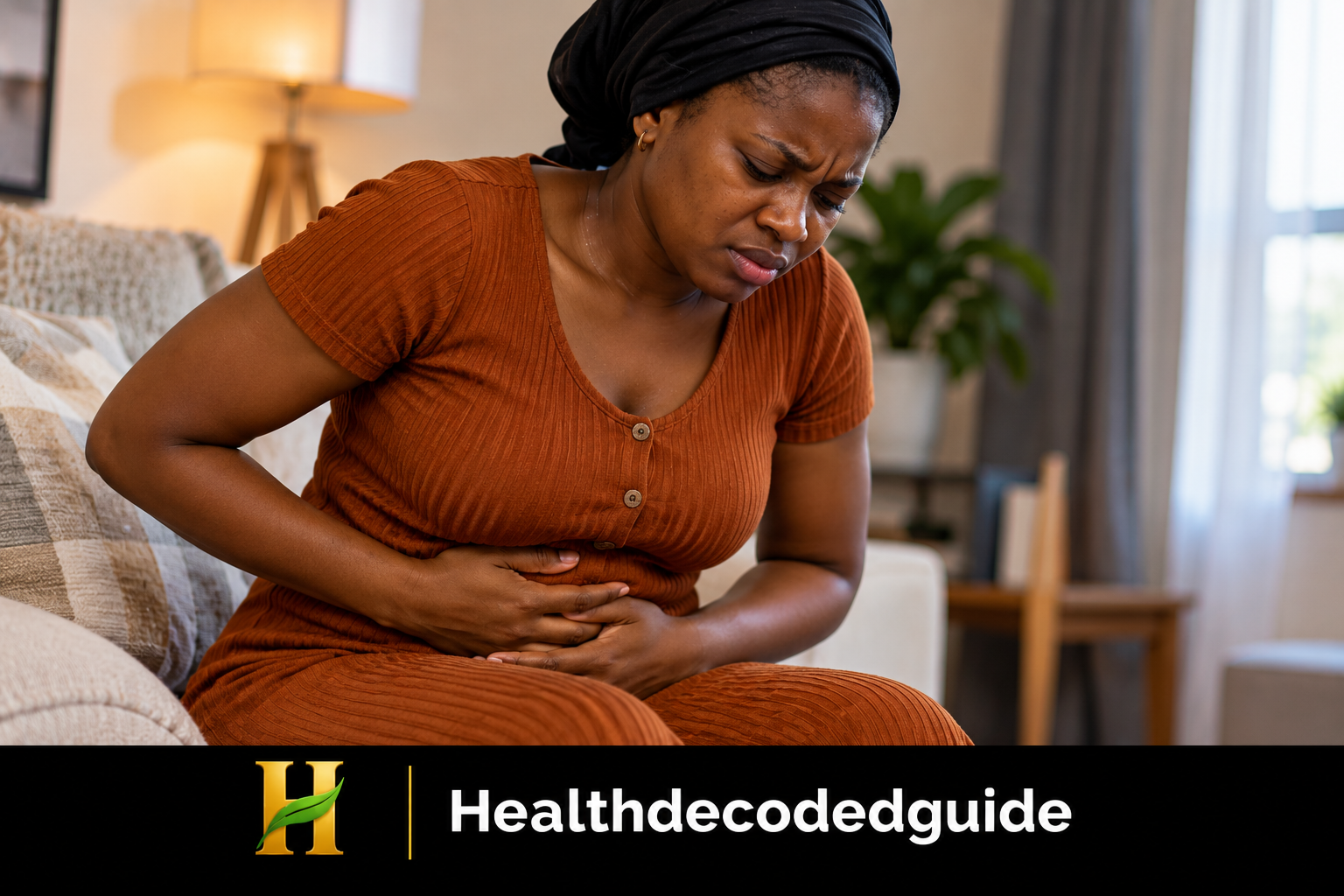
Abdominal pain is discomfort anywhere between the chest and pelvis.
It may come from the stomach, bowel, gallbladder, appendix, kidneys, bladder, reproductive organs or even structures outside the abdomen.
Most episodes are caused by temporary problems such as gas, indigestion or constipation, but sudden, severe or worsening pain can sometimes signal an emergency.
How severe the pain feels does not always show how serious the cause is.
🚨 Quick Action
Seek urgent/emergency medical help if abdominal pain comes with:
• sudden or severe pain, especially if it is rapidly worsening
• a hard, very tender or swollen abdomen
• vomiting blood, black stools or significant blood in the stool
• repeated vomiting with inability to pass stool or gas
• fainting, collapse, severe weakness or chest pain
Pregnancy with significant abdominal pain, especially with vaginal bleeding, also needs prompt assessment.
👉 Severe abdominal pain should not be managed at home while waiting to see if it passes.
1️⃣ What does abdominal pain feel like?
Abdominal pain can feel very different depending on the cause.
It may be:
• cramping or twisting
• sharp or stabbing
• burning
• dull or aching
• constant or coming in waves
• limited to one area or spread across the abdomen
Where the pain is located can give useful clues, but location alone cannot diagnose the cause.
2️⃣ Why does abdominal pain happen?
Organs inside the abdomen contain nerves that respond when tissues become stretched, inflamed, blocked, irritated or deprived of normal blood flow.
For example, trapped gas may stretch the bowel, infection may inflame an organ, and a stone or blockage may cause strong waves of pain as the body tries to move something through.
Common causes include:
• gas, indigestion or constipation
• gastroenteritis or food poisoning
• acid reflux or stomach ulcers
• urinary tract infection or kidney stones
• menstrual cramps or ovulation pain
• gallstones
• appendicitis
Other causes include pancreatitis, bowel obstruction, inflammatory bowel disease and conditions involving the ovaries or uterus.
Abdominal pain is a symptom, so the pattern and accompanying symptoms help narrow down the cause.
3️⃣ Which other symptoms matter?
Notice whether the pain happens with:
• vomiting or diarrhea
• constipation or inability to pass gas
• fever
• bloating or abdominal swelling
• painful urination
• vaginal bleeding or unusual discharge
• blood in vomit or stool
• unexplained weight loss
Also notice whether food, movement, bowel movements or urination make the pain better or worse.
4️⃣ What can you do?
For mild, short-lived abdominal discomfort when you otherwise feel well, simple measures may help.
These include:
• drinking enough fluids
• eating smaller, lighter meals if eating worsens discomfort
• resting
• using gentle warmth for cramps when appropriate
Avoid repeatedly taking laxatives or pain medicines for unexplained abdominal pain without knowing the cause.
If the pain keeps returning, persists or is getting worse, medical assessment is more useful than continuing to treat the symptom at home.
5️⃣ How is abdominal pain assessed?
A healthcare professional will usually ask:
• where the pain started and whether it moved
• what the pain feels like
• when it began and how long it lasts
• which other symptoms are present
• about bowel movements, urination and medicines
• about periods or possible pregnancy when relevant
Depending on the suspected cause, assessment may include examination, blood or urine tests, pregnancy testing, ultrasound or CT imaging.
👉 Not everyone with abdominal pain needs a scan — testing depends on the pattern and suspected cause.
6️⃣ 🩺 When should you seek medical help? 🚨
Arrange medical assessment if:
• pain lasts more than a few days or keeps returning
• the pain is gradually worsening
• eating or normal activities become difficult
• you have persistent fever, vomiting or bowel changes
• you are losing weight without trying
Seek urgent help for severe or sudden pain, a rigid or extremely tender abdomen, blood in vomit or stool, persistent vomiting, collapse, or pain associated with major injury.
🟢 Important Message
Most abdominal pain is not caused by a dangerous condition, but there are many possible causes.
The safest approach is to look at how the pain started, where it is, whether it is worsening and what other symptoms are happening with it.
👉 New severe pain or a clear change in your usual pattern deserves attention.
FAQ
• Does the location of abdominal pain tell you the cause?
It can give clues, but location alone is not enough to make a diagnosis.
• Can gas cause severe abdominal pain?
Yes. Gas and bowel cramps can sometimes be very painful, but severe new pain should not automatically be assumed to be gas.
• Can stress cause abdominal pain?
Yes. Stress can affect digestion and worsen conditions such as functional abdominal pain or irritable bowel syndrome.
• When should I worry about right-sided abdominal pain?
Persistent or worsening right-sided pain, particularly with fever, vomiting or significant tenderness, should be assessed.
• Can abdominal pain come from somewhere other than the stomach?
Yes. The bowel, kidneys, gallbladder, pancreas, bladder, reproductive organs and even the chest can cause pain felt in the abdomen.
🧠 Why We Delay
People often label abdominal pain as “gas,” “something I ate” or indigestion, especially when they have experienced similar discomfort before.
That may be correct — but a new pattern, steadily worsening pain or additional symptoms should not automatically be treated like previous stomach upset.
👉 Pay attention when the pain behaves differently from what is normal for you.
🔗 Related Health Topics
• Appendicitis
• Constipation
• Pelvic Pain
• Gallstones
• Nausea
• Vomiting
📚 Medical References
● Cleveland Clinic. Abdominal Pain: Causes, Types & Treatment.
● National Library of Medicine (MedlinePlus). Abdominal Pain.
● Mayo Clinic. Abdominal pain - Causes and definition.
● National Health Service (NHS). Stomach ache.
● HealthLink BC. Abdominal Pain, Age 12 and Older.
⚠️ Medical Disclaimer
This article is for educational purposes only and does not replace professional medical advice.