

Read in: English | Pidgin English
🩺 Medically reviewed by the Health Decoded Guide Editorial Team · Last reviewed: July 2026
🔎 Quick Summary
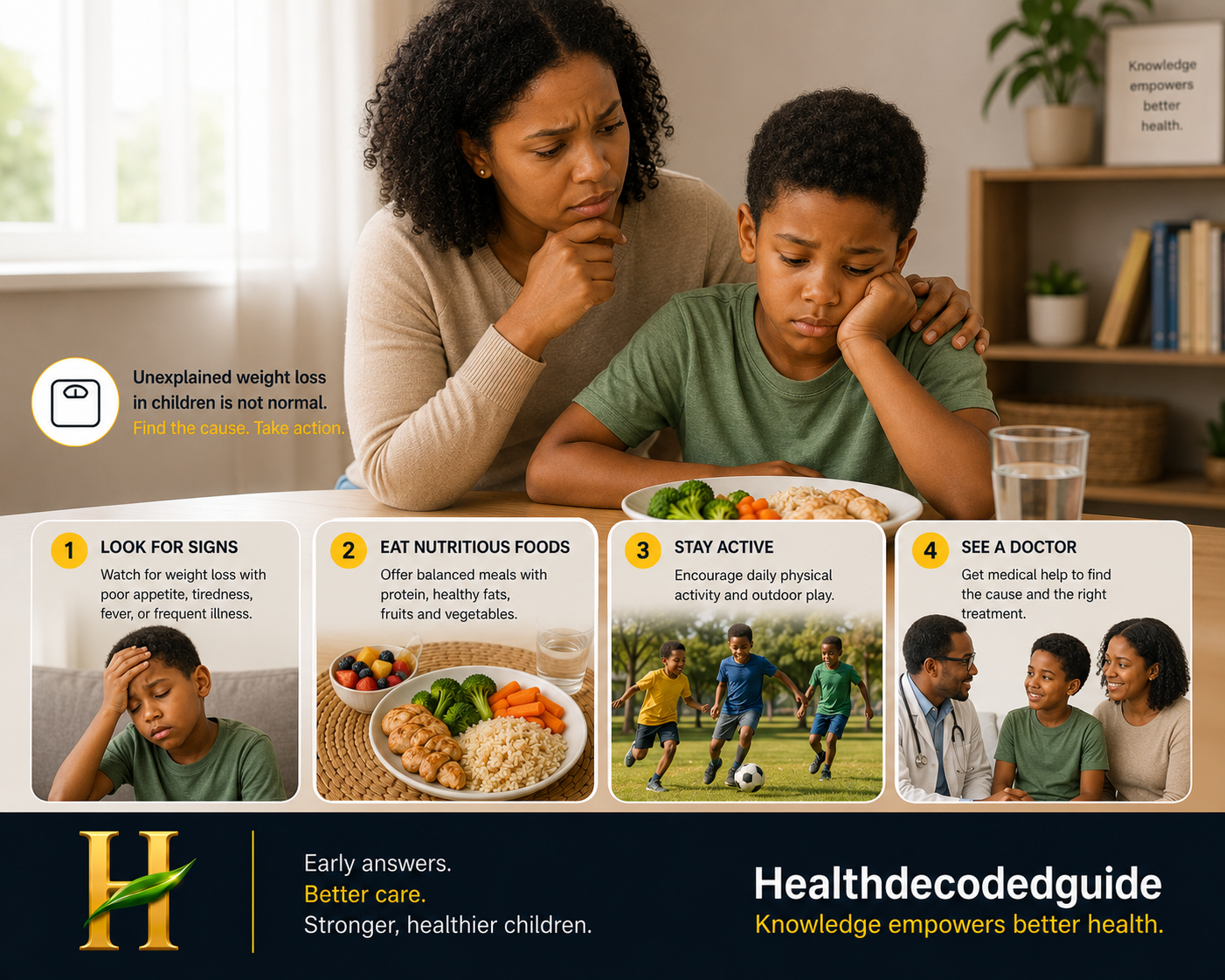
Weight loss in children is not always a sign of a serious illness, but it should never be ignored.
Sometimes it happens because of a temporary illness or poor appetite, while in other cases it may be caused by an underlying medical condition that needs treatment.
1️⃣ Introduction
Children usually gain weight as they grow.
While small day-to-day changes in weight are normal, a child who is losing weight over time should be assessed to find the cause.
👉🏽 Weight loss is different from simply gaining weight more slowly. A healthcare professional can help determine whether your child's growth is normal.
2️⃣ What is weight loss in children?
Weight loss means a child weighs less than they previously did.
This may happen suddenly or gradually.
Some children lose a small amount of weight after a short illness, but they usually regain it once they recover.
👉🏽 Ongoing weight loss or failure to regain lost weight deserves medical attention.
3️⃣ Common causes of weight loss
Weight loss may happen for many different reasons.
Reduced food intake
• poor appetite
• sore throat
• mouth ulcers
• teething in younger children
Illnesses
• gastroenteritis
• malaria
• chest infections
• tuberculosis
Digestive conditions
• persistent diarrhea
• vomiting
• constipation
• celiac disease
Other causes
• diabetes
• overactive thyroid (hyperthyroidism)
• worm infections
• emotional stress or anxiety
👉🏽 In many children, treating the underlying cause helps their weight gradually return to normal.
4️⃣ Symptoms that may occur with weight loss
Depending on the cause, your child may also have:
• poor appetite
• fever
• diarrhea
• vomiting
• persistent cough
• stomach pain
• tiredness
• increased thirst
• frequent urination
👉🏽 Looking at the child's other symptoms often provides important clues about why the weight loss is happening.
5️⃣ When weight loss may be normal
Not every drop in weight means something serious.
Temporary weight loss may happen:
• after a stomach bug
• during recovery from a fever
• after vomiting or diarrhea
• because of temporary poor appetite
Most children regain the lost weight after recovering.
👉🏽 The important question is whether your child starts gaining weight again after the illness improves.
6️⃣ How parents can help
If your child is otherwise well:
• encourage regular healthy meals
• offer small meals more often
• provide nutritious snacks
• encourage enough fluids
• avoid forcing your child to eat
• monitor your child's weight if advised by your healthcare professional
👉🏽 Focus on healthy eating habits rather than trying to make your child eat large amounts at once.
7️⃣ When weight loss becomes concerning
Weight loss should be assessed if your child:
• continues losing weight
• is not regaining weight after illness
• becomes less active
• is falling behind on growth
• has ongoing diarrhoea or vomiting
• develops persistent poor appetite
👉🏽 Persistent weight loss may be the first sign of an underlying medical condition.
8️⃣ Diagnosis
A healthcare professional may:
• ask about your child's eating habits
• review recent illnesses
• check growth charts
• perform a physical examination
• request blood tests, urine tests or stool tests if needed
👉🏽 Growth charts are one of the most useful tools for assessing whether a child's weight is changing appropriately over time.
9️⃣ When to seek urgent medical care 🚨
Seek immediate medical attention if your child has weight loss together with:
• severe dehydration
• repeated vomiting
• blood in the stool
• difficulty breathing
• severe weakness
• persistent high fever
• confusion or difficulty waking
👉🏽 Young children can become seriously ill more quickly than adults, especially if dehydration develops.
🟢 Important message
Weight loss in children should always be taken seriously, even though many causes are temporary and treatable.
Monitoring your child's growth, ensuring good nutrition and seeking medical advice when weight loss continues can help identify problems early.
👉🏽 A child who is active, growing well and regaining weight after illness is usually reassuring, but persistent weight loss should never be ignored.
FAQ
• Is it normal for children to lose weight after being sick?
Yes. Children may lose a small amount of weight during illnesses such as gastroenteritis, but they usually regain it as they recover.
• Should I worry if my child is eating less?
Not always. Appetite often decreases during illness, but persistent poor appetite or ongoing weight loss should be assessed.
• Can poor appetite cause weight loss?
Yes. Eating less than usual over time may lead to weight loss.
• Does every child with weight loss need blood tests?
No. Many children do not need extensive testing. The decision depends on the child's symptoms, examination and growth pattern.
• Can stress affect a child's weight?
Yes. Emotional stress, anxiety and major life changes may reduce appetite and contribute to weight loss.
• When should I seek medical advice?
If your child continues losing weight, fails to regain weight after illness, or develops other concerning symptoms such as persistent fever, diarrhea or vomiting.
🔗 Related Health Topics
• Poor Appetite in Children
• Fever in Children
• Picky eating in Children
• Childhood Gastroenteritis
• Constipation
• Eating Disorder
• Nutrition and Child Development
• Healthy Diet Basics
📚 Medical References
• World Health Organization (WHO). Infant and young child feeding.
• National Health Service (NHS). Children's weight.
• Centers for Disease Control and Prevention (CDC). Growth Charts.
• Mayo Clinic. Nutrition for kids: Guidelines for a healthy diet.
• American Academy of Pediatrics (HealthyChildren.org). Growth & Development.
⚠️ Medical Disclaimer
This article is for educational purposes only and does not replace professional medical advice.
If your child has persistent weight loss, poor growth or any concerning symptoms, please consult a qualified healthcare professional.