Read in: English | Pidgin English
🩺 Medically reviewed by the Health Decoded Guide Editorial Team · Last reviewed: August 2026
🔍 Quick Summary
Mumps is a contagious viral infection that mainly affects the salivary glands, especially the glands just below and in front of the ears.
Most people recover completely within a few weeks, but mumps can sometimes lead to complications, particularly in teenagers and adults.
1️⃣ Introduction
Mumps is caused by the mumps virus and spreads easily through respiratory droplets and saliva.
• it commonly causes swelling of one or both cheeks
• it can affect both children and adults
• vaccination has greatly reduced the number of cases in many countries
👉 Although mumps is often mild, it should not be dismissed because complications can occur.
2️⃣ How it happens
The virus enters the body through the nose or mouth before spreading to the salivary glands.
• the virus multiplies in the respiratory tract
• it spreads through the bloodstream to different parts of the body
• inflammation causes the salivary glands to swell
👉 This swelling is what gives many people with mumps their characteristic "puffy cheeks."
3️⃣ Types
Typical mumps infection
• swelling of one or both parotid glands
• mild to moderate illness
Mumps with complications
• infection spreads beyond the salivary glands
• may affect the brain, testicles, ovaries or pancreas
👉 Most people have uncomplicated illness, but complications become more common after puberty.
4️⃣ Common causes
Person-to-person spread
• coughing or sneezing
• close contact with an infected person
• sharing cups, utensils or bottles
Risk factors
• not receiving the MMR vaccine
• close contact in schools, colleges or crowded settings
👉 Someone with mumps can spread the virus before the facial swelling even appears.
5️⃣ Symptoms
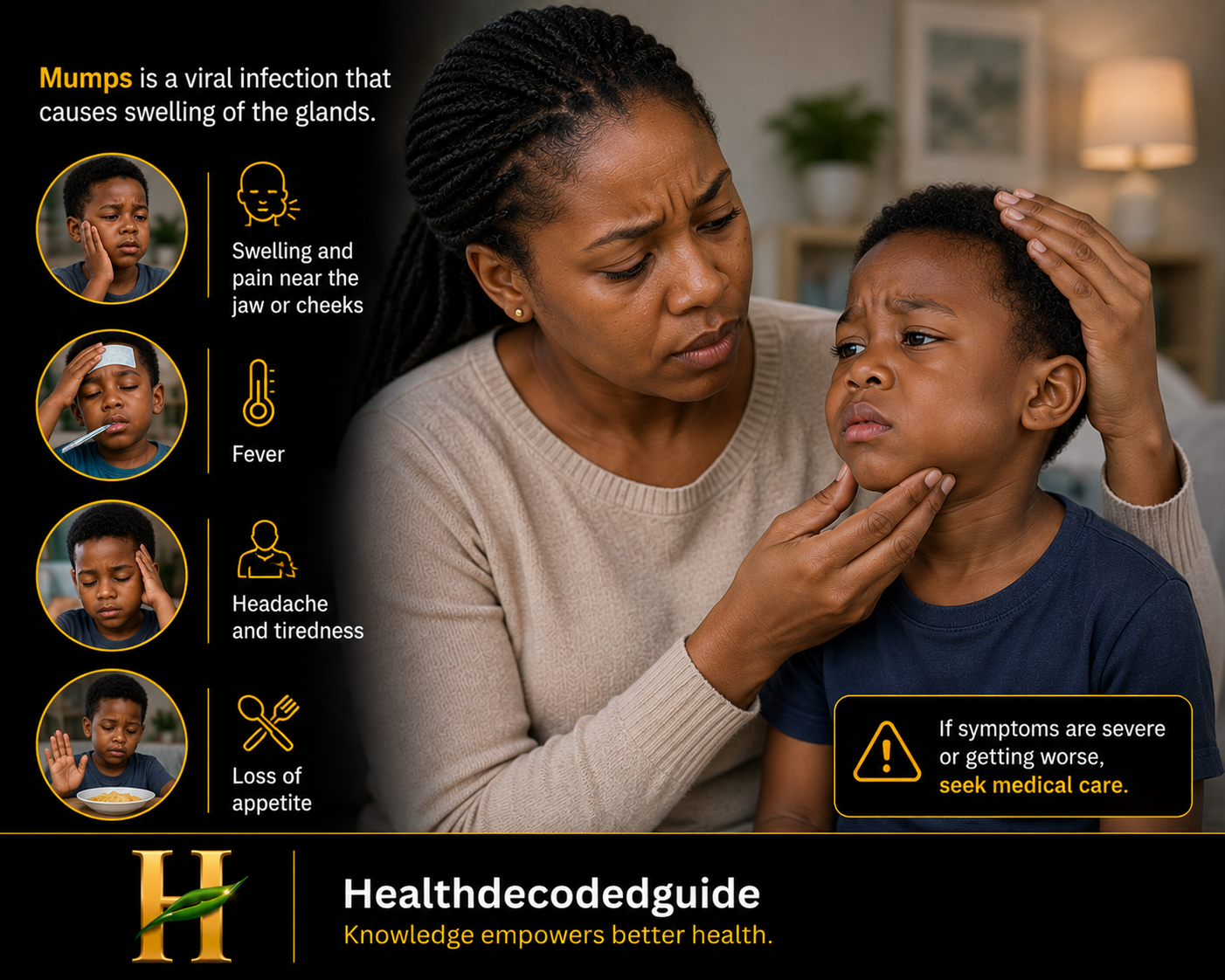
• swollen cheeks or jaw
• pain around the swollen glands
• fever
• headache
• muscle aches
• tiredness
• pain when chewing or swallowing
👉 Swelling may affect one side first before involving both sides.
6️⃣ Associated symptoms or complications
• meningitis
• encephalitis (brain inflammation)
• orchitis (swelling of the testicles)
• oophoritis (swelling of the ovaries)
• pancreatitis
• temporary hearing loss, and rarely permanent hearing loss
👉 Teenagers and adults are generally more likely than young children to develop complications.
7️⃣ 🩺 When it becomes dangerous 🚨
• severe headache or stiff neck
• confusion or seizures
• severe abdominal pain
• severe swelling and pain in the testicles
• difficulty waking or extreme drowsiness
👉 These may indicate:
• serious complications such as meningitis, encephalitis or pancreatitis
• need for urgent medical assessment
8️⃣ Management / treatment
• rest and drink plenty of fluids
• use pain relief or fever-reducing medicines when appropriate
• apply a warm or cool compress to swollen glands if comfortable
• eat soft foods if chewing is painful
• stay away from school or work until no longer infectious, according to local public health guidance
👉 Because mumps is caused by a virus, antibiotics do not treat the infection.
9️⃣ Diagnosis
• medical history and physical examination
• saliva or throat swab for viral testing
• blood tests in selected cases
👉 During outbreaks, the typical swelling of the salivary glands often strongly suggests the diagnosis.
🟢 Important Message
Vaccination remains the best way to prevent mumps and its complications.
👉 If you develop swollen cheeks with fever, avoid close contact with others and seek medical advice.
FAQ
• Is mumps contagious?
Yes. It spreads easily through respiratory droplets and saliva.
• Can vaccinated people still get mumps?
Yes, but vaccination greatly reduces the risk and usually makes the illness milder.
• Can adults get mumps?
Yes. Adults can become infected and are more likely to develop complications than young children.
• Is there a cure for mumps?
No. Treatment focuses on relieving symptoms while the body clears the virus.
🧠 Why We Delay
Many people mistake mumps for a simple swollen gland or tooth problem, especially when only one side of the face is affected at first. Others may continue going to school or work because they think it is "just a virus."
Delaying medical assessment can increase the risk of spreading the infection to others and may delay recognition of serious complications. Early diagnosis also helps protect vulnerable people who may not be fully vaccinated.
👉 Swollen cheeks with fever are not something to ignore—especially during a mumps outbreak.
🔗 Related Health Topics
• Measles
• Roseola
• Chicken pox
• Fever in Children
• Fever Treatment at Home
• Swollen Lymph Nodes
• Vaccinations
📚 Medical References
• National Health Service (NHS). Mumps.
• Centers for Disease Control and Prevention (CDC). Mumps.
• National Library of Medicine (MedlinePlus). Mumps.
• Mayo Clinic. Mumps.
• American Academy of Pediatrics (AAP). Mumps.
⚠️ Medical Disclaimer
This article is for educational purposes only and does not replace professional medical advice.
If you have concerning symptoms, risk factors or abnormal test results, consult a healthcare professional.