

🌍English
Published on February 22, 2026
🩺 Medically reviewed by Priscilla Afiakurue, MD, Family Medicine Physician | Founder & Lead Medical Editor : October 2026
🔍 Quick Summary
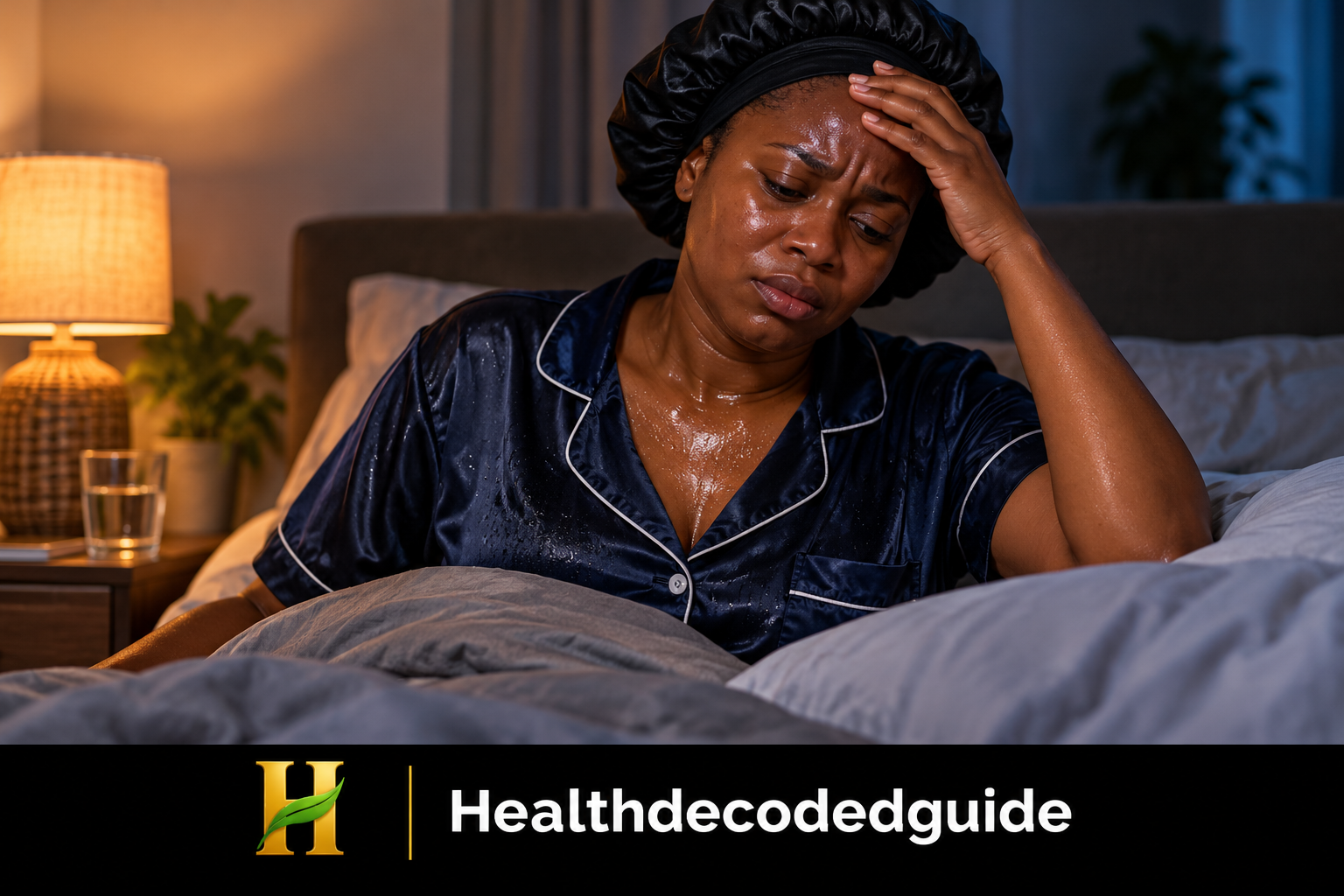
Night sweats happen when you sweat excessively during sleep, sometimes enough to soak your clothes or bedsheets even when the room is cool.
They can be caused by hormonal changes, infections, medicines or other medical conditions. Sometimes, no clear cause is found.
Occasional sweating at night is usually not serious, but repeated drenching night sweats, especially with fever or unexplained weight loss, should be medically evaluated.
1️⃣ What Are Night Sweats?
Sweating helps your body regulate its temperature.
It is normal to sweat when sleeping in a hot room or under thick blankets.
However, true night sweats involve excessive sweating that cannot be explained simply by the sleeping environment.
You may notice:
-
Waking up with soaked clothes or bedsheets
-
Needing to change your nightwear
-
Sweating even when the room is cool
-
Disturbed sleep because of sweating
👉 The important difference is whether sweating is caused by heat or something happening inside your body.
2️⃣ What Causes Night Sweats?
Several conditions can cause night sweats.
Hormonal changes
-
Menopause and perimenopause
-
Pregnancy or postpartum hormonal changes
-
Overactive thyroid (hyperthyroidism)
During menopause, changes in oestrogen levels can affect the body's temperature regulation, causing hot flushes and night sweats.
Infections
Certain infections may cause repeated night sweats, including:
-
Tuberculosis (TB)
-
Other infections that cause fever
-
Some long-lasting bacterial infections
👉 Night sweats alone do not mean you have TB or HIV. Doctors consider other symptoms and risk factors before recommending tests.
Medicines
Some medicines can increase sweating, including:
-
Certain antidepressants
-
Some pain-relieving medicines
-
Steroids
-
Medicines that lower blood sugar, particularly when they cause hypoglycaemia
Do not stop prescribed medicines without medical advice.
Other possible causes
-
Low blood sugar during sleep
-
Obstructive sleep apnea
-
Alcohol consumption
-
Some cancers, including lymphoma
Cancer is a less common cause of night sweats, and night sweats alone are not enough to suggest a cancer diagnosis.
The pattern of sweating and other accompanying symptoms help doctors identify possible causes.
3️⃣ Symptoms That May Occur With Night Sweats
Depending on the cause, you may also experience:
-
Fever or chills
-
Persistent cough
-
Hot flushes
For example, night sweats with:
-
hot flushes and irregular periods may suggest perimenopause.
-
persistent cough, fever and weight loss may raise concern for tuberculosis.
👉 Night sweats are a symptom, not a diagnosis. The accompanying symptoms often provide important clues.
4️⃣ When Should You See a Doctor?
Arrange a medical appointment if:
-
Night sweats happen repeatedly without an obvious reason
-
Your clothes or bedsheets become regularly soaked
-
You experience unexplained weight loss
-
You have persistent fever
-
You notice enlarged lymph nodes
-
You have a cough lasting several weeks
-
Night sweats begin after starting a new medicine
-
Sweating is disturbing your sleep or daily activities
When is it an emergency?🚨
Seek immediate medical help if sweating occurs with:
-
Severe chest pain
-
Serious difficulty breathing
-
Fainting or severe confusion
-
Signs of severe low blood sugar that do not respond to treatment
👉 Not every episode of night sweating requires emergency care, but persistent symptoms deserve investigation.
5️⃣ How Are Night Sweats Diagnosed?
Your doctor may ask:
-
How long have you been sweating at night?
-
Are your clothes or bedsheets soaked?
-
Do you have fever, cough or weight loss?
-
Have you recently started new medicines?
-
Are you experiencing menstrual or hormonal changes?
-
Have you been exposed to tuberculosis?
Depending on your symptoms and examination, tests may include:
-
Full blood count
-
Thyroid function tests
-
Blood glucose testing
-
HIV or TB testing when indicated
-
Chest X-ray if clinically necessary
-
Other investigations based on examination findings
👉 Not everyone with night sweats needs extensive testing. Investigations depend on the suspected cause.
6️⃣ How Are Night Sweats Treated?
Treatment depends on the underlying cause.
If caused by menopause
Options may include:
-
Keeping the bedroom cool
-
Lightweight bedding
-
Avoiding personal triggers
-
Discussing menopausal hormone therapy or non-hormonal treatments with a healthcare professional
If caused by an infection: The infection must be identified and treated appropriately. E.g. tuberculosis
If caused by medication: Your doctor may review the dose or consider an alternative medicine.
If caused by low blood sugar: Your diabetes treatment may need adjustment to prevent overnight hypoglycaemia.
👉 Treating the underlying cause is more effective than simply trying to stop the sweating.
7️⃣ What Can You Do at Home?
If there are no concerning symptoms, simple measures may improve comfort:
-
Keep your bedroom comfortably cool
-
Wear lightweight, breathable nightwear
-
Use lighter bedding
-
Avoid excessive alcohol before bedtime
-
Keep a record of when the sweating happens
-
Note any associated fever, medicines or other symptoms
These measures may reduce discomfort but do not replace medical assessment when night sweats are persistent or unexplained.
🟢 Important Message
Night sweats are common and often have manageable causes. However, repeated drenching sweats should not automatically be blamed on stress, menopause or hot weather.
Pay attention to the pattern, accompanying symptoms and how long the sweating has continued.
FAQ
• Can stress cause night sweats?
Yes. However, persistent drenching night sweats should not automatically be attributed to stress.
• Do night sweats mean I have tuberculosis?
No. Tuberculosis is one possible cause, especially when sweating occurs with persistent cough, fever or weight loss.
• Can menopause cause severe night sweats?
Yes. Hormonal changes during perimenopause and menopause can cause drenching night sweats that disturb sleep.
• Can night sweats be a sign of cancer?
Occasionally. Certain cancers, such as lymphoma, can cause night sweats, particularly with unexplained weight loss, fever or enlarged lymph nodes.
• When should I worry about night sweats?
If they repeatedly soak your clothes or bedding, occur without an obvious cause, or are accompanied by concerning symptoms.
🧠 Why We Delay
People may ignore night sweats because they believe:
-
"its just hot weather," "Maybe stress." or "I just need to change my bed sheet."or maybe "It will stop by itself."
Sometimes these explanations are correct. But when night sweats keep returning, especially alongside other symptoms, waiting too long can delay the diagnosis of an underlying illness. You do not need to panic, but persistent unexplained symptoms should be checked.
🔗 Related Health Topics
• Fever
• Fatigue
• Unexplained Weight loss
• Swollen Lymph Nodes
• Headache
• Thyroid disorders
📚 Medical References
● National Health Service (NHS). Night sweats.
● American Academy of Family Physicians (AAFP). Persistent Night Sweats: Diagnostic Evaluation.
● National Health Service (NHS). Symptoms of menopause and perimenopause.
● World Health Organization (WHO). Tuberculosis.
● Centers for Disease Control and Prevention (CDC). Low Blood Sugar (Hypoglycemia).
⚠️ Medical Disclaimer
This article is for educational purposes only and does not replace professional medical advice.